
British Airways 777 Diverts to Heathrow After 28,000-Foot Descent Over Ireland
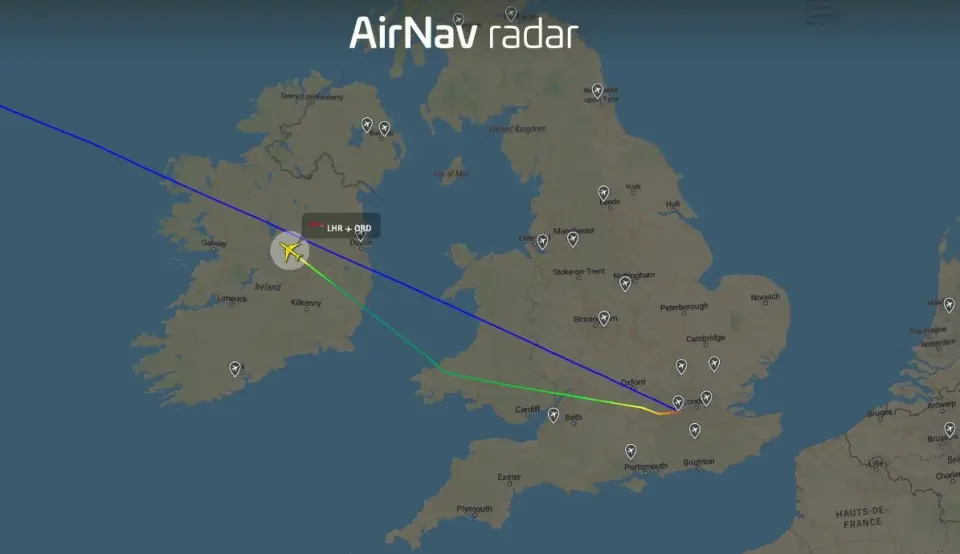
British Airways Flight BA295, a Boeing 777-200ER traveling from London Heathrow to Chicago O'Hare, declared an emergency over Ireland on October 5, 2026. Approximately one hour after takeoff, the aircraft experienced a rapid descent from 37,000 feet to 9,000 feet, triggering a squawk 7700 general emergency code. The crew diverted the plane back to Heathrow, where it landed after burning off fuel to reduce weight. British Airways subsequently cancelled the flight, and the specific cause of the emergency remains undisclosed, though such descents often indicate cabin depressurization.
Key points
- Flight BA295, operated by a 30-year-old Boeing 777-200ER, departed London Heathrow at 11:50 AM for Chicago.
- The aircraft dropped 28,000 feet to 9,000 feet within minutes over Ireland, prompting a squawk 7700 emergency signal.
- The plane returned to Heathrow, landing four hours and 47 minutes after departure after burning fuel to reduce weight.
- British Airways cancelled the flight following the emergency landing.
- The exact cause of the emergency was not publicly disclosed by the airline or authorities.
Background
This incident occurred shortly after a high-profile security breach on a flydubai flight in September 2026, where a co-pilot attacked the captain, leading to a diversion and subsequent security reviews. While the BA295 incident appears operational rather than security-related, it highlights ongoing scrutiny of aviation safety protocols. Previous archive coverage notes that airlines often use holding patterns or fuel-burning maneuvers to manage weight during unexpected diversions, a tactic employed by BA295.
How outlets are covering it
Airlive provided real-time updates on the flight's descent, fuel jettisoning, and landing, emphasizing the operational timeline. NDTV and Hindustan Times focused on the technical aspects, noting that the 7700 squawk indicates a general emergency and that rapid descents often suggest cabin depressurization. All sources agreed that the cause remained undisclosed, but NDTV contextualized the event against the recent flydubai security incident, while Hindustan Times explained the mechanics of fuel-burning circles. No source reported on passenger injuries or specific mechanical failures, maintaining a neutral stance on the root cause.
Why it matters
The incident underscores the critical importance of emergency protocols in long-haul aviation, where rapid descents and fuel management are essential for safety. It also highlights the transparency gap in aviation incidents, as airlines often withhold specific causes until investigations are complete. For passengers and regulators, such events reinforce the need for robust emergency response systems and clear communication during in-flight crises.
What to watch
British Airways is expected to conduct an internal investigation and cooperate with aviation authorities to determine the cause of the emergency. Passengers may be rebooked on alternative flights, and the airline may issue a formal statement once more information is available. Regulators may review the incident to ensure compliance with safety standards, particularly regarding cabin depressurization protocols and emergency descent procedures.
- British Airways transatlantic flight BA295 to Chicago ORD is declaring an emergency over Ireland airlive
- British Airways Flight From London To Chicago Declares Emergency Over Ireland NDTV
- British Airways London-Chicago flight declares ‘emergency’ mid air; makes U-turn after take-off The Hindu
- British Airways flight issues midair alert after dropping 28,000 feet The Indian Express
- Why British Airways flight BA295 is flying in circles after rapid 28,000 feet descent Hindustan Times
Want the full story? Read the original reporting
Read on airlive