
Bhutan’s Gelephu Mindfulness City Launches with 108 Stupas Built by 40,000 Volunteers
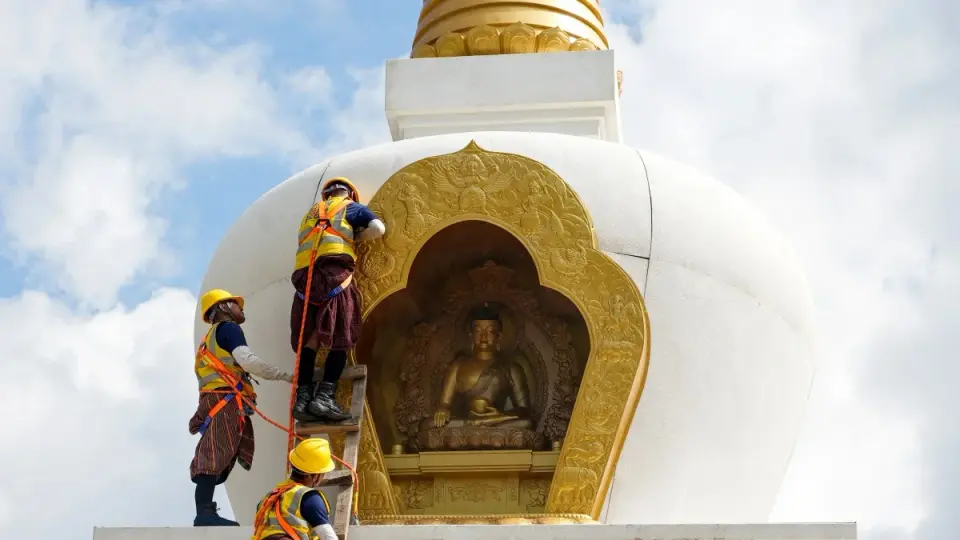
Bhutan has inaugurated its Gelephu Mindfulness City project with the construction of 108 Buddhist stupas along a 12km riverbank near the Indian border. Over 40,000 volunteers participated in the single-day build, attended by nearly 200,000 people, including King Jigme Khesar Namgyel Wangchuck. The initiative aims to stimulate economic growth, attract investment in green technology and financial services, and retain young talent amid rising unemployment and skilled worker migration. The city, established by royal charter in 2024, is linked to Bhutan’s cryptocurrency ambitions and features connections to India’s rail network and a planned 2029 airport.
Key points
- More than 40,000 volunteers constructed 108 stupas, each 15 meters tall, along 12 kilometers of riverbank in Gelephu on November 1, 2026.
- Approximately 200,000 people attended the ceremony, representing nearly one-fourth of Bhutan’s total population of under 800,000.
- King Jigme Khesar Namgyel Wangchuck expressed gratitude for the successful single-day completion, noting initial concerns about the feasibility of the project.
- The Gelephu Mindfulness City, designed by Danish architects, is intended to boost the economy through sustainable business, green technology, education, tourism, and financial services.
- Indian billionaire Gautam Adani joined the project as a founding member in January 2026, and the site is set to connect to India’s Assam rail network with an international airport opening in 2029.
- The project is linked to Bhutan’s cryptocurrency ambitions, utilizing surplus hydropower for Bitcoin mining to support the city’s development.
Background
Bhutan, a landlocked Himalayan nation known for prioritizing 'Gross National Happiness' alongside economic growth, faces significant economic challenges including rising unemployment, falling birth rates, and mass migration of skilled workers. The Gelephu Mindfulness City was established by royal charter in 2024 as a special zone to create a vibrant economic hub. The current project represents a major step in this vision, aiming to persuade young people to stay and attract international investment. This development follows earlier announcements about the city’s design and strategic partnerships, including the involvement of major conglomerates and infrastructure links to India.
Why it matters
The successful construction of 108 stupas serves as a symbolic and practical launch for Bhutan’s ambitious economic diversification strategy. By leveraging cultural heritage and modern technology, such as cryptocurrency and green infrastructure, Bhutan aims to address demographic and economic pressures. The involvement of major figures like Gautam Adani and the planned infrastructure connections to India highlight the city’s potential to become a regional economic hub, potentially reversing the trend of skilled worker migration and fostering sustainable growth in a small, landlocked nation.
What to watch
The next major milestone is the opening of the international airport in Gelephu in 2029. Additionally, the connection to India’s rail network in Assam is expected to enhance regional trade and mobility. Continued investment in the city’s sectors, including green technology and financial services, will be crucial to realizing the vision of attracting young talent and sustaining economic growth. Analysts will monitor whether the project can attract sufficient investment to meet its ambitious goals.
Want the full story? Read the original reporting
Read on Al Jazeera