
FSB Claims Interception of Booby-Trapped Drone Goggles in Repeat of 2025 Plot
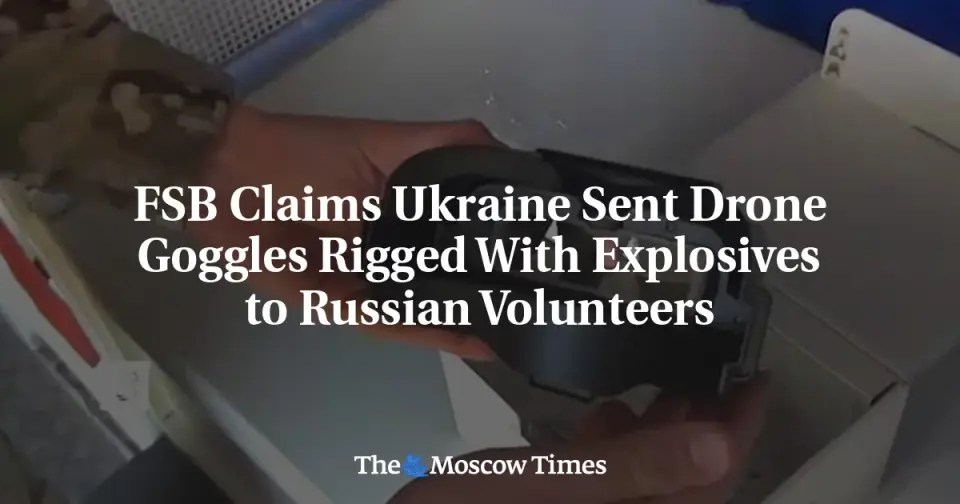
Russia’s FSB announced on November 2, 2026, that it intercepted a shipment of first-person view (FPV) drone goggles rigged with improvised explosive devices. The devices, allegedly sent via Russian Post to military units in the Volgograd region, were discovered after a serviceman reported suspicious donations. The FSB claims this is a repeat of a February 2025 operation by Ukrainian intelligence, using volunteer networks to deliver booby-trapped equipment. While Moscow accuses Ukrainian special services, independent verification of the plot’s origin remains absent, and the exact number of seized devices is undisclosed.
Key points
- FSB states that explosives were hidden inside the cooling fan compartments of FPV goggles, designed to detonate upon activation.
- The plot was uncovered when a soldier in Volgograd reported two suspicious pairs of goggles received from a volunteer, leading to broader seizures via Russian Post.
- Moscow alleges Ukrainian intelligence used anonymous Telegram accounts to contact volunteer organizations, mimicking a successful February 2025 scheme.
- The FSB opened a criminal case for attempted terrorism and illegal explosives trafficking but has not released the total number of seized items.
- Ukrainian authorities have not publicly responded to the allegations, and independent forensic verification of the devices' origin is currently unavailable.
Background
This incident follows a similar operation in February 2025, where Ukrainian intelligence allegedly targeted Russian drone operators with rigged goggles, a tactic reportedly inspired by Israeli 'Piger' devices used in Lebanon in 2024. Recent months have seen intensified drone warfare, with Ukraine claiming to have disabled 51% of Russian oil refining capacity and Russia launching massive aerial assaults. The current plot highlights growing security concerns regarding unofficial supply chains, as both sides rely on volunteer networks for critical equipment like FPV goggles, creating vulnerabilities for sabotage.
How outlets are covering it
The Moscow Times and Kyiv Post present the FSB’s account as a confirmed interception, with Kyiv Post noting the use of Chinese-made Skyzone Cobra X v4 goggles. News.Az and SadaNews emphasize the lack of independent verification, noting that Ukraine has not responded and that the allegations rest solely on Russian security claims. While all sources agree on the FSB’s announcement, they differ in tone: Russian and pro-Russian outlets frame it as a thwarted terrorist act, while international outlets highlight the uncertainty surrounding the origin and the potential impact on volunteer aid networks.
Why it matters
The incident underscores the escalating risks of unofficial military supply chains, where volunteer donations can be exploited for sabotage. It may lead to stricter screening of donated equipment, potentially slowing aid delivery to frontline units. The FSB’s warning about disguised explosives in everyday items signals a broader campaign to target Russian military personnel through civilian networks, reflecting the evolving nature of asymmetric warfare in the Russia-Ukraine conflict.
What to watch
The FSB is expected to continue its investigation, attempting to identify the individuals behind the anonymous Telegram accounts and trace the distribution of the rigged goggles. Russian military authorities may implement stricter procurement and inspection protocols for donated electronic equipment. Further developments will depend on whether any suspects are detained and if independent evidence emerges to confirm or refute the allegations of Ukrainian involvement.
- FSB Claims Ukraine Sent Drone Goggles Rigged With Explosives to Russian Volunteers The Moscow Times
- FSB Intercepted Booby-trapped FPV Goggles in Repeat of 2025 Attacks Kyiv Post
- How did Russia uncover an alleged plot to hide explosives inside military drone goggles? Latest news from Azerbaijan
- Ukrainian Version of the Piger: Explosive Glasses Target Russian Soldiers وكالة صدى نيوز
- Russian Security Foils Ukrainian Plot Using Explosive-Filled VR Goggles وردنا
Want the full story? Read the original reporting
Read on The Moscow Times