
Deloitte and Meritservus Falsified Over 1,000 Documents to Hide Abramovich's $10bn Fortune
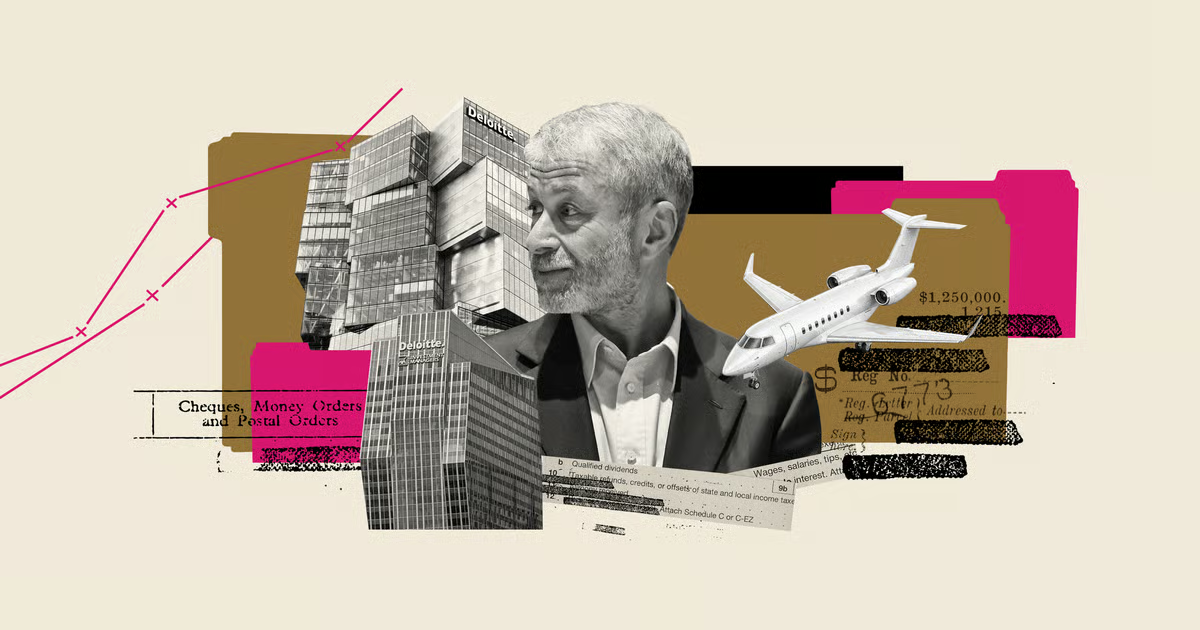
A joint investigation reveals that Deloitte Cyprus and its spin-off Meritservus falsified over 1,000 corporate documents between 1999 and 2013 to help Russian oligarch Roman Abramovich conceal assets and evade taxes. The scheme involved backdating records to hide billions in wealth from public accounts and avoid tax liabilities in Cyprus. While Abramovich denies involvement, experts describe the actions as blatant tax evasion and fraud.
Key points
- Deloitte Cyprus and Meritservus backdated over 1,000 corporate documents to create a false paper trail for Abramovich's offshore companies.
- The falsification allowed Abramovich to hide assets worth $672m, including superyachts and mansions, from public accounts in 2006.
- The scheme also helped evade millions in tax by falsely claiming that Kravin Investments held funds as a trustee rather than an owner.
- Experts described the actions as 'straightforward' and 'blatant' tax evasion, violating statutory duties of auditors.
- Abramovich and his aides deny wrongdoing, claiming they relied on professional advice, while Deloitte cited the age of the records as a reason for not commenting.
Background
This story builds on the 'Cyprus Confidential' investigation, which has been analyzing leaked documents since 2023. Earlier reports detailed how Abramovich built his wealth through the controversial acquisition of Sibneft oilfields in the 1990s. The current findings expand on previous revelations by detailing specific mechanisms of document falsification and the involvement of major professional firms in maintaining secrecy for over a decade.
How outlets are covering it
The Bureau of Investigative Journalism and BBC Panorama emphasize the scale of the fraud, highlighting that Deloitte staff knowingly signed off on misleading accounts. The Guardian focuses on the personal involvement of Abramovich's aide Eugene Tenenbaum, suggesting he may have given false evidence to UK courts. While all outlets agree on the falsification, they differ in emphasis: BBC and TBIJ focus on the tax evasion and asset hiding, while The Guardian highlights the potential legal implications of misleading a court. Abramovich's lawyers consistently argue that he was not involved in day-to-day operations and relied on professional advice, a stance rejected by legal experts cited in the reports.
Why it matters
The revelations raise serious questions about the integrity of major accounting firms and the ability of the super-rich to hide wealth from authorities. It highlights systemic issues in offshore jurisdictions like Cyprus and the potential for professional advisers to facilitate financial crimes, undermining trust in global financial transparency and tax compliance.
What to watch
Regulators and legal authorities may investigate the findings, potentially leading to prosecutions or further sanctions. The UK government may review tax evasion claims, while Cypriot authorities could seek to recover evaded taxes. Deloitte and Meritservus may face reputational damage and legal scrutiny, and Abramovich's legal battles in Jersey and the UK may be impacted by the new evidence.
- Deloitte helped Abramovich hide $10bn by faking documents TBIJ
- Documents falsified to evade tax on Abramovich's wealth, BBC finds BBC
- Roman Abramovich aides falsified paperwork to disguise assets and dodge tax, records suggest The Guardian
- Former Chelsea owner investigation raises more questions about Premier League governance Yahoo Sports
- Deloitte’s Cyprus Office Helped Abramovich Firms Relocate Billions in Assets in Apparent Bid to Sidestep Tax and Transparency Organized Crime and Corruption Reporting Project | OCCRP
Want the full story? Read the original reporting
Read on TBIJ