
Iran Escalates Hormuz Strikes to Counter Oil Rebound, Threatening Gulf Stability
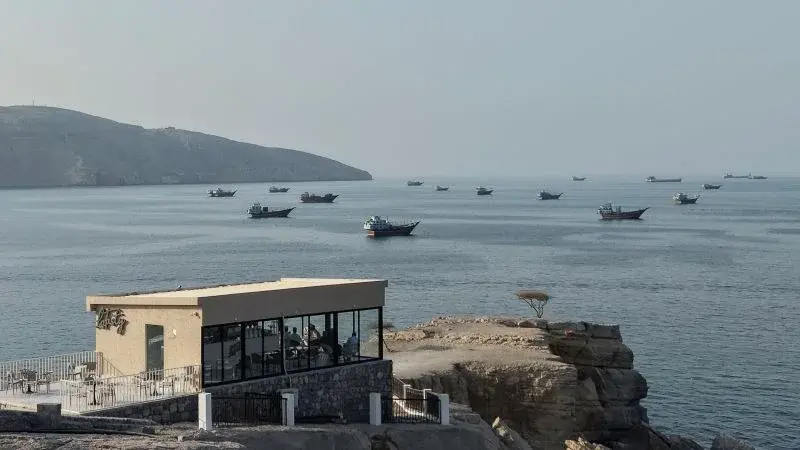
Iran is intensifying attacks on tankers in the Strait of Hormuz and Persian Gulf to regain leverage over oil flows, which had rebounded to near pre-war levels in September. Over a dozen strikes have occurred since late September, causing crude prices to stay above $100 per barrel. The US maintains a naval blockade on Iran, while Tehran claims the strait is a 'strategic red line.'
Key points
- Iran has launched over a dozen attacks on shipping since late September, including a supertanker explosion and projectile strikes, to disrupt oil exports.
- Crude flows through Hormuz dropped to 8.5 million barrels per day in early October, down from 13.1 million in late September, as attacks increased.
- The US military disabled a cargo vessel in the Gulf of Oman on October 11, enforcing its blockade on Iranian ports.
- Trump stated he has no plans to strike Iran before the November 3 midterm elections, prioritizing diplomatic discussions to prevent nuclear proliferation.
- Iranian officials claim that if they cannot export oil, no one else in the region can, using Hormuz as leverage against US pressure.
Background
This escalation follows a brief period in September where Middle East crude exports reached pre-war levels, aided by US military escorts and high shipping premiums. Recent archive reports noted that freight costs soared to $1.4 million per day for supertankers due to logistical bottlenecks and ship-to-ship transfers near Hormuz. The current surge in attacks threatens to reverse this temporary stability, with Brent crude remaining above $100 per barrel due to persistent risks and insurance premiums.
How outlets are covering it
CNN emphasizes Iran's strategic intent to regain control over Hormuz as a 'red line' and highlights Trump's decision to avoid military action before the midterms. CNBC focuses on the statistical surge in attacks, noting that 11 tankers were struck in the week ending October 4, the highest since the war began, and details the injuries to Indian sailors. Al Jazeera frames the escalation within the context of stalled diplomatic efforts, noting that Iran demands a return to a collapsed June memorandum of understanding and a finalized Iran-Oman deal for transit routes. TradeWinds highlights the economic impact, noting that VLCC owners are holding out for $300,000 per day in time-charter rates due to the stalemate and soaring spot rates.
Why it matters
The renewed attacks threaten to disrupt global oil supply, keeping prices elevated and impacting energy costs in the US ahead of the midterm elections. The US blockade and Iranian strikes create a volatile environment in the Gulf, with potential for further escalation if diplomatic talks fail. The situation also affects global shipping costs and insurance premiums, adding to the cost of oil and other goods.
What to watch
Diplomatic talks between the US and Iran are ongoing but stalled, with no breakthrough expected before the November 3 US midterm elections. Iran may continue to attack shipping to pressure the US, while the US maintains its naval blockade. The outcome of these talks could determine whether the strait remains open or if further military action occurs.
- After oil increasingly left the Gulf, Iran is trying to regain its stranglehold on shipping CNN
- Matter of time: VLCC owners hold out for $300,000 per day for one-year fixes TradeWinds News
- Tanker attacks in Strait of Hormuz surge to wartime high as Iran tries to choke off oil exports CNBC
- Hormuz attacks intensify as efforts to end war on Iran stall Al Jazeera
- Tanker damaged after being hit in Strait of Hormuz, marine agency says The Times of Israel
Want the full story? Read the original reporting
Read on CNN