
Dangote’s Lamu Refinery Sparks Local Cement Boom and Regional Diplomatic Debates
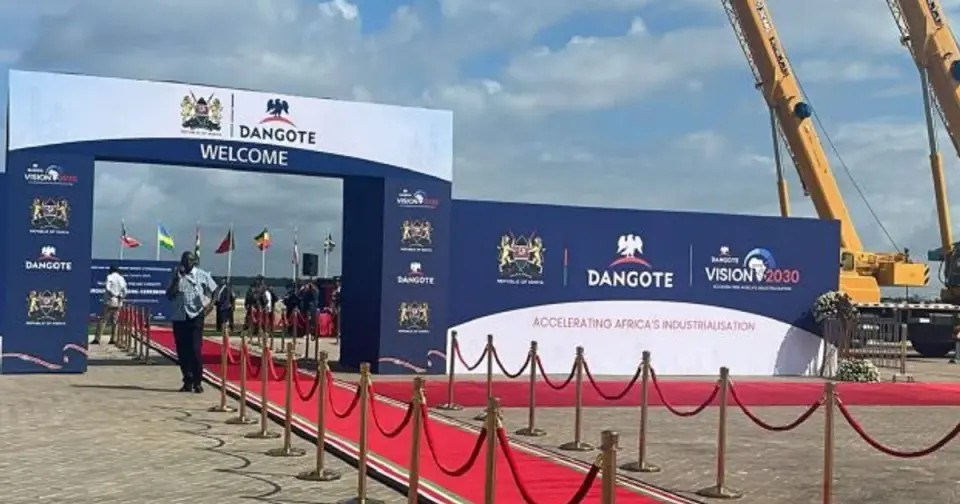
The groundbreaking of Dangote’s $16 billion refinery in Lamu, Kenya, has triggered immediate commercial opportunities for local suppliers and sparked debate over regional inclusion. Kenyan cement maker Bamburi is positioning itself to supply over one million tonnes of concrete for the 700,000-barrel-per-day facility, leveraging Kenya’s push for local procurement. Meanwhile, South Sudan, a major crude producer, faces criticism for its absence from early negotiations, raising concerns that it may be excluded from value-added benefits despite the project’s proximity to its oil reserves.
Key points
- Bamburi CEO Geoffrey Ndugwa stated that the refinery construction will consume approximately one million tonnes of cement and concrete, with deliveries planned from the company’s Mombasa plant.
- Bamburi is offering its DuraCem 42.5-grade cement and Ultra-series concrete products, which are designed for marine and large-scale construction, to meet the refinery’s specific needs.
- The project aligns with Kenyan government mandates requiring locally manufactured products for the Sh2 trillion infrastructure development, creating a market for domestic suppliers.
- Bamburi is concurrently expanding its own capacity via a $250 million contract with Sinoma CBMI Construction for a new clinkerisation plant in Kwale County, adding 1.6 million tonnes of annual capacity.
- Dangote Cement already operates significant facilities in Tanzania and Ethiopia but lacks a direct manufacturing presence in Kenya, leaving a gap that local rivals like Bamburi are filling.
Background
Dangote Group broke ground on the Lamu refinery on September 30, 2026, in a project valued at $16 billion and expected to be operational by 2030. This follows the company’s recent IPO, which raised funds to expand its Nigerian refinery to 1.4 million barrels per day by 2029. The Lamu facility is designed to reduce East Africa’s dependence on imported fuel and serve regional markets. Previous coverage noted that the launch faced legal challenges and environmental protests, with Dangote selecting Honeywell for a $300 million engineering contract to accelerate the timeline.
How outlets are covering it
Business Insider Africa emphasizes the commercial synergy between Dangote’s energy investment and local Kenyan manufacturers, highlighting how the refinery creates immediate demand for Bamburi’s products despite Dangote Cement’s existing presence in other East African nations. In contrast, Radio Tamazuj focuses on the geopolitical exclusion of South Sudan. An opinion piece in Radio Tamazuj argues that Juba’s absence from foundational negotiations is a strategic failure, warning that South Sudan risks becoming a captive consumer of refined products derived from its own crude. The outlet suggests that South Sudan should have negotiated a dedicated pipeline and equity stakes to secure economic benefits, contrasting the proactive engagement of other regional partners with Juba’s passive posture.
Why it matters
The Lamu refinery serves as a catalyst for industrialization in East Africa, demonstrating how mega-projects can stimulate local supply chains. For Kenya, it validates the strategy of prioritizing domestic procurement in large infrastructure deals. For South Sudan, the project highlights the risks of being excluded from regional value chains, potentially locking the country into a raw material exporter role while neighbors capture higher-margin industrial and refining profits. The outcome will influence future diplomatic and economic strategies for landlocked and resource-rich nations in the region.
What to watch
Bamburi is expected to finalize contracts for the cement supply as construction progresses, potentially coinciding with the completion of its new clinkerisation plant. The Dangote refinery is scheduled for completion in 2030, with interim milestones likely to trigger further procurement opportunities for local firms. South Sudan may attempt to re-engage in discussions regarding pipeline connections or equity stakes, though analysts note that late-stage negotiations offer limited leverage. The project’s success will also depend on resolving pending legal challenges and environmental concerns in Kenya.
- Dangote’s $16bn Kenya refinery creates 1million-tonne cement opportunity for local rival Business Insider Africa
- Nigeria's Dangote breaks ground on $16 billion East African oil refinery in Kenya Reuters
- Africa’s Richest Man Wants to Turn a Pristine Coastline Into an Oil Hub WSJ
- Dangote’s $16 Billion Kenya Refinery Faces New Legal Hurdle Bloomberg.com
- Opinion| Why South Sudan’s absence from the Lamu refinery project is a missed opportunity Radio Tamazuj
Want the full story? Read the original reporting
Read on Business Insider Africa