
Record Droughts Paralyze Europe’s Rivers, Triggering Energy Crises and Economic Losses
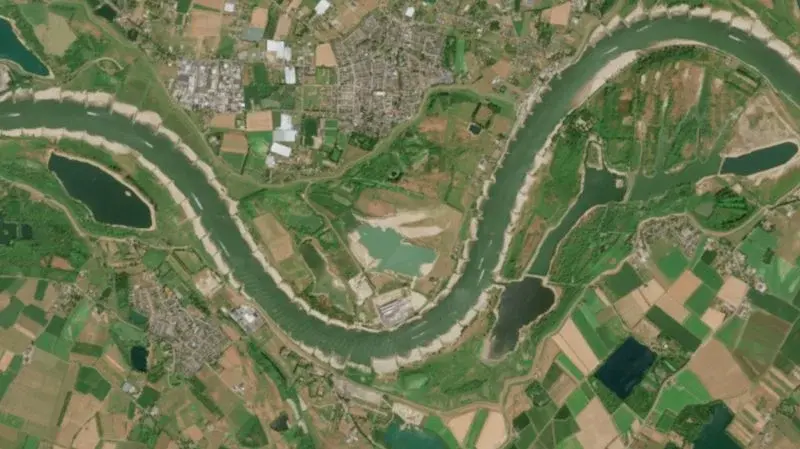
Europe’s major rivers, including the Rhine and Danube, have reached historic low levels due to extreme heat and lack of rain. This crisis is disrupting shipping, tourism, and energy production, forcing nuclear plants to reduce output and causing significant economic losses.
Key points
- The Rhine and Danube have hit record-low water levels, visible via satellite imagery, exposing sandbars and riverbanks.
- Hungary’s Paks nuclear plant, which supplies nearly half the country’s electricity, is operating at roughly 10% capacity due to insufficient cooling water.
- Romania deployed naval forces to detonate explosives in the Danube to redirect water to its Cernavodă nuclear plant, preventing a total shutdown.
- Shipping on the Rhine has been severely restricted, with cargo loads reduced by up to 80% to avoid grounding, disrupting supply chains.
- River cruises have been canceled or altered, forcing passengers to transfer to buses or other vessels, impacting the tourism sector.
- Scientists warn that such hydrological extremes will become more frequent as climate change intensifies, with potential economic losses reaching €126bn by 2029.
Background
Europe has faced recurring droughts in recent years, with 2018 and 2022 marking particularly severe events. The 2026 crisis follows a pattern of increasingly extreme weather, including record heat domes and wildfires in southern Europe, which exacerbate soil moisture deficits and reduce river flows.
How outlets are covering it
CNN and The Guardian emphasize the unprecedented nature of the drought, highlighting record-low water levels and the visible impact on landscapes. CNBC focuses on the economic consequences, noting potential GDP impacts in Germany and rising freight costs. Fox News highlights the disruption to tourism, particularly river cruises, with passengers facing itinerary changes and transfers. All sources agree on the severity of the situation but differ in their emphasis: CNN and The Guardian focus on the environmental and infrastructural crisis, while CNBC and Fox News highlight the economic and tourism impacts.
Why it matters
The drought is not just an environmental issue but a critical threat to Europe’s energy security, economic stability, and cultural heritage. The reliance on rivers for cooling nuclear plants and transporting goods means that low water levels can lead to power shortages, supply chain disruptions, and significant financial losses. As climate change intensifies, such events are likely to become more frequent, requiring long-term policy changes and rapid reductions in greenhouse gas emissions to mitigate future impacts.
What to watch
Authorities are implementing emergency measures, such as voluntary power reductions in Hungary and water diversion efforts in Romania. However, these are short-term solutions. Long-term strategies, including improved water management and climate policies, are needed to address the growing frequency and severity of such droughts. Monitoring of river levels and continued adaptation of infrastructure will be crucial in the coming months.
- Extreme weather is drying up Europe’s rivers in a crisis so dire it can be seen from space CNN
- Europe is blowing up riverbeds as an extreme drought wreaks havoc on its economy CNBC
- Cruises thrown into chaos as drought strands ships, leaves passengers scrambling Fox News
- Europe’s rivers are running dry, and the knock-on effects are disastrous | Yiannis Baboulias The Guardian
- Rhine falls to record low levels as drought strains Europe's rivers BBC
Want the full story? Read the original reporting
Read on CNN