
Europe’s Heat Crisis Demands District Cooling, Not Just US-Style AC
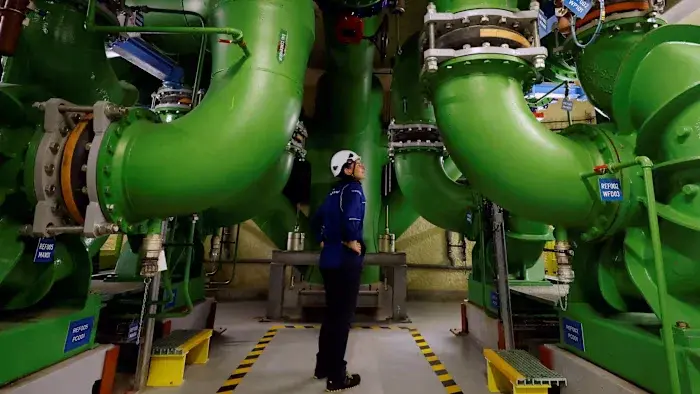
As record heatwaves drive demand for cooling, experts argue Europe should adopt district cooling networks using water sources rather than replicating the US model of individual air conditioning units, which exacerbates urban heat islands and strains grids.
Key points
- Carlo Ratti argues that traditional air conditioning merely moves heat outdoors, worsening street temperatures and grid strain, whereas district cooling systems like Paris’s 'Fraîcheur de Paris' use river water to cool entire city blocks efficiently.
- A 2023 EU survey found 26% of households could not keep homes cool, rising to 35% for the lowest-income group; inadequate cooling is linked to 46,400–60,000 excess deaths in Europe during the 2022 summer, with 89% of victims aged 65 or older.
- In Greece in July 2025, a heatwave caused electricity prices to spike 45% in one day and pushed demand toward 10,000 megawatts, triggering emergency grid alerts, highlighting the risks of unmanaged cooling demand.
- Passive measures such as reflective roofs, shading, and urban greening are recommended alongside active cooling, with research showing trees can significantly lower street-level temperatures.
- Europe’s building stock is largely inefficient, with 75% lacking summer thermal performance, and 31% of the population are renters who cannot easily retrofit homes, creating an equity gap in heat resilience.
Background
Previous coverage noted that Europe’s air conditioning penetration remains low (about 20% of households) compared to the US (90%), with resistance driven by cost and environmental concerns. Recent heatwaves have caused significant mortality, including 16,000 excess deaths in late June 2026, prompting debates on balancing immediate relief with long-term sustainable infrastructure.
How outlets are covering it
The Financial Times, via Carlo Ratti, emphasizes technological innovation and district cooling as a superior alternative to individual AC units, highlighting European engineering strengths. In contrast, Materia Rinnovabile focuses on social equity and 'summer energy poverty,' arguing that cooling is a social right and that passive measures and tariff protections are critical for vulnerable populations, particularly renters and the elderly, who are disproportionately affected by heat and cost barriers.
Why it matters
As Europe warms faster than the global average, the choice between individual air conditioning and district cooling systems will determine the continent’s ability to manage heat-related health crises, grid stability, and energy equity in a warming century.
What to watch
The EU’s Energy Performance of Buildings Directive requires Member States to submit National Building Renovation Plans by December 2025, which must include summer thermal performance. Policymakers are urged to implement regular data collection on heat vulnerability and protect low-income consumers through time-of-use pricing aligned with solar generation.
- Europe can do better than US-style air conditioning Financial Times
- The hidden link between Europe’s housing crisis and energy poverty Cyprus Mail
- Too Hot to Cope: Why Cooling Must Become Europe’s Next Social Right Materia Rinnovabile | Renewable Matter
Want the full story? Read the original reporting
Read on Financial Times