
Record El Niño Threatens Pacific Northwest Coasts and Global Fisheries
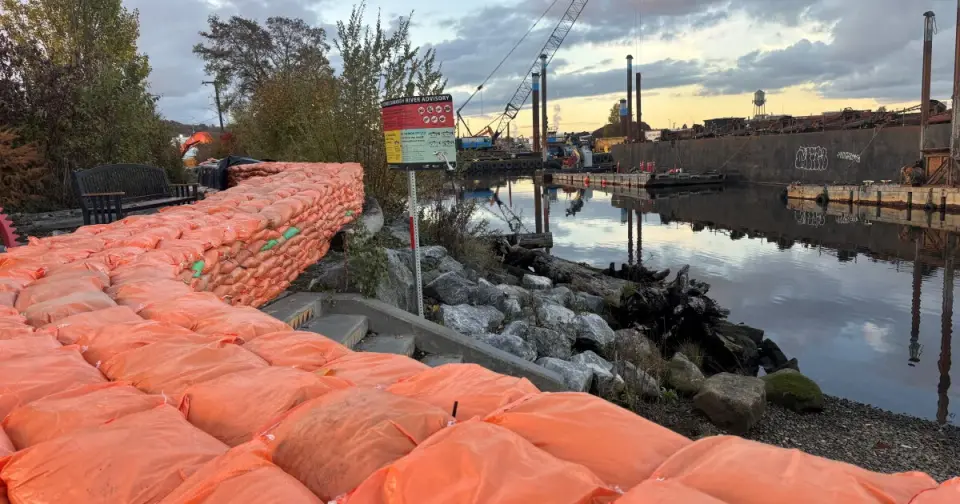
A potentially record-breaking El Niño is intensifying, threatening Washington State’s coastal communities with severe flooding during the upcoming king-tide season. While local governments scramble for infrastructure fixes, the phenomenon is also disrupting marine ecosystems globally, from Peru’s penguin colonies to Chile’s aquaculture sector.
Key points
- Sea surface temperatures in the tropical Pacific are warmer than any point in 150 years of record-keeping, according to Washington deputy state climatologist Karin Bumbaco.
- The Quinault Indian Nation in Taholah, Washington, is relocating residents from low-lying homes to higher ground this autumn, with plans for 18 additional upland homes in 2027.
- Stanwood, Washington, is completing emergency repairs to a dike protecting the city from high tides on Puget Sound.
- Hoquiam, Washington, faces the winter without a protective levee; construction is set to begin in spring 2027 after a federal judge ordered the restoration of disaster-prevention grants.
- Seattle’s South Park neighborhood will rely on temporary sandbag walls for a fourth year, with a permanent fix not expected until 2032.
- In Peru, the Humboldt penguin population at Punta San Juan has dropped from 3,000 to fewer than 500 due to avian flu and El Niño-driven food scarcity.
Background
This event follows a series of climate extremes in 2026, including record atmospheric water vapor levels in August and severe coastal flooding on the U.S. Atlantic Coast in September. Previous coverage noted that El Niño conditions have already driven droughts in Puerto Rico and are expected to make winters warmer and drier in parts of the Northeast. The current situation represents an escalation of these trends, with scientists warning that the 2026-2027 El Niño could act as a preview of permanent future climate conditions if carbon emissions are not reduced.
How outlets are covering it
KUOW emphasizes the immediate human impact in Washington State, highlighting specific community responses like the Quinault tribe’s relocation and the temporary nature of Seattle’s flood defenses. Science News focuses on the ecological crisis in Peru, detailing the collapse of the Humboldt penguin population at Punta San Juan due to the combination of avian flu and El Niño-induced food scarcity. Fish Farmer reports on the economic implications for Chile’s aquaculture industry, noting that Sernapesca is bracing for a challenging year. While KUOW and Science News highlight the destructive potential of the event for local ecosystems and communities, Fish Farmer frames the issue through the lens of industry preparedness and economic resilience.
Why it matters
The convergence of El Niño and long-term climate change creates a 'perfect storm' for coastal erosion and flooding, with sea levels potentially rising by nine inches temporarily. This event serves as a tangible preview of future climate conditions, with researchers estimating that extreme heat from this El Niño could kill 451,000 people globally. For coastal communities, the predictability of king tides offers a window for preparation, but the scale of the threat underscores the urgent need for long-term infrastructure adaptation and ecosystem protection.
What to watch
Washington State communities will face the peak of king-tide season in November, December, and January. The Quinault Indian Nation expects to move residents into new modular homes this autumn. Hoquiam’s levee construction is scheduled to begin in spring 2027. Scientists anticipate that the El Niño will continue to weaken trade winds and raise sea levels, potentially leading to record high water levels. In Peru, ecologists are monitoring the return of Humboldt penguins to Punta San Juan as food sources recover. Globally, the absence of Atlantic hurricanes in 2026 may continue, while Pacific hurricanes threaten Hawaii and Mexico.
- El Niño could put Washington’s coastal towns in hot water kuow.org
- Predicted El Niño could be a disaster for WA salmon, steelhead | Op-Ed The Seattle Times
- Peru’s penguins are on the brink. A super El Niño could make it worse. Science News
- Empty nets in Latin America as fish flee El Niño Phys.org
- Chile’s aquaculture sector bracing for El Niño impact Fish Farmer
Want the full story? Read the original reporting
Read on kuow.org