
Israeli military accused of deliberate wildfire campaign in southern Lebanon
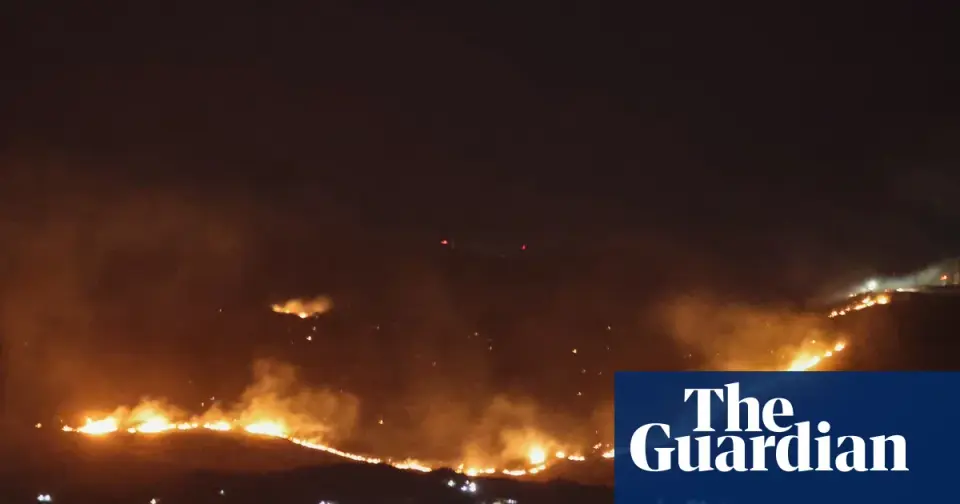
Firefighters and residents in southern Lebanon accuse the Israeli military of intentionally igniting wildfires using flares, white phosphorus, and drones since the June 17 ceasefire. These actions have burned 30-40% of frontline woodland, hindered firefighting efforts, and are described by environmental groups as a pattern of 'ecocide' aimed at degrading the ecosystem and displacing civilians.
Key points
- Israeli forces dropped flares and incendiary munitions in wooded areas near Khiam and Kfarchouba, sparking large blazes.
- Firefighters report that 30-40% of land near the frontline has been affected by fires, with drones striking nearby to prevent extinguishing efforts.
- Environmental groups label the attacks as 'ecocide,' targeting stone pine and oak woodlands that support biodiversity and migratory birds.
- The Israeli military did not respond to requests for comment regarding the specific wildfire incidents.
- Residents in villages like Yaroun report that bulldozing and burning are part of a strategy to make the land uninhabitable and erase cultural history.
Background
This escalation follows a series of tensions in southern Lebanon, including large-scale detonations near Beaufort Castle in August and ongoing disputes over Israeli troop withdrawals. Previous UN appeals in July urged Israel to halt demolitions and end its occupation, while Rome talks in July aimed to facilitate a phased withdrawal. The current wildfire campaign represents a new dimension of environmental destruction amid the fragile ceasefire framework.
How outlets are covering it
The Guardian and CNN highlight the deliberate nature of the environmental destruction, with the Guardian focusing on the tactical use of incendiaries and drones to hinder firefighting, while CNN emphasizes the broader impact on civilian property and displacement. The Financial Times, though paywalled, frames the situation as a campaign to make southern Lebanon 'unliveable,' aligning with the Guardian's narrative of systematic degradation. All sources agree on the scale of destruction but differ in emphasis: the Guardian focuses on the environmental and ecological impact, while CNN highlights the human cost and legal repercussions for American citizens.
Why it matters
The deliberate targeting of woodlands and agricultural land threatens long-term ecological stability and civilian livelihoods in southern Lebanon. It complicates the ceasefire by creating new humanitarian crises and raises questions about the adherence to international humanitarian law. The destruction of cultural and historical sites also erodes the social fabric of the region, potentially leading to permanent displacement and loss of heritage.
What to watch
Expect continued international pressure on Israel to halt environmental attacks and comply with ceasefire terms. Environmental groups may pursue legal or diplomatic avenues to address the 'ecocide.' Firefighting efforts will remain constrained by security risks, and the long-term ecological recovery of southern Lebanon will be a critical focus for regional and global stakeholders.
- Israel deliberately starting wildfires in southern Lebanon, firefighters say The Guardian
- How Israel is making southern Lebanon ‘unliveable’ Financial Times
- The Americans losing homes to Israel’s war in Lebanon CNN
- Israel builds roads, military posts in south Lebanon as Rome talks stall Arab News
- Israel Captured 230 Square Miles of Lebanon, Razed Villages and Built New Bases haaretz.com
Want the full story? Read the original reporting
Read on The Guardian