
Sudan’s Civil War Enters Drone Era: Mass Casualties and Energy Collapse
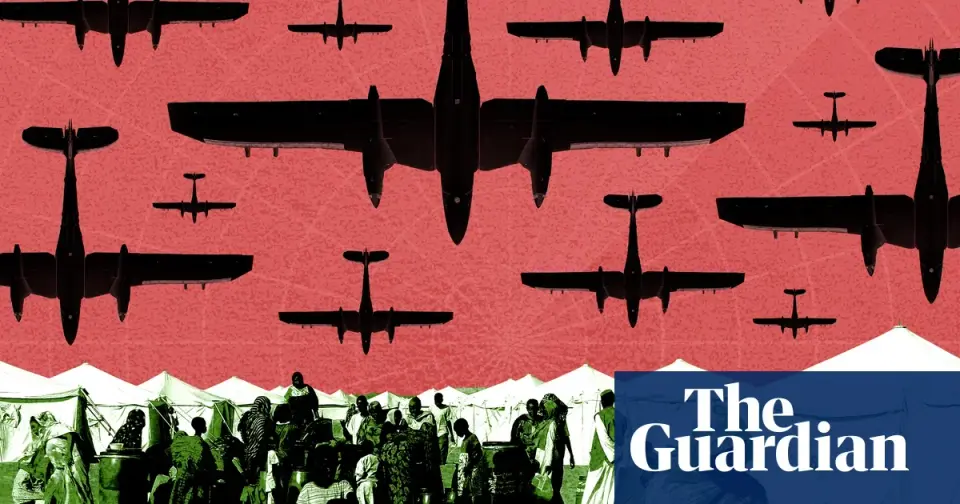
Drone strikes have become the primary cause of civilian death in Sudan’s ongoing civil war, killing over 300 people in early October alone. Recent 'double-tap' attacks on markets in Al-Dibab and Nyala killed hundreds, while sustained strikes on power infrastructure have plunged the country into a severe energy crisis. The UN warns that two-thirds of child casualties this year are drone-related, and the destruction of electricity grids is collapsing healthcare, water systems, and food production. International bodies have condemned the escalation, but attribution remains difficult due to the long-range nature of the weapons.
Key points
- In October 2026, drone strikes killed at least 306 people in the first three weeks, with a 'double-tap' attack in Al-Dibab killing 139 and a strike in Nyala killing 103.
- Between January and April 2026, drones accounted for over 80% of all conflict-related civilian deaths, targeting markets, residential areas, and critical infrastructure.
- Sudan’s electricity generation capacity has dropped from 4,400 megawatts pre-war to approximately 1,100 megawatts due to repeated strikes on power stations.
- The UN reports that two-thirds of child injuries and deaths in Sudan this year are caused by armed drones, which are now reaching areas previously considered safe.
- The African Union, UN, EU, Arab League, and IGAD issued a joint statement condemning the attacks and calling for an immediate halt to hostilities and external support.
Background
Sudan’s civil war began in April 2023 after a power struggle between the Sudanese Armed Forces (SAF) and the paramilitary Rapid Support Forces (RSF) erupted into violence. The conflict has displaced over 14 million people and killed an estimated 150,000 to 400,000. Earlier in 2026, drone strikes on the Abyei border region and the Merowe Dam highlighted the escalating threat to cross-border stability and national energy independence. The current escalation marks a shift from early-war tactics involving jets and artillery to a reliance on unmanned aerial vehicles.
How outlets are covering it
The Guardian and UN News emphasize the tactical evolution of the war, noting a shift from small 'suicide' drones to long-range precision-guided UAVs capable of striking targets 1,500 kilometers away. Al Jazeera focuses on the immediate humanitarian impact, detailing how power outages are forcing civilians to buy ice to preserve insulin and disrupting small businesses. While the Guardian and CIR identify 21 unique drone models from countries including China, Russia, and Iran, the UN notes that attribution is difficult due to the distance of the strikes. The Sudanese government has accused the UAE and Ethiopia of supplying drones to the RSF, a claim both nations deny. International bodies, including the Quintet, condemn the attacks as violations of international humanitarian law but lack the mechanism to stop the escalation.
Why it matters
The widespread use of drones in Sudan represents a potential new paradigm for global warfare, where cheap, long-range 'point-and-click' attacks can bypass traditional defenses and target civilian infrastructure with impunity. The collapse of Sudan’s energy grid demonstrates how modern warfare can dismantle a nation’s basic services, creating a lethal cycle of malnutrition and disease. If these tactics are not regulated, they could redefine conflict dynamics worldwide, making civilian protection increasingly difficult in future wars.
What to watch
The international community is calling for an immediate ceasefire and an end to external support for the warring parties, but no concrete enforcement mechanisms have been announced. Humanitarian agencies, including UNICEF, are struggling to fund their response, which is currently only one-third funded. As the agricultural season approaches, the continued destruction of power and fuel infrastructure threatens to exacerbate food insecurity and famine across Sudan. The lack of clear attribution for drone strikes may continue to hinder diplomatic resolutions and accountability efforts.
- Terror from the skies: drones are redefining warfare in Sudan, and massacring its civilians The Guardian
- Drone attacks on power stations plunge Sudan’s cities into darkness Al Jazeera
- Sudanese army shoots down drone near Ethiopian border as civilian toll rises Sudan Tribune
- Sudan war: First ‘suicide’ drone attacks, now long-range strikes are the norm UN News
- 5 international partners condemn escalating attacks in Sudan Anadolu Ajansı
Want the full story? Read the original reporting
Read on The Guardian