
Deadly Israeli Strikes in Southern Lebanon Defy June Ceasefire
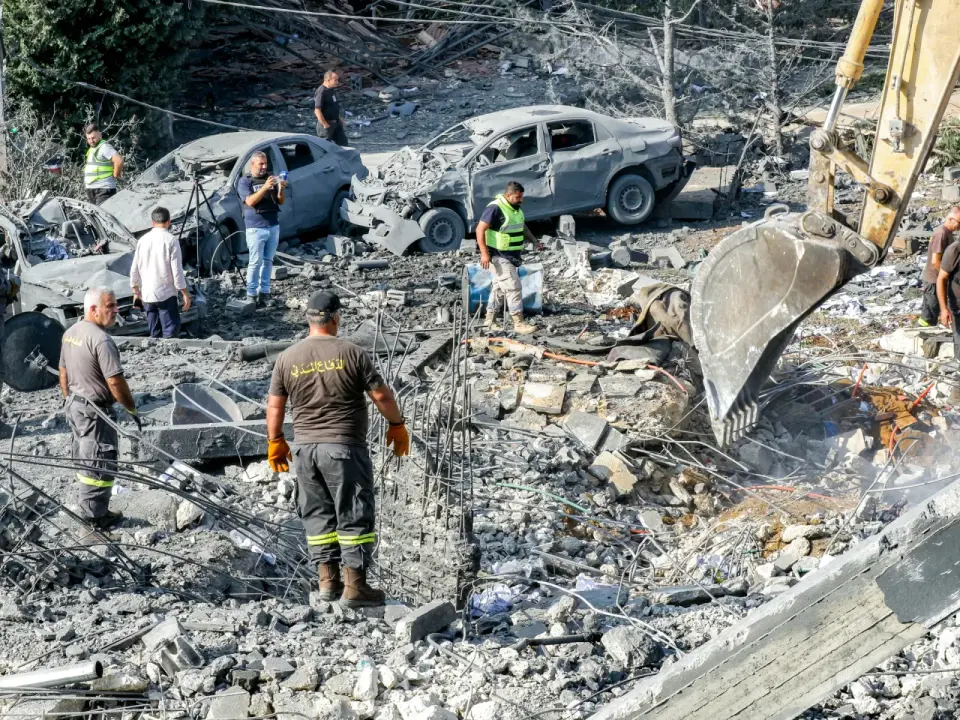
Israeli airstrikes killed at least 12 people in southern Lebanon on Monday, including children and medics, marking the deadliest wave of violence since a June ceasefire. The attacks, which targeted residential areas in Kfar Roummane and Deir al-Zahrani, have reignited fears that the US-brokered truce has collapsed.
Key points
- At least 12 people were killed in Israeli strikes on Monday, including two children and two medics, according to Lebanese health and state media.
- The attacks followed a three-day surge that killed 27 people, described as the deadliest period since the June ceasefire took effect.
- Israel issued evacuation orders for Deir al-Zahrani, claiming it targeted Hezbollah infrastructure near the Ali al-Taher ridge.
- Lebanese President Joseph Aoun condemned the strikes as a 'dangerous escalation' and called on the US to intervene.
- The US-brokered 'pilot zone' plan for Hezbollah disarmament and Israeli withdrawal remains stalled, with Israel refusing further withdrawals.
Background
This escalation follows a fragile peace process initiated in June 2026, which aimed to disarm Hezbollah and withdraw Israeli forces from southern Lebanon. Previous archive reports from August and September 2026 noted similar deadly strikes in the Nabatieh district, indicating a pattern of violence despite diplomatic efforts. The current conflict is part of a broader regional war involving Iran, the US, and Israel, which began in March 2026.
How outlets are covering it
Al Jazeera emphasizes the humanitarian impact, noting that civilians are returning to rebuild homes despite 'uncertainty and fear,' and describes the diplomatic process as 'stalled.' The New York Times frames the strikes as part of an intensifying military campaign, suggesting Israel may be seeking to entrench control over seized territory. CNBC highlights the broader Middle East context, linking the Lebanon clashes to the wider Iran-US conflict and noting that the June ceasefire has effectively collapsed. BBC focuses on the specific targeting of medics and children, citing Lebanese officials who view these strikes as violations of international humanitarian law. All outlets agree that the violence is testing the limits of the US-brokered agreement, but they differ on whether the primary driver is Israeli strategic expansion or retaliation for Hezbollah drone attacks.
Why it matters
The resurgence of lethal strikes in southern Lebanon signals a potential collapse of the US-brokered ceasefire, risking a wider regional conflict. The targeting of civilians and medical personnel raises serious international humanitarian law concerns. Furthermore, the failure of the 'pilot zone' disarmament plan suggests that the diplomatic framework for ending the conflict is failing, potentially leading to prolonged instability in the Middle East.
What to watch
Diplomatic efforts to revive the ceasefire are currently stalled. Israel has refused further withdrawals from its 'security zone,' while Hezbollah has rejected the disarmament provisions. Residents in southern Lebanon are likely to continue fleeing or remain in a state of high alert as the 'pilot zone' plan remains unimplemented. The US is expected to face pressure from Lebanon and the international community to enforce the ceasefire terms, though no immediate breakthrough is anticipated.
- Israeli air attacks kill at least 11 people in southern Lebanon Al Jazeera
- Israel-Hezbollah clashes kill 11 as Lebanon president calls for U.S. support to save truce CNBC
- Israeli strikes in southern Lebanese village kill nine BBC
- Israeli airstrikes hit southern Lebanon village, killing 9, and other Mideast news The Hill
- Israeli Strikes in Lebanon Kill 9 as Bombardment Intensifies The New York Times
Want the full story? Read the original reporting
Read on Al Jazeera