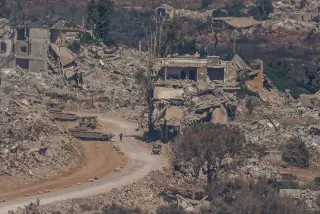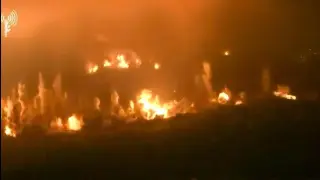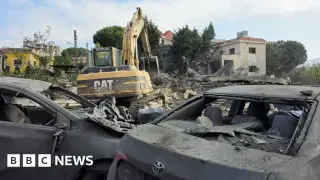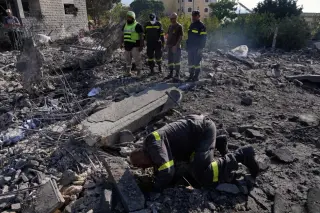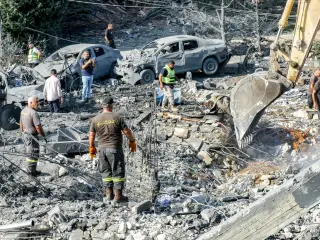
Israeli and Hezbollah clashed near Lebanon’s Litani River on May 26, 2026, as ceasefire negotiations remain tense, with civilians displaced by Israeli strikes in southern Lebanon seeking shelter in Beirut.
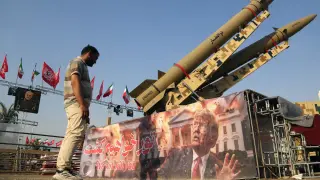
Iran's supreme leader says regional powers will no longer shield US bases and the US will have no safe haven in the region, as US strikes on Iran continue, Hezbollah attacks unfold in Israel, and diplomacy to end the war advances amid market volatility.
Israel carried out airstrikes on Hezbollah targets in Lebanon after a Lebanese drone attack on northern Israel killed a Israeli soldier, signaling a renewed cross-border escalation.
Israel widened its air campaign in southern Lebanon and pledged to intensify operations to defeat Hezbollah, which in turn carried out drone and artillery attacks into northern Israel. Despite a ceasefire that took effect in mid-April, fighting has continued since March, leaving casualties on both sides and heightening regional tensions amid stalled US-Iran talks; several Israeli ministers have urged expanding the campaign.
Prime Minister Benjamin Netanyahu said he ordered the IDF to 'hit the gas' against Hezbollah amid ongoing drone attacks from Lebanon, claiming the military has killed more than 600 Hezbollah militants in recent weeks and urging stronger action while praising northern residents’ resilience. The remarks came as IDF Chief of Staff Eyal Zamir floated striking Beirut in response to Hezbollah drones, with ministers Smotrich and Ben-Gvir calling for a tougher approach, including attacks in Lebanon. A US official said Hezbollah has ignored ultimatums and warned that the status quo is untenable.
Prime Minister Benjamin Netanyahu announced Israel would intensify its strikes on Hezbollah, and the IDF launched attacks across Lebanon—including the Bekaa Valley—after declaring the war on Hezbollah; despite a ceasefire extension, fighting continues with ten Israeli soldiers killed, more than 400 Lebanese killed, and over a million people displaced as Israel widens its campaign beyond the south.
Israeli strikes across southern and eastern Lebanon continued Sunday, killing 11 in Sir al-Gharbiyeh and hitting Nabatieh, Zawtar al-Sharqiyah, and a civil-defence facility as evacuation warnings were issued, despite a ceasefire in the Israel-Hezbollah war. Hezbollah remains engaged with Israel as regional tensions mount amid signs of a near US-Iran peace deal that could include Lebanon, while Lebanon and Israel press direct talks under US mediation and Israeli forces stay inside a declared border line.
Iran's top negotiator Mohammad Bagher Ghalibaf says Tehran's armed forces have rebuilt during the ceasefire and would deliver a more crushing response if the US resumes hostilities; Iran also argues any Strait of Hormuz mechanism should be agreed by regional states (Iran, Oman and neighbouring littoral states) rather than Washington, with talks mediated by Pakistan. Hezbollah reiterates Tehran's support for the group and wants Lebanon included in any ceasefire. Other items include signals of a potential deal from Rubio, Israeli strikes in Lebanon, and Gulf security developments.
Israeli air strikes across southern Lebanon killed at least 21 people, including children and a Syrian national, with a strike on a family home in Deir Qanoun al-Nahr and additional casualties in Nabatieh and Tyre. Israel says it targeted Hezbollah structures; fighting and cross-border exchanges continue as the US extends the ceasefire by 45 days.
Maj. (res.) Itamar Sapir, 27, from Eli, was killed in combat in southern Lebanon while serving as deputy commander of a company in Battalion 7008 after Hezbollah fired on IDF troops. He left behind a wife and a 1.5-year-old son. Israeli leaders Naftali Bennett and Benjamin Netanyahu mourned his death and praised his courage as Israel continues to defend its northern border.
Israel carried out airstrikes in southern Lebanon, killing at least six people including three paramedics at a Hezbollah-linked clinic and targeting Hezbollah infrastructure, hours after negotiators extended a ceasefire by 45 days. In Gaza, Israel said it killed Hamas military chief Haddad. The new strikes, along with ongoing talks and U.S. scrutiny of broader regional options, raise fears of a broader conflict even as a fragile truce persists.
Israel’s defense establishment says military action alone won’t eliminate Hezbollah’s drone and rocket threat; even occupying southern Lebanon wouldn’t eradicate the last explosives, and a political breakthrough coupled with prolonged deterrence is needed to change the northern threat, as the IDF continues strikes on Hezbollah targets and deploys defensive measures against drones.
Lebanon extends its 45-day ceasefire as Israel-Hezbollah clashes continue, while the broader US-Iran confrontation intensifies: Trump warns Iran of a “very bad time” if no peace deal is reached, and Europe is in talks with Tehran over Hormuz transit and fees. Iran signals openness to help from China, UAE rejects Iranian claims of involvement, the UK deploys anti-drone systems, and CENTCOM says it has redirected dozens of ships during its blockade ahead of planned June talks.
Staff-Sgt. Negev Dagan, 20, from Dekel, was killed during combat in southern Lebanon when Hezbollah mortars struck his unit near the Litani River. Medics failed to save him; he was posthumously promoted to Staff-Sergeant. Dagan’s death marks the sixth combat fatality since the ceasefire, and Prime Minister Netanyahu publicly eulogized him.
Israel and Lebanon agreed to a 45-day extension of their fragile ceasefire after talks in Washington, with the US planning renewed political negotiations and a security track at the Pentagon as fighting continues and casualties rise along the border.