
St. Petersburg car bomb kills Russian lieutenant colonel, investigators open probe
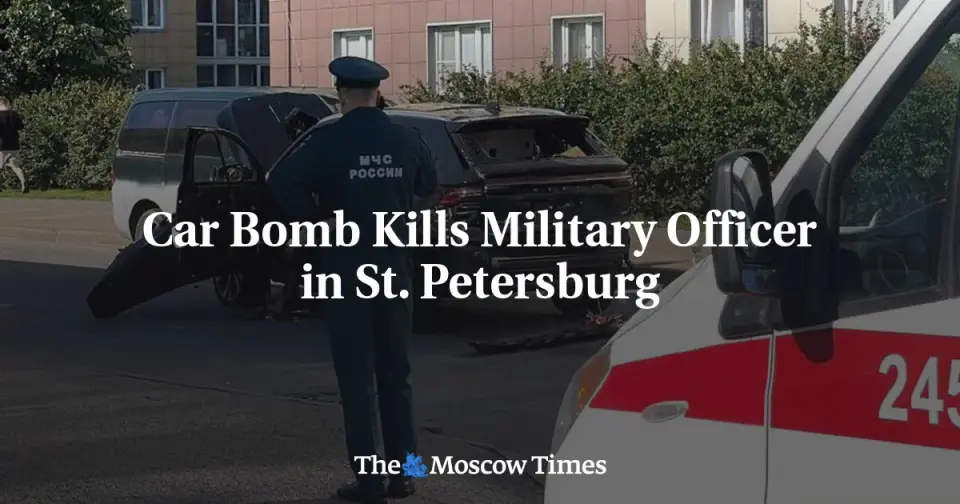
A Russian military lieutenant colonel was killed in a car explosion in St. Petersburg on Thursday, with his wife injured. Russian investigators initially described the incident as a 'vehicle fire' but confirmed the death and opened a criminal probe. Local media identified the victim as a 53-year-old officer, while Ukrainian sources claimed he served in the Air Force. Moscow has previously accused Kyiv of similar assassinations, though Ukraine has not commented on this specific attack.
Key points
- A car explosion occurred around 10 a.m. local time near a supermarket in the Shushary neighborhood of St. Petersburg, killing a Russian military officer and injuring his wife.
- Russian investigators initially labeled the incident a 'vehicle fire' rather than an explosion, but confirmed the death and launched a criminal probe.
- Local outlet Fontanka identified the victim as a 53-year-old lieutenant colonel, while Ukrainian outlet Ukrainska Pravda claimed he served in Russia's Air Force and Air and Missile Defence units.
- The blast is part of a series of targeted attacks on Russian military personnel since the start of the full-scale invasion, with Moscow accusing Ukraine of involvement in several cases.
- Ukrainian authorities did not immediately comment on the St. Petersburg incident, and no group has claimed responsibility for the attack.
Background
This incident follows a pattern of violence against Russian military figures, including a bomb attack in Sevastopol, Crimea, earlier this month that killed a former Ukrainian submarine commander who had defected to Russia. In that case, a woman was arrested in connection with the attack. The current St. Petersburg blast adds to a series of high-profile vehicle explosions and targeted assassinations aimed at military commanders and pro-war figures in Russian cities since February 2022.
How outlets are covering it
The Moscow Times and Al Jazeera both report the core facts but differ in details. The Moscow Times notes that investigators described the incident as a 'vehicle fire' and that a 24-year-old woman allegedly recruited by Ukrainian handlers was identified as the bomber, who fled to Moldova. Al Jazeera, citing Fontanka, identifies the victim as a 53-year-old lieutenant colonel and notes that Ukrainska Pravda claimed he served in the Air Force. Both outlets emphasize that Russian authorities initially downplayed the incident as a fire, while Ukrainian sources have claimed responsibility for some similar attacks but denied others. The Moscow Times also highlights that Russian authorities had not identified the victim 24 hours after the bombing, whereas Al Jazeera notes that no group has claimed responsibility for this specific blast.
Why it matters
The killing of a high-ranking Russian military officer in St. Petersburg underscores the ongoing pattern of targeted violence against Russian military figures linked to the war in Ukraine. It highlights the continued tensions between Moscow and Kyiv, with Russia accusing Ukraine of assassinations and Ukraine denying involvement in some cases. The incident also raises questions about the effectiveness of Russian security measures and the potential for further targeted attacks on military personnel.
What to watch
Russian investigators are expected to continue their criminal probe into the incident, potentially leading to further arrests or charges. Ukrainian authorities may issue a statement on the attack, either claiming responsibility or denying involvement. The incident may also prompt increased security measures for Russian military personnel in major cities. Additionally, the case may be linked to other similar attacks, with investigators potentially identifying more suspects or connections to Ukrainian handlers.
- Car Bomb Kills Military Officer in St. Petersburg The Moscow Times
- Russian serviceman dies in car blast in St. Petersburg dw.com
- Russian military serviceman killed in St Petersburg car blast Al Jazeera
- Russian serviceman killed in explosion in St. Petersburg, media reports Reuters
- Car bomb kills Russian air force lieutenant colonel The Times
Want the full story? Read the original reporting
Read on The Moscow Times