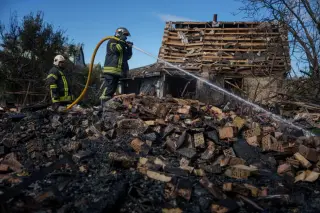
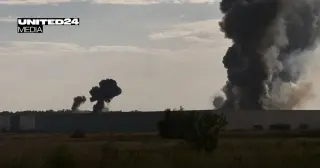
A Russian glide bomb struck two buses in Kramatorsk, killing at least 30 people and wounding 18. This is the deadliest single civilian attack of 2026. Authorities suspended public transport in the region as Ukraine urges allies for more air defense supplies.
President Volodymyr Zelensky warned on October 6 that intelligence indicates a massive Russian strike is imminent, urging citizens to shelter. Hours later, Ukraine’s Air Force confirmed three Tu-160 strategic bombers launched from Belaya airbase in Siberia, with potential cruise missile impacts expected after 3 a.m. local time. Zelensky emphasized that Ukraine’s ability to defend depends on continued Western support for air defense systems. This warning follows recent Russian attacks on Kharkiv and a broader escalation in strikes on civilian infrastructure.
Russian forces launched a massive overnight barrage of 130 drones and 48 missiles across Ukraine, killing at least 28 people and damaging energy infrastructure. The attack, which coincided with Vladimir Putin’s 74th birthday, targeted the capital Kyiv and the northern town of Pryluky, where a residential building collapsed. Ukrainian air defenses intercepted over 80% of the jet-powered drones but struggled against ballistic missiles. In response, Kyiv struck oil facilities in Russia and the Black Sea, while European leaders condemned the terror tactics.
Russian forces launched a large-scale overnight attack on Ukraine on October 7, 2026, using ballistic missiles, cruise missiles, and drones. The assault killed at least 21 people, including four children, and wounded approximately 60. President Volodymyr Zelensky warned of the strike hours in advance, citing intelligence on Russian preparations. The attack targeted energy infrastructure, military-industrial facilities, and residential areas across multiple regions, with Kyiv suffering significant damage. Ukraine's air defenses downed 161 targets but struggled to intercept all ballistic missiles and fast-moving drones. Zelensky confirmed retaliatory strikes on Russian oil facilities and a Black Sea vessel. The attack coincided with Russian President Vladimir Putin's 74th birthday and followed a week of intensified Russian strikes on Kyiv's bridges and infrastructure.
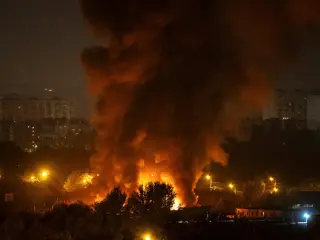
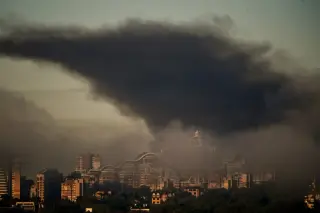
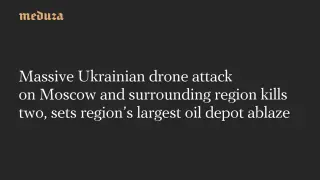
Ukraine launched its largest drone attack on Moscow in two years overnight on October 5-6, sending 650 drones toward the capital. Russian officials reported two deaths, nine injuries, and damage to 47 homes. A fire broke out at the Volodarskaya oil depot, the region’s largest fuel hub, though authorities did not officially confirm the strike. Air defenses intercepted the vast majority of the drones, ending a brief lull in large-scale strikes on the capital.
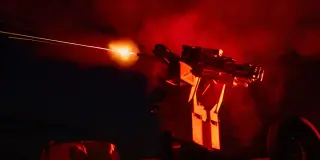
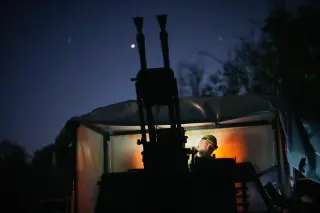
Ukraine has confirmed the first successful interceptions of Russia's fastest jet-powered attack drones using AI-enabled robotic gun turrets. Air Force spokesperson Yurii Inhat stated that these systems, which utilize machine vision and .50-caliber machine guns, have shot down Geran-5 drones. President Volodymyr Zelenskyy reported that over a dozen turrets are installed in Kyiv, with eight more planned for the region. This development aims to improve interception rates, which currently stand at 50-70% for jet-powered drones compared to over 85% for slower propeller models.
Russian attacks on Kyiv have escalated sharply, targeting bridges, schools, and energy infrastructure. While air defenses intercepted 131 of 157 drones in a recent overnight barrage, the capital faces a severe shortage of Patriot interceptors and new jet-powered drones. Officials warn that winter will bring a humanitarian crisis as Moscow aims to plunge the city into darkness.
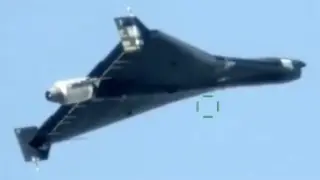
Russian jet-powered Shahed drones are outpacing Ukraine’s current air defenses, forcing the capital into a frontline role. While Ukrainian interceptors struggle with speed and altitude limitations, engineers are racing to scale up new turbojet-powered countermeasures. The shift highlights a critical technological gap that is reshaping the dynamics of the conflict and straining defense budgets.
Russia has rapidly scaled up production of jet-powered Geran-4 and Geran-5 drones, which fly faster and higher than previous propeller models, significantly reducing Ukraine's interception rates. These drones, assembled in Russia with Chinese and US components, now strike deep into Ukrainian cities, forcing Kyiv to develop new high-speed interceptors and jet engines to counter the escalating threat.
Russia is stockpiling advanced jet-powered drones to launch massive winter strikes on Ukraine’s energy grid, aiming to force capitulation before spring. Recent attacks have caused significant civilian casualties, but analysts note current barrage sizes are smaller than expected, indicating a deliberate accumulation strategy. Ukraine faces a critical defense gap, with interception rates for new drones dropping to 57%, while it tests new counter-drone technologies that are not yet ready for mass deployment.
Russian forces launched a massive daytime aerial assault on Ukraine on September 28, 2026, killing at least seven people and wounding over 50. The strikes focused on Kyiv's energy grid, the National Academy of Sciences, and civilian areas, with President Zelenskyy calling it a 'difficult attack' that stretches Ukraine's air defenses. Moscow claimed hits on power plants and data centers, while diplomatic efforts at the UN stalled amid rising tensions.
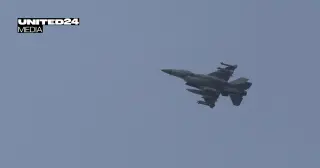
Ukraine has authorized long-range strikes on Russian logistics and energy sites, including a hit in the Tyumen region, while simultaneously securing F-16 support. This offensive push coincides with a critical defensive crisis: Russian jet-powered Geran-4 and Geran-5 drones are overwhelming Ukrainian interceptors, causing severe civilian damage in Kyiv and other cities. Kyiv is now developing new jet-powered interceptors to counter this technological shift.
Russian jet-powered drones struck Kyiv’s National Academy of Sciences and a medical center on September 28, killing at least two and injuring 24. These faster weapons bypass Ukraine’s existing electric interceptors, forcing Kyiv to rely on scarce, expensive missiles. While Ukraine has developed new turbojet interceptors, scaling production remains a critical financial and logistical challenge.
Russia’s new jet-powered drones are outpacing Ukraine’s existing defenses, forcing Kyiv to develop expensive new interceptors. While Ukraine has successfully shot down these faster targets, the high cost of defense and production is straining both nations' budgets. Putin claims Ukraine has no 'antidote' to these weapons, but Kyiv is actively testing new systems to close the gap.
Ukrainian President Volodymyr Zelenskyy reported on September 28 that Ukraine now intercepts 57% of Russian jet-powered drones, up from 55% in late September. While the overall drone interception rate stands at 70%, Zelenskyy called the jet-drone figure 'significantly lower than needed.' Ukrainian forces are actively testing new interceptor systems, including a turbojet delta-wing design, to close the gap. The Washington Post reported that recent strikes on Kyiv’s National Academy of Sciences and a medical center highlight the persistent threat, while Ukrinform confirmed that engineers have successfully tested countermeasures against Shahed drones.