
Ethiopian drones strike Eritrean troops in Tigray as regional tensions escalate
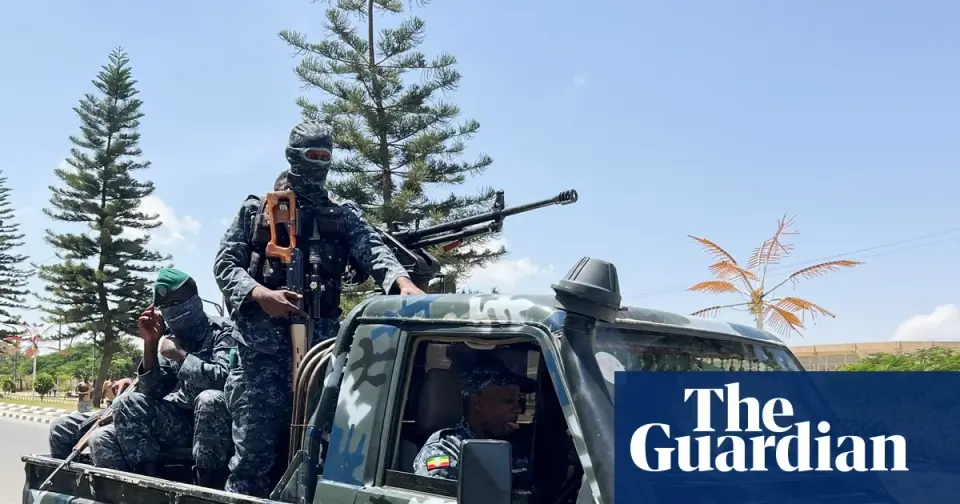
Ethiopian government forces launched drone attacks against Eritrean troops that crossed into the Tigray region, escalating a conflict that began two weeks ago. While Addis Ababa accuses Asmara of direct military intervention to support the Tigray People’s Liberation Front (TPLF), Eritrea denies the allegations, framing them as a pretext for Ethiopian aggression over Red Sea access. The violence has severed diplomatic ties between the two nations and raised fears of a wider regional war, particularly concerning China’s economic interests in the Horn of Africa.
Key points
- Eritrean military vehicles entered Tigray on Wednesday, reaching Adigrat, 40km south of the border, according to witnesses and the conflict monitoring group Acled.
- Ethiopian government drones targeted these Eritrean forces on Wednesday evening and Thursday morning, marking a direct cross-border military engagement.
- The TPLF and six other armed groups launched an offensive against the Ethiopian government on September 23, leading to the capture of the Tigray capital, Mekelle, by pro-government forces on October 4.
- Ethiopia and Eritrea severed diplomatic ties last week as tensions rose over Red Sea access and the Grand Ethiopian Renaissance Dam (GERD).
- China faces a diplomatic dilemma as it balances ties with both Ethiopia and Egypt, whose disputes over the Nile and Red Sea security threaten Beijing’s Belt and Road investments in the region.
Background
This escalation follows a brutal civil war between 2020 and 2022, which resulted in 300,000 to 800,000 civilian deaths and saw Eritrea fight alongside Ethiopia against the Tigray People’s Liberation Front (TPLF). Although relations improved after a 2018 rapprochement, they have deteriorated recently due to Prime Minister Abiy Ahmed’s stated desire for Red Sea access, specifically targeting the Eritrean port of Assab. The current conflict also involves a new rebel alliance formed in September, which includes the TPLF and other groups opposing the federal government.
How outlets are covering it
The Guardian and BBC report that Eritrean troops have physically entered Tigray, with the BBC citing resident accounts of convoys of 20 to 60 trucks moving toward Edaga Hamus. The Ethiopian government, via official Abraham Belay, accuses Eritrea of full-scale participation, stating that many Eritrean soldiers have been killed or captured. Conversely, Eritrean Information Minister Yemane Ghebremeskel denies the presence of troops, calling the allegations 'wild' and accusing Ethiopia of fabricating a war agenda to justify aggression for Red Sea access. Al-Monitor highlights the broader geopolitical impact, noting that China is caught between its partners, with Beijing recently aligning more closely with Egypt’s stance on the Nile and Red Sea security during President Xi Jinping’s September visit to Cairo.
Why it matters
The direct military engagement between Ethiopia and Eritrea risks triggering an all-out regional war, potentially involving Sudan and Somalia. The conflict threatens to disrupt China’s critical Belt and Road infrastructure, including the Addis Ababa-Djibouti railway, and could destabilize the Horn of Africa. Additionally, the dispute over Red Sea access and the GERD has international implications, affecting global shipping routes and water security for downstream Nile countries.
What to watch
Ethiopia has stated it is ready to defend its sovereignty and territorial integrity, while Eritrea continues to deny involvement in the Tigray conflict. The situation may escalate further if Ethiopia pursues its stated goals of Red Sea access or regime change in Eritrea. China is expected to adopt a wait-and-see approach, potentially pausing new investments until the region stabilizes, while the US and other international actors may be called upon to mediate.
- Ethiopia launches drone attack against Eritrean troops who crossed into Tigray The Guardian
- Ethiopia and Eritrea are on the brink of another conflict The Economist
- Ethiopia says it must defend itself against Eritrea's 'all-out invasion' Reuters
- Eritrean troops move deep into Ethiopia's Tigray region, residents tell BBC BBC
- Why renewed Egypt-Ethiopia tensions are a problem for China Al-Monitor
Want the full story? Read the original reporting
Read on The Guardian