
Francophonie Summit in Cambodia Faces Rift as DRC Threatens Exit Over Rwanda’s Leadership Bid
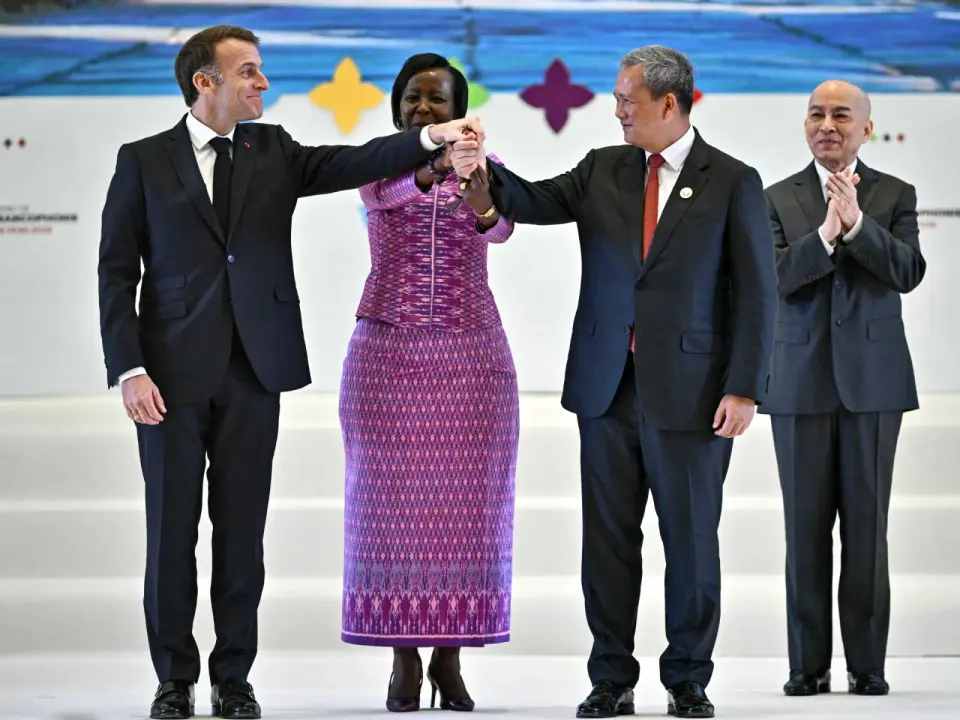
The 20th Francophonie Summit opened in Phnom Penh, Cambodia, on November 15, 2026, amid a sharp dispute between the Democratic Republic of the Congo (DRC) and Rwanda over the next secretary-general of the Organisation internationale de la Francophonie (OIF). Rwanda’s Louise Mushikiwabo seeks a third term, but the DRC, which accuses Rwanda of supporting the M23 rebel group, has threatened to withdraw from the organization if she is re-elected. The DRC withdrew its own candidate, Juliana Lumumba, and backed Romanian former Prime Minister Dacian Ciolos to foster consensus, while Rwanda maintains Mushikiwabo will remain in the race. French President Emmanuel Macron, who chairs the summit, is pushing for a consensus solution, noting that most members agree on the need for unity. The DRC’s potential exit would be a significant blow to the OIF, which already lost three members in 2025. The summit, themed 'Reinvest in Peace for Shared Prosperity and Lasting Stability,' also drew attention to human rights concerns in Cambodia, with UN Special Rapporteur Tom Andrews urging delegates to press for the release of detained activists.
Key points
- The 20th Francophonie Summit is taking place in Phnom Penh, Cambodia, from November 15 to 17, 2026, with about 20 leaders expected, including Canadian PM Mark Carney, Vietnamese President To Lam, Rwandan President Paul Kagame, and DRC President Felix Tshisekedi.
- The central dispute is over the OIF secretary-general position: Rwanda’s Louise Mushikiwabo, who has led the OIF since 2018, is seeking a third term, while the DRC has threatened to leave the organization if she is re-elected, citing Rwanda’s alleged support for the M23 rebel group in eastern DRC.
- The DRC withdrew its candidate, Juliana Lumumba, and backed Romanian former PM Dacian Ciolos to allow 'consensus around a unifying candidacy,' while Rwanda’s foreign minister confirmed Mushikiwabo would stay in the race. Mauritania’s Coumba Ba is also a candidate.
- French President Emmanuel Macron, who chaired the 2024 summit and is handing the chair to Cambodia, is pushing for consensus, with his office stating that most members agree on the need for unity. France is the largest contributor to the OIF’s 2026 budget of 71.7 million euros.
- The DRC, with a population of over 110 million, is the most populous country where French is an official language, and its exit would be a major blow to the OIF, which already lost Mali, Niger, and Burkina Faso in March 2025 over military coups.
- The summit’s slogan is 'Reinvest in Peace for Shared Prosperity and Lasting Stability,' and activists are using the event to press Cambodia, a de facto one-party state, on human rights issues, with UN Special Rapporteur Tom Andrews urging delegates to demand the release of detained activists.
Background
The DRC-Rwanda conflict over the M23 rebel group has escalated in recent months, with former DRC president Joseph Kabila launching a new politico-military coalition, the Front pour la Refondation de la Nation (FRN), allied with M23 in October 2026. This move threatened to collapse peace talks between Kinshasa and Kigali and signaled a major escalation in eastern Congo, where M23 has controlled key areas since January 2025. The current OIF dispute is part of this broader regional tension, with the DRC accusing Rwanda of backing M23, a claim Rwanda denies. The OIF has also faced internal challenges, losing three members in 2025 over military coups, making the DRC’s potential exit a significant threat to the organization’s stability.
How outlets are covering it
Al Jazeera and AFP/Reuters emphasize the DRC-Rwanda dispute over the OIF leadership as the central issue, highlighting the DRC’s threat to withdraw and the DRC’s withdrawal of its candidate in favor of a consensus candidate. Al Jazeera notes that the DRC’s exit would be a major blow to the OIF, given its large population and status as the most populous French-speaking country. The Associated Press, via Yahoo, focuses on the diplomatic aspects of the summit, highlighting Macron’s meeting with Cambodian King Norodom Sihamoni and the state luncheon, but does not delve into the DRC-Rwanda dispute. Both sources agree on the key facts, but Al Jazeera provides more detail on the political dynamics and the OIF’s internal challenges, while the AP focuses on the ceremonial and diplomatic aspects of the summit.
Why it matters
The DRC-Rwanda dispute over the OIF leadership could fracture the organization, which already faces challenges from member withdrawals and internal divisions. The DRC’s potential exit would be a significant blow to the OIF, given its large population and status as the most populous French-speaking country. The summit also highlights broader issues of human rights and governance in Cambodia, with activists and UN officials pressing for the release of detained activists. The outcome of the OIF leadership vote could have implications for regional stability in Africa, particularly in the DRC-Rwanda conflict, and for the OIF’s future as a cohesive organization of French-speaking nations.
What to watch
Leaders will vote on Monday to choose the next OIF secretary-general for a four-year term. The outcome will depend on whether a consensus can be reached around a candidate, or if the DRC-Rwanda dispute will lead to a split in the organization. Macron is expected to continue pushing for consensus, and the DRC’s potential exit could have significant implications for the OIF’s future. The summit will also continue to address human rights issues in Cambodia, with activists and UN officials pressing for the release of detained activists.
- Francophone summit opens in Cambodia amid Rwanda-DR Congo rift Al Jazeera
- Vive la Francophonie! The Economist
- French-speaking nations hold a summit in Cambodia as a conflict in Africa threatens a rift AP News
- French President Macron meets Cambodian leaders on sidelines of Francophonie summit Yahoo
- Macron urges unity at Francophonie summit in Cambodia as DR Congo threatens to quit DW.com
Want the full story? Read the original reporting
Read on Al Jazeera