
Hebron Crackdown Displaces 2,500 as Israel Faces Election
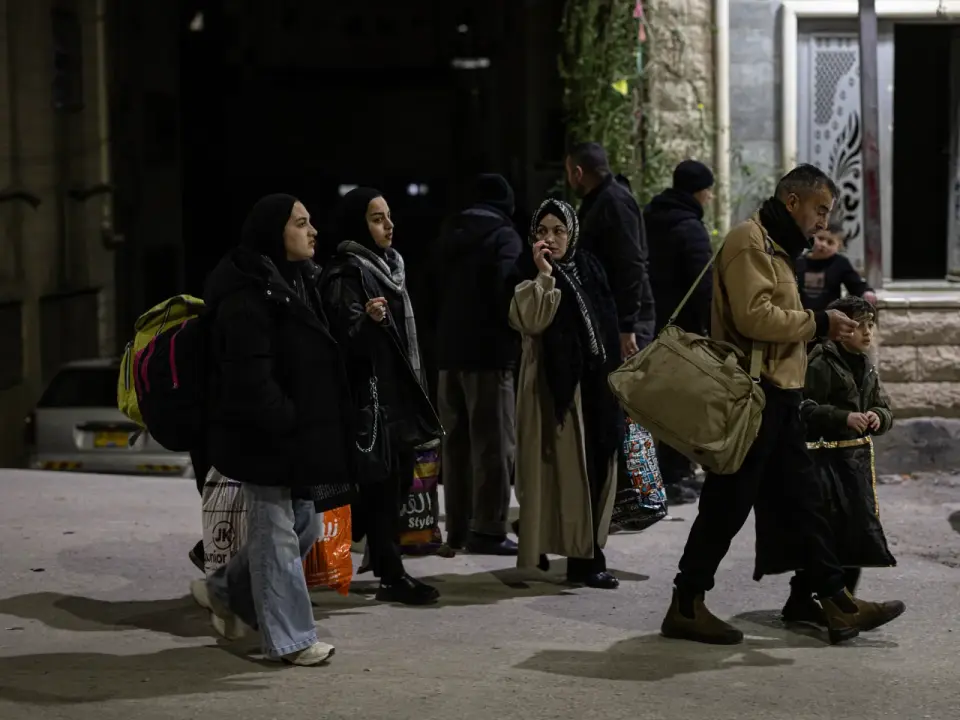
Israeli forces have launched a massive military operation in Hebron, displacing approximately 2,500 Palestinians and detaining at least 47 individuals following a Friday shooting that killed two soldiers. The crackdown, which includes mass demolitions and a full lockdown, occurs just days before Israel’s general election. Critics describe the actions as collective punishment and ethnic cleansing, while the Israeli military frames it as a security response to terrorism. The operation severely impacts the Palestinian economy, with Hebron accounting for 40% of industrial output, and exacerbates tensions in the Old City where settler control has expanded.
Key points
- The operation began after a shooting at a checkpoint in the Farsh al-Hawa area killed two Israeli soldiers and wounded three others, with the two suspects also killed.
- Israeli forces have imposed a lockdown on Hebron, detaining at least 47 Palestinians and forcing approximately 2,500 people out of the city, including nearly 500 families from the Ein Deir Bahha neighbourhood.
- The military conducted operations in over 400 locations across the West Bank, arresting 40 individuals claimed to be affiliated with Hamas or Palestinian Islamic Jihad.
- Crossings into Israel remain closed until after the Tuesday election, and Palestinian workers are barred from entering settlements for work on Sunday and Monday.
- Hebron, which contributes 40% of Palestinian industrial output and 30% of exports, faces severe economic disruption due to the restrictions and logistical challenges.
- Israeli Finance Minister Bezalel Smotrich seized planning powers over the Ibrahimi Mosque and the H2 zone, effectively abolishing parts of the 1997 Hebron Protocol.
Background
This latest escalation follows a pattern of increasing settler violence and military operations in the West Bank, including deadly attacks during the olive harvest in October 2026. Previous coverage highlighted the intensification of settler violence under military protection and the broader economic crisis in the West Bank due to Israeli restrictions. The current operation is part of a series of measures aimed at displacing the Palestinian population, with critics noting the systematic expansion of 'closed zones' around settlements in Hebron's Old City.
How outlets are covering it
Al Jazeera emphasizes the humanitarian impact, describing the operation as a 'complete eviction campaign' and 'ethnic cleansing,' highlighting the displacement of 2,500 people and the destruction of homes. It also focuses on the economic strangulation of Hebron, noting its significance to the Palestinian economy. Politico, in contrast, frames the operation as a security response to a gun attack that killed two soldiers, noting the timing just before the Israeli election and the military's claim that the arrests were of individuals affiliated with Hamas or Palestinian Islamic Jihad. While both sources agree on the scale of the operation and the lockdown, Al Jazeera focuses on the collective punishment and human rights violations, whereas Politico highlights the political context and the military's justification.
Why it matters
The Hebron crackdown underscores the escalating tensions in the West Bank and the potential for further displacement and economic disruption. The timing of the operation, just days before the Israeli election, suggests a strategic move to influence the political landscape. The seizure of planning powers over the Ibrahimi Mosque and the H2 zone by Smotrich marks a significant shift in the status quo, potentially entrenching the occupation and further restricting Palestinian rights. The economic impact on Hebron, a key pillar of the Palestinian economy, could have widespread repercussions for the West Bank's stability and livelihoods.
What to watch
The Israeli military has indicated that the operation will continue at the same intensity on Sunday, with crossings into Israel remaining closed until after the Tuesday election. The political outcome of the election may influence the continuation or escalation of such operations. International condemnation and potential diplomatic responses to the collective punishment and human rights violations will be key to monitor. The economic impact on Hebron and the broader West Bank will likely be assessed in the coming weeks, with potential long-term consequences for Palestinian businesses and livelihoods.
- Why Israel’s latest assault on Hebron is so significant for the West Bank Al Jazeera
- Israel Cracks Down in West Bank City After Deadly Attack The New York Times
- Days before Israeli election, military conducts massive West Bank operation Politico
- Around 1,200 Palestinians are displaced in Hebron as Israel begins military operation Reuters
- IDF pushing for Hebron attack to be classified as clash between soldiers, terrorists, not terror Yahoo
Want the full story? Read the original reporting
Read on Al Jazeera