
Houthi missile strike on Riyadh airport kills 12, wounds 300 in deadliest Saudi attack in a decade
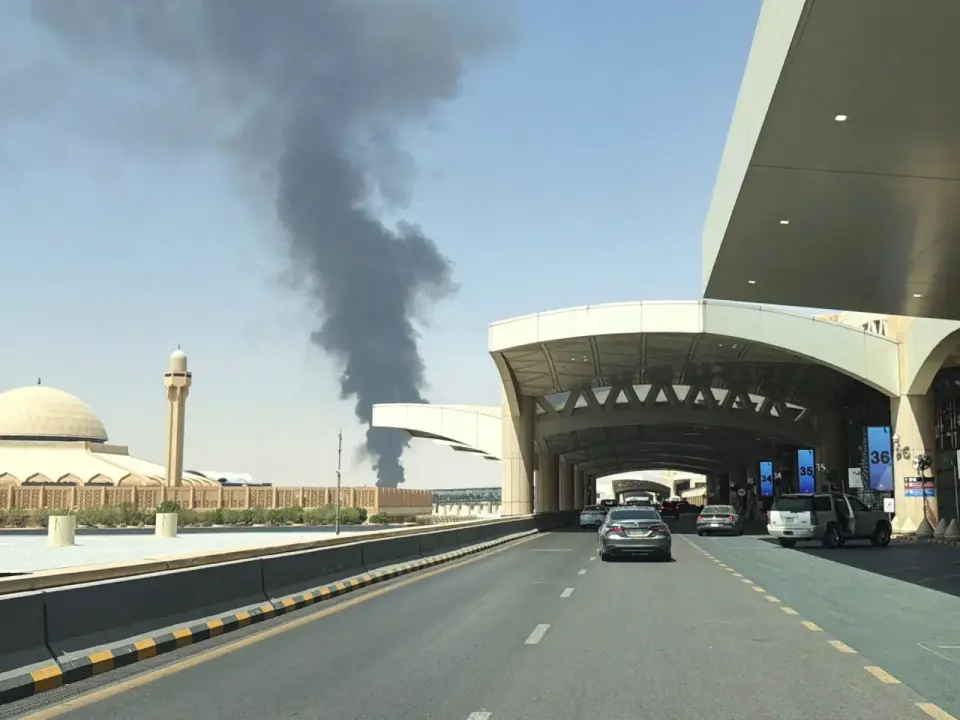
Yemen’s Houthis launched a ballistic missile at King Khalid International Airport in Riyadh on Saturday, killing at least 12 people and wounding 309. This is the third strike on the airport this week and the deadliest attack on Saudi soil in over a decade. The attack killed four Saudis, two Bangladeshis, and one each from the US, Egypt, Jordan, Syria, Palestine, and Sudan. All flights were diverted, and the airport remained closed until 9 p.m. local time. The Saudi-led coalition condemned the act as a war crime and vowed a decisive response. US President Donald Trump called the attack 'terrible' and said Washington was evaluating whether to join strikes against the Houthis. The incident follows a week of escalating Houthi attacks on Saudi infrastructure amid intensified fighting in Yemen.
Key points
- At least 12 people were killed and 309 wounded in a Houthi missile strike on King Khalid International Airport in Riyadh on Saturday, October 10, 2026.
- The dead included four Saudi citizens, two Bangladeshis, and one each from the United States, Egypt, Jordan, Syria, Palestine, and Sudan.
- The attack was the third strike on the airport this week; a previous Thursday strike killed three Saudis, including a pilot.
- All flights were diverted from Riyadh, and the airport remained closed until 9 p.m. local time, with 627 flights cancelled on Sunday.
- The Saudi-led coalition called the attack a 'full-fledged war crime' and vowed a decisive response in accordance with international humanitarian law.
- US President Donald Trump described the attack as 'terrible' and said he was evaluating whether the US should join the war against the Houthis.
Background
This escalation follows a week of Houthi attacks on Saudi airports, including strikes on Abha and King Khalid International Airport that killed three and wounded 36 on October 7-8. The Saudi-led coalition had retaliated by destroying 82 military targets in Yemen, while Yemeni government forces claimed to have neutralized 1,860 Houthi fighters in a counter-offensive. The conflict in Yemen had intensified last month after years of relative calm, with Saudi Arabia supporting its Yemeni partners in a campaign named 'Yemen’s Dawn.'
How outlets are covering it
Al Jazeera and CNN both report the core facts of the attack, including the death toll of 12 and 309 wounded, and the nationalities of the victims. However, CNN emphasizes the broader implications for Saudi defense capabilities and the potential for US involvement, citing Trump’s statement that Washington may join strikes against the Houthis. Al Jazeera focuses more on the Houthi perspective, noting their declaration of Saudi airspace as a military zone and their claim of having 'shut down' the airport. Both outlets highlight the condemnation from regional and international actors, but CNN provides more detail on the flight cancellations and the airport’s closure until 9 p.m. local time. Al Jazeera includes analysis from Nawaf Obaid, a senior research fellow at King’s College London, who described the attack as an anticipated response to Saudi air strikes and condemned it as targeting a civilian site. CNN, in contrast, frames the attack as exposing Saudi vulnerabilities and notes the UN Secretary-General’s condemnation of the strike as a violation of international law.
Why it matters
The attack marks a significant escalation in the Saudi-Yemeni conflict, with the Houthis targeting a major civilian infrastructure in the Saudi capital for the first time in over a decade. It raises concerns about regional security, as the Houthis have declared Saudi airspace a military zone, potentially disrupting air travel and trade. The incident also highlights the risk of wider regional involvement, with the US evaluating whether to join strikes against the Houthis. The attack underscores the fragility of Saudi defense capabilities and the potential for further escalation in the Yemen conflict, which has been intensifying since last month. It also raises questions about the humanitarian impact of the conflict, as the Houthis have targeted civilian infrastructure, and the Saudi-led coalition has vowed a decisive response, potentially leading to further strikes in Yemen.
What to watch
The Saudi-led coalition is expected to carry out a 'decisive' response to the attack, potentially including strikes on Houthi targets in Yemen. The US is evaluating whether to join the war against the Houthis, with President Trump planning to speak with Saudi Crown Prince Mohammed bin Salman. The airport is expected to remain closed until 9 p.m. local time, with 627 flights cancelled on Sunday. The Houthis have declared Saudi airspace a zone of military operations, warning airliners to avoid it except over Mecca and Medina. The UN Secretary-General and other international actors have condemned the attack as a violation of international law, and the Saudi-led coalition has vowed to respond in accordance with international humanitarian law. The situation is likely to escalate further, with the potential for wider regional involvement and increased humanitarian impact.
- Attack on Riyadh airport kills 12, injures over 300, Saudi Arabia says Al Jazeera
- Saudi Arabia’s Riyadh Airport Attacked Again, After Days of Houthi Strikes The New York Times
- Iran war live: 12 killed in Riyadh, US weighs joining fight against Houthis Al Jazeera
- Attack on Saudi airport leaves at least 12 dead, 309 wounded CNN
- Houthis Bombard Saudi Air Links in Effort to Cut Kingdom Off From Rest of World WSJ
Want the full story? Read the original reporting
Read on Al Jazeera