
Local Official Beaten to Death in DR Congo After Defending Ebola Response
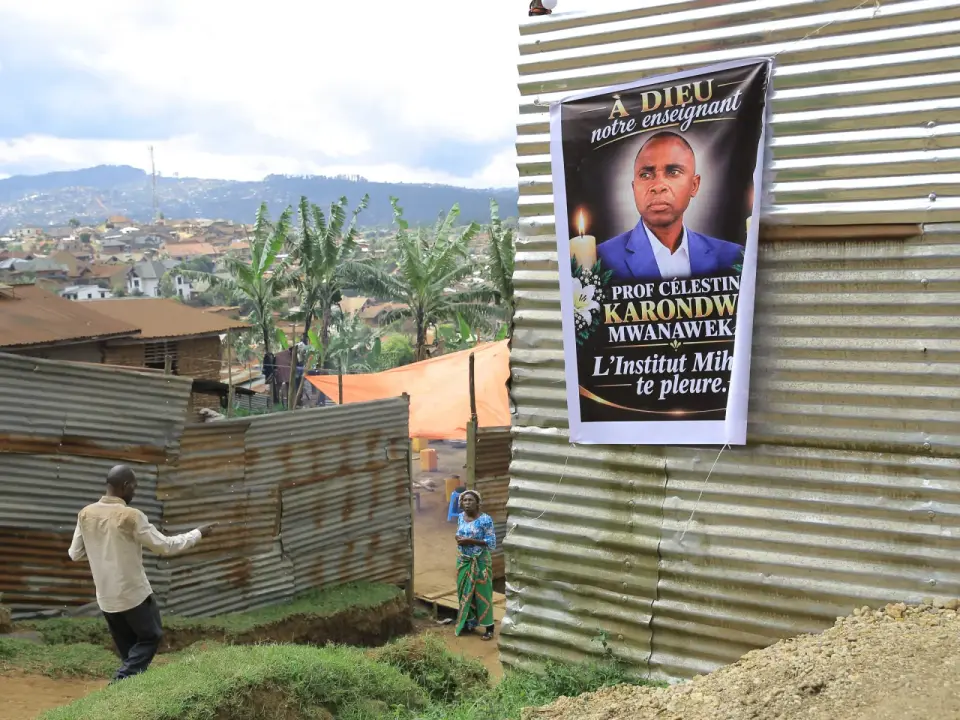
Marie-Celestin Karondwa, a local official in the Democratic Republic of Congo, was beaten to death and his home burned in Butembo after he publicly defended the government's Ebola response on the radio. His party, the Union for Democracy and Social Progress, described him as an innocent victim of his political stance. The killing occurred amid a severe Ebola outbreak that has surpassed 8,000 cases and nearly 4,000 deaths, with widespread public distrust and resistance to health measures in rebel-held areas.
Key points
- Marie-Celestin Karondwa was attacked at his home in Butembo, North Kivu, on Sunday and died of his injuries at a local hospital.
- His granddaughter, Sagesse Kavira, stated that attackers beat him and then set his house on fire.
- The Union for Democracy and Social Progress (UDSP), which leads the DRC government, stated Karondwa was killed for defending the party's position on the Ebola virus and its threat to the population.
- The funeral for Karondwa was held in Butembo on Wednesday, September 30, 2026.
- The current Ebola outbreak, caused by the Bundibugyo strain, has recorded over 8,000 cases and nearly 4,000 deaths.
- The World Health Organization (WHO) reports Ebola is present in seven provinces, with Ituri being the most affected.
Background
The Democratic Republic of Congo is experiencing its 17th and deadliest Ebola outbreak, which began in May 2026. The outbreak, caused by the Bundibugyo strain, has seen a rapid increase in cases and deaths, with the WHO describing the situation in the east as a 'catastrophic collision of disease and conflict.' Previous efforts included the distribution of 70,000 Ervebo vaccine doses, with 50,000 allocated for frontline health workers and 20,000 for a clinical trial, as Ervebo is not yet proven effective against the Bundibugyo strain. By September 2026, the outbreak had surpassed 7,200 confirmed cases and 3,475 deaths, with officials noting that infections had slowed from approximately 120 per day to 80 per day, though they cautioned against premature optimism. The current killing of a government official highlights the deep-seated public distrust and resistance to health measures, particularly in areas affected by decades of conflict and human rights abuses.
Why it matters
The killing of a local official who defended the government's Ebola response underscores the severe public distrust and political tensions surrounding the outbreak in the DR Congo. This incident, along with the burning of his home, exemplifies the violent resistance to health measures and the government's response, which is complicating efforts to control the disease. The lack of a licensed vaccine for the Bundibugyo strain and the widespread skepticism about Ebola, often dismissed as a hoax, further exacerbate the crisis, particularly in rebel-held areas where decades of conflict have eroded trust in state authorities. This situation highlights the critical need for effective communication, community engagement, and robust public health strategies to overcome resistance and control the outbreak.
What to watch
The WHO and other international organizations will likely continue to support the DRC's Ebola response, including the testing of potential vaccine candidates for the Bundibugyo strain. Efforts to combat public distrust and resistance to health measures will be crucial, particularly in rebel-held areas. The DRC government may face increased pressure to address the root causes of public skepticism and to ensure the safety of health workers and officials involved in the response. Ongoing surveillance and contact tracing will remain essential to monitor the spread of the virus and to implement effective containment measures.
Want the full story? Read the original reporting
Read on Al Jazeera