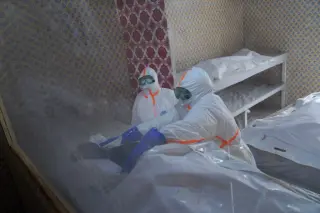
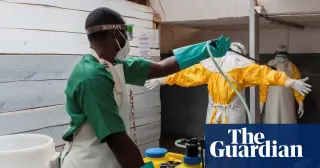
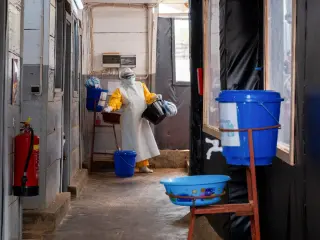
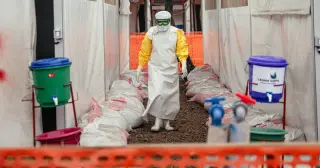
The Ebola outbreak in the Democratic Republic of Congo has expanded to new hot spots, with North Kivu reporting a 58% fatality rate. The virus has spread to half of the country's 34 health zones, and Kenya has confirmed its first case and death, believed to be imported from the DRC.
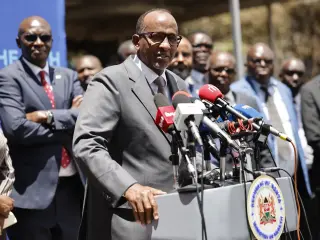
Kenya has confirmed its first Ebola case, a Kenyan national who died in Nairobi after traveling from the Democratic Republic of the Congo (DRC) via Uganda. The patient, who had lived in the DRC for seven years, tested positive for the rare Bundibugyo strain. Health authorities are quarantining 28 contacts and tracing 27 others from the same flight. The DRC outbreak, now the deadliest in its history, has killed over 4,000 people and infected more than 8,300.
Kenya has confirmed its first Ebola case, marking the fourth country affected by the Democratic Republic of Congo (DRC) outbreak that began in May. A Kenyan national who lived in the DRC for seven years traveled via Uganda to Nairobi, where he died on Monday. Health authorities are tracing 51 contacts, including 23 passengers from the same flight, while the DRC faces its deadliest outbreak on record with over 8,400 cases and 4,000 deaths. The rare Bundibugyo strain lacks an approved vaccine, complicating containment efforts in conflict-affected regions.
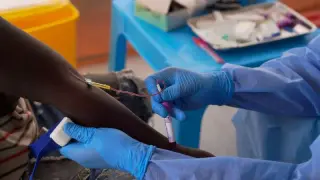
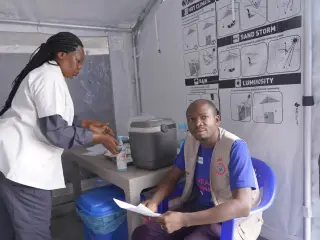
A clinical trial in DR Congo is testing an experimental antiviral pill to prevent Ebola after exposure, as the country’s deadliest outbreak on record continues to spread across seven provinces with no approved vaccine for the specific virus strain.
A staff member of Doctors Without Borders (MSF) testing positive for Ebola in the Democratic Republic of Congo has been evacuated to a hospital in the Netherlands. The individual was working on the response to the ongoing Bundibugyo virus outbreak, which has now recorded over 8,200 cases and nearly 4,000 deaths. This latest infection highlights the severe risks faced by frontline health workers in a conflict-affected region where the epidemic is outpacing historical outbreaks.
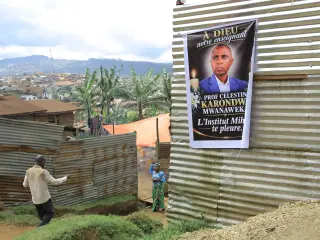
Marie-Celestin Karondwa, a local official in the Democratic Republic of Congo, was beaten to death and his home burned in Butembo after he publicly defended the government's Ebola response on the radio. His party, the Union for Democracy and Social Progress, described him as an innocent victim of his political stance. The killing occurred amid a severe Ebola outbreak that has surpassed 8,000 cases and nearly 4,000 deaths, with widespread public distrust and resistance to health measures in rebel-held areas.
Marie-Celestin Karondwa, a senior official of the ruling UDPS party in Butembo, was beaten to death on Sunday after appearing on a radio program to promote Ebola prevention measures. The attack, which included the burning of his home, is part of a broader wave of violence against health workers and facilities in the DRC. The current Bundibugyo outbreak, which has no approved vaccine, has infected over 8,000 people and killed nearly 4,000, making it the deadliest in the country's history.
The World Health Organization confirmed that the Bundibugyo strain of Ebola has spread to two new health zones in the Democratic Republic of Congo, bringing the total affected areas to 63 across seven provinces. As of September 23, the country reported 7,890 confirmed cases and 3,799 deaths, resulting in a case-fatality rate of nearly 48 percent. The outbreak, which began in May, remains centered in Ituri province but is expanding into North Kivu and border regions. WHO Director-General Tedros Adhanom Ghebreyesus highlighted that armed conflict and displacement are hindering contact tracing and access to affected communities. While no approved vaccine exists for this specific strain, clinical trials are underway, and the Ervebo vaccine, designed for the Zaire strain, is being used under compassionate use programs for frontline workers.
The Democratic Republic of Congo faces its largest Ebola outbreak on record, with 7,773 confirmed cases and 3,759 deaths. While cases dropped in Ituri, they surged 73% in North Kivu. A critical shortage of health workers, unpaid wages, and high child mortality rates are hindering containment efforts.
DR Congo has begun vaccinating 50,000 frontline health workers with the Ervebo vaccine amid the Ebola outbreak in Ituri (and rising cases in North Kivu). About 20,000 recipients will be monitored for a year to assess effectiveness against the Bundibugyo strain, while trials for a licensed vaccine continue. The outbreak has killed at least 3,639 and infected around 7,541 since May, with no licensed vaccine specifically for Bundibugyo; WHO and MSF are backing the rollout under a compassionate-use program.
Congolese authorities say the Bundibugyo Ebola outbreak has peaked with infections slowing (about 120 per day previously to ~80 now) and several health zones removed from active transmission. The outbreak is centered in Ituri, with Sud-Ubangi the latest region affected, and has surpassed 7,200 confirmed cases and 3,475 deaths as of Sept. 14. Vaccination with Ervebo has begun, but officials caution against triumphalism and stress the need for continued preventive measures, robust surveillance, and contact tracing, amid concerns over data transparency and ongoing response challenges.
DRC reports 7,022 Ebola cases from the Bundibugyo strain, with 3,398 deaths and 837 in isolation or treatment; the outbreak began in Ituri and has spread to a seventh province (South-Ubangi), marking the country’s 17th Ebola epidemic with no approved vaccine or treatment available.
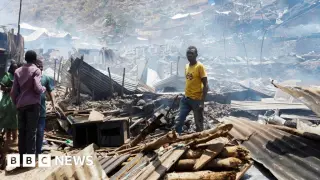
At least 24 people, including more than 20 children, died when a fire engulfed two schools in rebel-held Bukavu, in eastern DR Congo, causing a stampede as residents fled. Survivors were taken to hospitals, hundreds of houses were destroyed, and the cause of the blaze is under investigation, with authorities warning the toll could rise.
DR Congo and Rwanda-backed M23 rebels agreed a roadmap to resume peace talks and establish a ceasefire monitoring mechanism under the US-brokered Doha Framework signed in 2025, with a first verification mission planned in Minembwe; however, disputes linger over sanctions, detainees, and the pace of political reforms.
DR Congo will test the Ervebo Ebola vaccine against the Bundibugyo strain in a clinical trial as the outbreak expands rapidly, with about 2,500 deaths reported. The WHO says infections are growing exponentially across the north and east. The plan allocates 20,000 doses for the trial and 50,000 for frontline health workers, in a bid to broaden protection beyond the Zaïre strain; the response is complicated by conflict, misdiagnosis early on, burial practices, and new movement restrictions imposed by the M23 rebel group to limit spread.