
Rome Reopens Restored Ulpia Library, Ancient Repository of Greek Scrolls
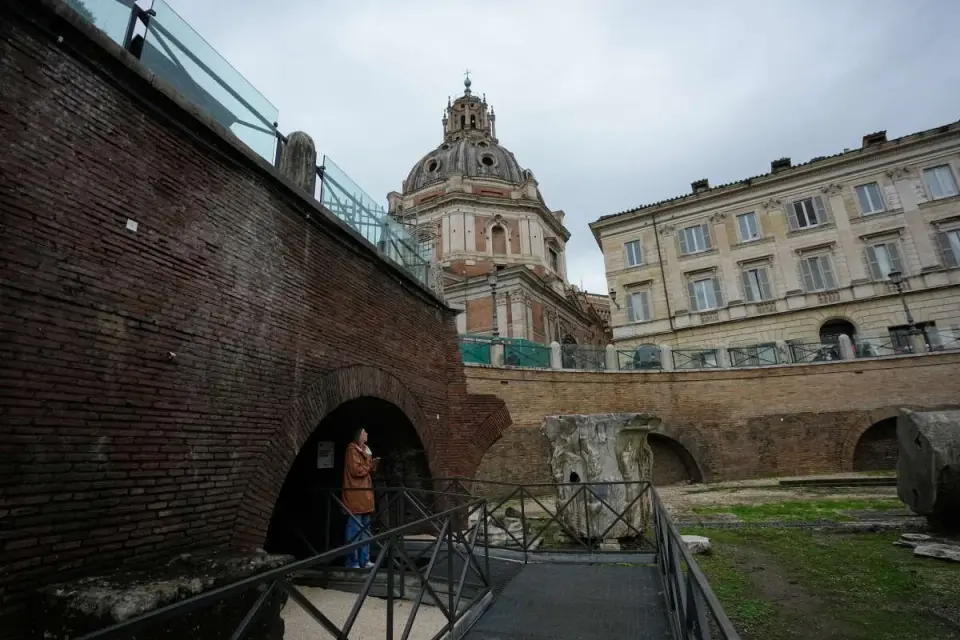
A long-buried section of the ancient Ulpia Library in Rome has reopened to the public after a year-long restoration. Located in Trajan’s Forum, the site was discovered in 1932 but remained inaccessible for nearly a century. The restored western building, which housed Greek-language scrolls, now features immersive videomapping and marble remains. The project, funded by 1.75 million euros from EU pandemic recovery funds, allows limited public access on weekends.
Key points
- The western building of the Ulpia Library, part of Trajan’s Forum, has reopened to the public after being inaccessible for almost a century.
- Archaeologists identify the site as one of the most important libraries of the ancient world, comparable to Alexandria and Pergamon, due to its vast collection of documents and scrolls.
- The library was discovered in 1932 during road clearing works by Mussolini’s government but was later covered in concrete and used as a storage room for forum artifacts.
- Restoration began in 2025 and cost 1.75 million euros ($1.92 million), funded by European Union pandemic recovery funds.
- The new exhibition includes immersive videomapping on the walls and displays broken Corinthian columns and marble fragments, as the original scroll cabinets are no longer present.
- Public access is initially limited to Fridays, Saturdays, and Sundays, with 20-person groups admitted every 40 minutes.
Background
This development follows a broader trend of cultural restoration in Rome, where EU funds are supporting various heritage projects. While unrelated to the recent Pompeii wardrobe discovery or the Winnie-the-Pooh repatriation debates, the Ulpia Library reopening highlights ongoing efforts to preserve and present ancient Roman infrastructure to the public.
Why it matters
The reopening of the Ulpia Library provides a rare physical connection to one of the ancient world’s most significant knowledge repositories, offering insights into how Roman citizens and magistrates accessed legal and cultural documents. It also demonstrates the impact of EU funding on cultural heritage preservation in Italy.
What to watch
The library will continue to offer limited weekend access, with potential for expanded hours or further restoration projects in the future. The eastern building remains buried, but its preservation may be a focus of future archaeological discussions.
Want the full story? Read the original reporting
Read on AP News