
First-Ever Footage Reveals 420-Meter Underground Network Beneath Istanbul’s Hagia Sophia
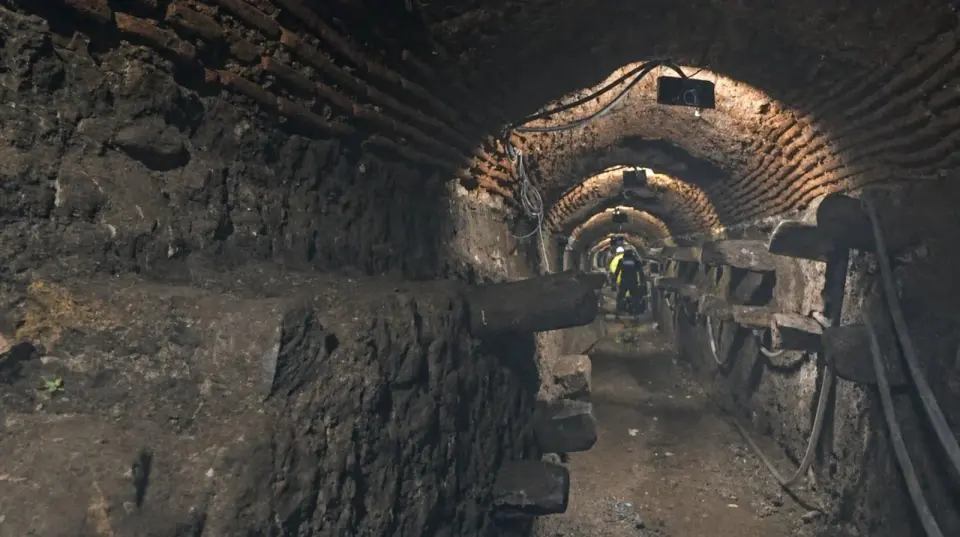
Turkish authorities have cleared 420 meters of underground tunnels beneath Hagia Sophia, removing nearly 3,000 tons of debris to reveal six chambers and nine passages. The excavation, described as the largest restoration in the Turkish Republic, has uncovered architectural layers potentially predating the 6th-century basilica. Officials are evaluating whether to open sections to the public and utilize the network for improved ventilation, though no timeline has been set.
Key points
- Cleared 420 meters of tunnels and removed 3,000 tons of debris from the Vizier’s and West Gardens.
- Discovered six subterranean spaces and nine tunnels, with seven fully cleared and two under documentation.
- Uncovered a hypogeum (underground burial structure) with architectural layers potentially predating the 6th-century basilica.
- Identified a 180-meter tunnel parallel to the western facade, possibly linked to the ancient Roman road network.
- Planned to open select sections to the public and assess the network’s potential for improving building ventilation.
Background
Hagia Sophia, completed in 537 under Emperor Justinian I, served as the principal cathedral of Constantinople before becoming an imperial mosque after the 1453 Ottoman conquest. It was converted into a museum in 1935 and returned to mosque status in 2020. Recent restoration efforts, described as the most comprehensive in the Turkish Republic, aim to preserve the monument while uncovering its hidden historical layers.
How outlets are covering it
Euronews and Hürriyet Daily News emphasize the archaeological significance of the hypogeum and the potential for the tunnels to predate the 6th-century basilica. Türkiye Today highlights the structural reinforcement efforts, including stainless steel supports, and the project’s scale compared to historical interventions. GreekReporter notes the possibility that the 420 meters cleared represent only a fraction of a wider 9-kilometer underground network, as reported by ORF. All sources agree on the potential for public access and ventilation improvements, but differ on the emphasis of historical dating versus engineering challenges.
Why it matters
The discovery provides new insights into the engineering and infrastructure of ancient Constantinople, potentially revealing layers of history that predate the current Hagia Sophia. It offers a chance to improve the monument’s ventilation and preserve its historical layers while making them accessible to the public.
What to watch
Turkish authorities are planning an exhibition project to open suitable underground sections to the public, pending conservation and safety measures. Further scientific studies will determine the exact dating of the architectural layers and the original function of the tunnels. Structural repairs and documentation of the remaining two tunnels will continue.
- Hidden World Beneath Hagia Sophia Revealed in First-Ever Footage GreekReporter.com
- Ancient tunnels emerge beneath Istanbul's iconic Hagia Sophia Euronews
- Hagia Sophia's secret tunnels revealed in major restoration Türkiye Today
- Massive cleanup uncovers ancient layers beneath Hagia Sophia Hürriyet Daily News
- Hagia Sophia’s Underground Tunnels Reveal Hidden History tovima.com
Want the full story? Read the original reporting
Read on GreekReporter.com