
Iran showcases underground 'missile city' and dual-launcher amid US blockade
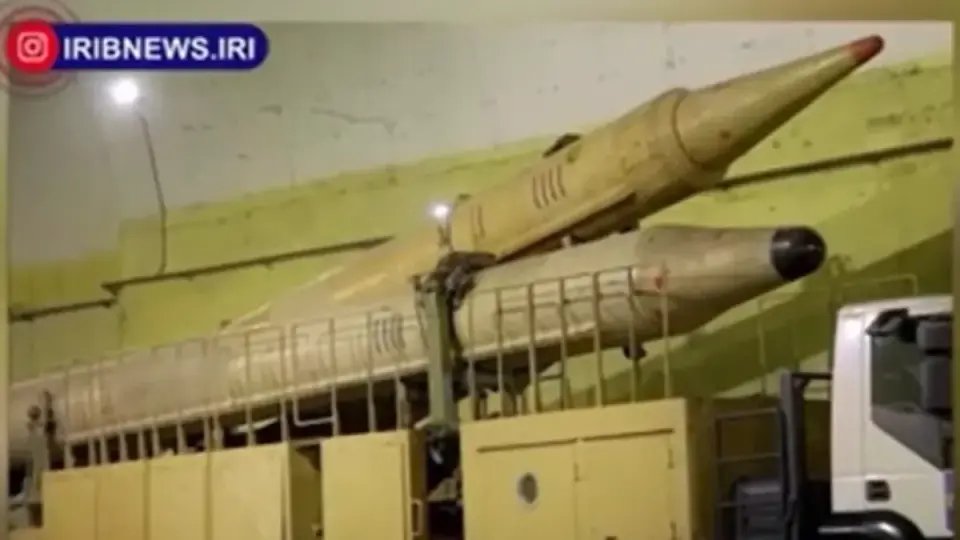
Iran’s Islamic Revolutionary Guard Corps (IRGC) displayed a new dual-missile launcher and underground production facilities, asserting its military resilience despite US-Israeli strikes and a naval blockade. The showcase, led by IRGC commander Ahmad Vahidi, highlights Tehran’s strategy to maintain deterrence and economic pressure on Washington.
Key points
- IRGC commander Ahmad Vahidi toured an underground 'missile city' on Saturday, showcasing a new launcher capable of firing two liquid-fueled missiles simultaneously.
- State media claims the new systems offer improved range, accuracy, and GPS-independent guidance, countering US assertions that Iran’s missile program has been destroyed.
- The IRGC has moved production lines underground to sustain weapons manufacturing despite heavy bombardment, storing spare parts and raw materials in subterranean complexes.
- Iran faces severe economic pressure from a US naval blockade that has disrupted oil exports, with analysts noting Tehran is escalating tensions to force diplomatic concessions.
- Simultaneously, three oil tankers were struck near the Strait of Hormuz, and an Israeli airstrike in Gaza killed three men, highlighting ongoing regional instability.
Background
This display follows the November 10 unveiling of the underground facility and coincides with Iran lifting its self-imposed 2,000-kilometer range limit. Recent leaks suggest Russia agreed to supply 90 advanced launchers to Iran, contradicting US claims of minimal support. The current escalation occurs amid a US naval blockade and diplomatic efforts mediated by Qatar.
How outlets are covering it
Al Jazeera and AP News emphasize the strategic signaling of the missile showcase, noting it aims to restore deterrence and counter US claims of destruction. AP highlights the technical advancement of liquid-fueled missiles over previous solid-fuel systems. Tasnim focuses on the IRGC’s internal preparedness and production continuity. NewsNation provides limited detail, focusing on the visual evidence of the underground facility. Analysts cited by Al Jazeera suggest Iran is emboldened by US domestic political shifts, while others note the economic desperation driving the escalation.
Why it matters
The display signals Iran’s intent to maintain military pressure despite economic sanctions, potentially prolonging the conflict. The underground facilities suggest a long-term strategy to sustain weapons production, challenging US efforts to degrade Iran’s military capabilities. The simultaneous tanker attacks and Gaza strikes indicate a broader regional escalation, risking wider conflict and energy market instability.
What to watch
Iran may continue to leverage its military capabilities to pressure the US for diplomatic concessions or relief from the naval blockade. The US and Israel may respond with further strikes or intensified sanctions. Diplomatic efforts mediated by Qatar could resume, but the current escalation suggests a high risk of renewed conflict. The impact on global energy markets and regional stability will depend on the outcome of these tensions.
- Iran unveils dual-missile launcher, new ‘missile city’: What to know Al Jazeera
- Iran strikes 3 tankers as it shows off missile launchers, and other Mideast news AP News
- IRGC Chief Visits Missile City تسنیم
- Iran posts video of new underground ‘missile city’ NewsNation
- How war shifted Iran's missile ambitions beyond the Middle East Al-Monitor
Want the full story? Read the original reporting
Read on Al Jazeera