
Spanish-Egyptian team uncovers vibrant 5th Dynasty tomb at Saqqara
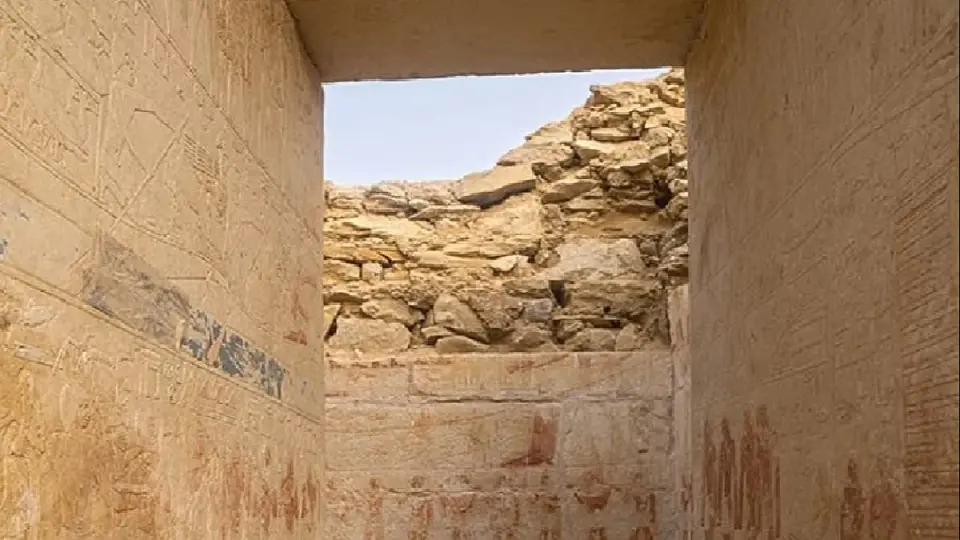
A joint Spanish-Egyptian archaeological mission has uncovered a well-preserved mastaba tomb from the late Fifth Dynasty at Saqqara, featuring vividly colored reliefs and dual burial chambers for a high official and his father.
Key points
- The tomb, dating to the reign of Pharaoh Djedkare Isesi (c. 2494–2345 BC), was discovered in the Mariette necropolis north of Saqqara.
- It contains two funerary chapels for Yunmen, a senior official, and his father Iti, a lower-ranking official.
- Reliefs depicting agricultural activities and offering processions retain their original colors, a rare preservation feat.
- The excavation was led by Josep Cervelló of the Autonomous University of Barcelona in collaboration with Egypt’s Supreme Council of Antiquities.
- The find provides new insights into the administrative and social structures of the Old Kingdom.
Background
Saqqara has been a site of continuous archaeological interest since the 19th century, serving as a necropolis for royals and elites from the Old Kingdom through the Roman era. Recent discoveries in the area, including a 4,100-year-old burial chamber of a royal doctor, have highlighted the site's ongoing significance for understanding ancient Egyptian burial practices and social hierarchies.
How outlets are covering it
Euronews emphasizes the exceptional preservation of the tomb's colors and the social mobility implied by the dual burial of Yunmen and his father. Smithsonian Magazine focuses on a different, related discovery at Saqqara involving a false door and over 100 ushabti figurines, highlighting the site's density of elite tombs. Live Science and HeritageDaily provide minimal additional detail, with the latter confirming the Spanish-Egyptian collaboration. The outlets generally agree on the historical significance but differ in which specific artifacts or aspects of the Saqqara excavations they highlight.
Why it matters
The discovery offers a rare glimpse into the daily life, artistic standards, and administrative roles of the Old Kingdom elite. The preservation of original colors allows for a more accurate understanding of ancient Egyptian aesthetics and religious practices, while the dual burial sheds light on family dynamics and social advancement in ancient Egypt.
What to watch
The team plans to excavate traces of two additional nearby tombs in future seasons. Ongoing research aims to reconstruct the topography and functional layout of the Saqqara necropolis, including its streets, squares, and ritual spaces.
- Spanish archaeologists find 4,400-year-old tomb in Egypt with original colours intact Euronews.com
- False Door To Travel Between Worlds Of The Dead And Living Found In New Ancient Egyptian Tomb IFLScience
- Ancient Egyptian tomb holding the king's 'keeper of secrets' unearthed at Saqqara Live Science
- Archaeologists Discover a 4,000-Year-Old Tomb With a False Door at Egypt's Ancient Saqqara Necropolis Smithsonian Magazine
- Spanish-Egyptian mission reveals fifth dynasty tomb at Saqqara HeritageDaily
Want the full story? Read the original reporting
Read on Euronews.com