
DIA Report Reveals First Clear Image of China’s Shenlong Spaceplane and Warns of Orbital Laser Threats
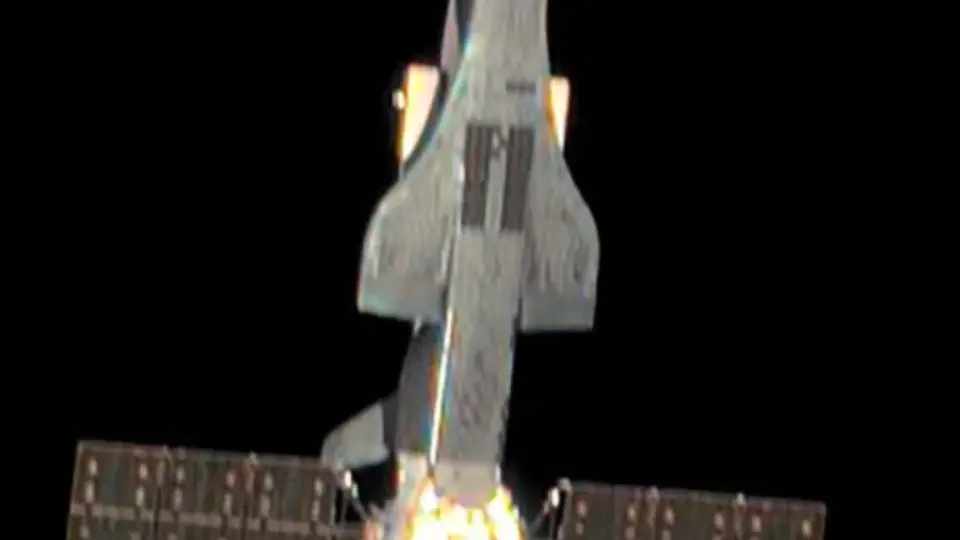
The Defense Intelligence Agency (DIA) released its 2026 'Challenges to Security in Space' report, featuring the first high-resolution image of China’s Shenlong spaceplane, captured in 2024 by Vantor (formerly Maxar). The report warns that China may deploy space-based directed-energy weapons by the late 2020s. While the Chinese vehicle closely resembles the US X-37B, it has only operated in low-Earth orbit, whereas the US vehicle has reached higher altitudes. The assessment highlights growing threats from China, Russia, and emerging powers like Iran and North Korea.
Key points
- The DIA’s 2026 report, released October 26, includes a 2024 image of China’s Shenlong spaceplane, showing its delta wings and rear-mounted solar arrays, which mirror the US X-37B design.
- China has completed four spaceplane missions since 2020, with the current mission launched in February 2026; the vehicle has demonstrated the ability to release and recapture sub-satellites in orbit.
- The DIA assesses that China may field space-based directed-energy weapons by the late 2020s, capable of disabling satellites in higher orbits, while currently operating ground-based laser systems.
- The report identifies Russia as a significant threat, noting its development of the 'Nivelir' kinetic weapon system and ambitions to deploy nuclear weapons in space, alongside recent close approaches to commercial satellites.
- The assessment covers threats from China, Russia, Iran, and North Korea, emphasizing the militarization of space and the risks posed by dual-use capabilities and orbital debris.
Background
This development follows recent concerns about the integrity of low-Earth orbit infrastructure, including the fragmentation of the 1988 US spy satellite 'Farrah III' in September 2026. It also occurs amid a shifting commercial landscape, where SpaceX is set to retire its Crew Dragon spacecraft by 2030, potentially leaving NASA dependent on Boeing for crewed access to orbit. These events underscore the increasing complexity and vulnerability of orbital operations, where both commercial and military assets face new security challenges.
How outlets are covering it
Ars Technica emphasizes the visual confirmation of the Shenlong spaceplane’s design, noting its striking resemblance to the US X-37B and the implications of commercial non-Earth imaging (NEI) for intelligence gathering. Popular Science highlights the unprecedented clarity of the 2024 image, focusing on the vehicle’s unique rear-facing solar arrays and its current fourth mission. SpaceNews and the DIA press release frame the story within a broader geopolitical context, stressing the strategic threat posed by China’s potential space-based directed-energy weapons and Russia’s kinetic orbital weapons. While all sources agree on the technical capabilities, Ars Technica and Popular Science focus on the specific vehicle and its operations, whereas SpaceNews and the DIA emphasize the strategic implications for US national security and the international space environment.
Why it matters
The release of the DIA report marks a significant shift in transparency regarding adversary space capabilities, moving from speculation to visual confirmation. The potential deployment of space-based directed-energy weapons by China by the late 2020s could fundamentally alter the balance of power in orbit, threatening the security of commercial and military satellites. This development intensifies the need for international cooperation on space security and the development of countermeasures, as the line between commercial and military space activities continues to blur. The report also highlights the growing role of commercial imaging in intelligence, changing the dynamics of space surveillance.
What to watch
The US Space Force and other agencies will likely increase their focus on countering directed-energy weapons and enhancing the resilience of their satellite constellations. China may continue to test and refine its spaceplane capabilities, potentially expanding its operations beyond low-Earth orbit. The US and its allies may accelerate the development of their own orbital weapons and inspection satellites, as hinted by the recent procurement of refuelable inspector satellites. International discussions on space security and the regulation of dual-use capabilities may gain momentum, although tensions with Russia and China are likely to persist.
- China’s top-secret spaceplane can’t hide in low-Earth orbit Ars Technica
- DIA Releases Challenges to Security in Space DIA.mil
- China could field directed-energy weapons in orbit by late 2020s, U.S. intelligence says SpaceNews
- China’s super-secret space plane visible in clearest photo yet Popular Science
- DIA: China has tripled its satellite fleet since 2018 as expansion continues Breaking Defense
Want the full story? Read the original reporting
Read on Ars Technica