
Ethiopia Receives 12 Russian Su-35s, Eyes S-400s Amid Tigray Conflict
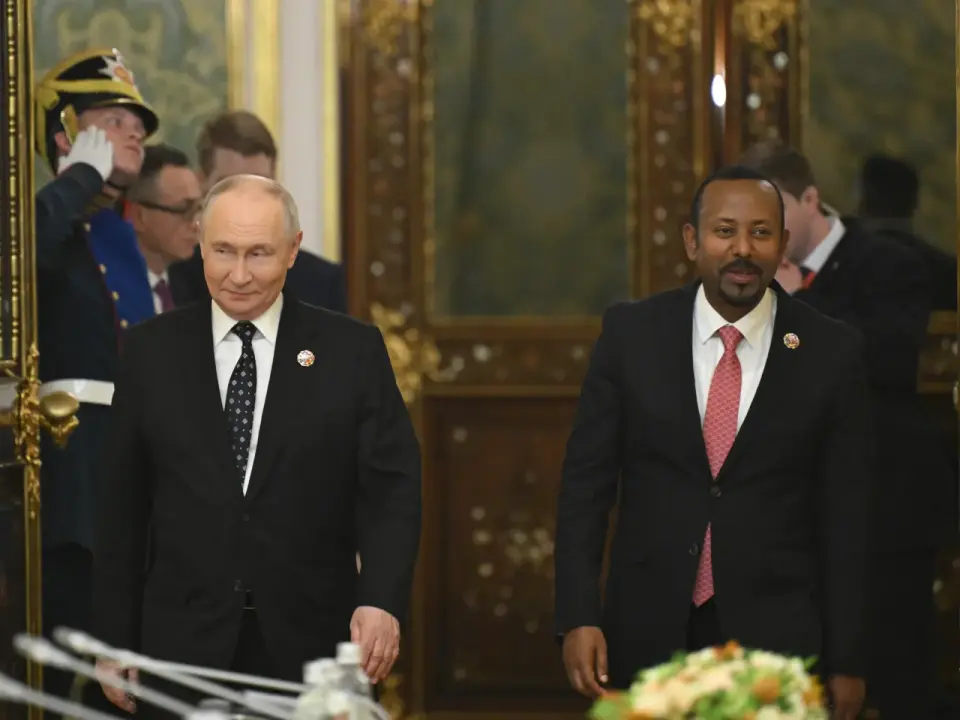
Ethiopia has received 12 Russian Su-35 fighter jets and agreed to acquire four S-400 air defense batteries, a deal announced by Prime Minister Abiy Ahmed at the Russia-Africa Summit in Moscow. The delivery, which arrived a year ahead of schedule, strengthens Addis Ababa’s military capabilities amid renewed fighting in Tigray and tensions with Eritrea. While the acquisition boosts Ethiopia’s air power, experts note that long-term maintenance support remains uncertain due to Western sanctions on Russia. The move also signals Moscow’s continued effort to maintain influence in the Horn of Africa despite its isolation in Europe.
Key points
- Ethiopia took delivery of 12 Su-35 fighter jets, with four S-400 air defense batteries to follow, as announced by PM Abiy Ahmed in Moscow.
- The Su-35s were delivered one year ahead of schedule under an agreement signed several years prior, enhancing Ethiopia’s air-to-air and air-to-ground combat capabilities.
- The acquisition occurs amid renewed conflict in Tigray, where government forces and Tigray People’s Liberation Front (TPLF) fighters have clashed since late September, undermining the 2022 peace agreement.
- Russia’s arms sales to Africa provide crucial revenue and diplomatic leverage, while Ethiopia diversifies its security partnerships amid geopolitical competition from China and the West.
- Long-term maintenance and spare parts supply for the new jets remain uncertain due to Western sanctions on Russia’s defense industry, which may impact operational readiness.
Background
Ethiopia’s military modernization follows a period of intense internal conflict, including the 2020-2022 Tigray War and recent unrest in Amhara. The country’s strategic location in the Horn of Africa makes it a focal point for global powers seeking influence. Previous archive coverage noted concerns over Western sanctions impacting Russian arms deals, a risk highlighted in this latest acquisition.
How outlets are covering it
Al Jazeera emphasizes the geopolitical significance of the deal for Russia’s influence in Africa and the limitations of air defenses against drone threats. BBC highlights the domestic security implications, noting that the jets may be used to deter external threats and protect critical infrastructure like the Renaissance Dam. The War Zone focuses on the technical and logistical challenges, questioning whether Russia can sustain maintenance support for the jets given its own war in Ukraine and Western sanctions. All sources agree that the acquisition strengthens Ethiopia’s military but differ on the primary drivers: Al Jazeera sees it as a geopolitical move, BBC as a security necessity, and The War Zone as a logistical risk.
Why it matters
The deal reshapes the military balance in the Horn of Africa, potentially escalating tensions with Eritrea and other neighbors. It also demonstrates Russia’s ability to circumvent Western sanctions through arms sales to Africa, while raising questions about the sustainability of such partnerships. For Ethiopia, the acquisition enhances deterrence but may strain resources and complicate relations with Western allies.
What to watch
Ethiopia will likely integrate the Su-35s into its air force, requiring training and infrastructure upgrades. The delivery of S-400 batteries is expected but not yet scheduled. Regional tensions may escalate if the weapons are perceived as provocative by neighbors like Eritrea. Long-term, the deal’s success will depend on Russia’s ability to provide maintenance and spare parts despite sanctions.
- Why is Russia sending fighter jets and air defences to Ethiopia? Al Jazeera
- Ethiopia says it received Russian Su-35 jets, S-400 air defence systems to follow Reuters
- Ethiopia receives 12 Russian fighter jets and air defence systems as Tigray war escalates BBC
- Ethiopia Gets 12 Russian Su-35 Fighters, Eyes S-400 Air Defenses TWZ
- Why Ethiopia Is Now Flying Russian Fighter Jets The National Interest
Want the full story? Read the original reporting
Read on Al Jazeera