
Lockheed and Boeing-Anduril Advance in Army’s Mid-Tier Air Defense Competition
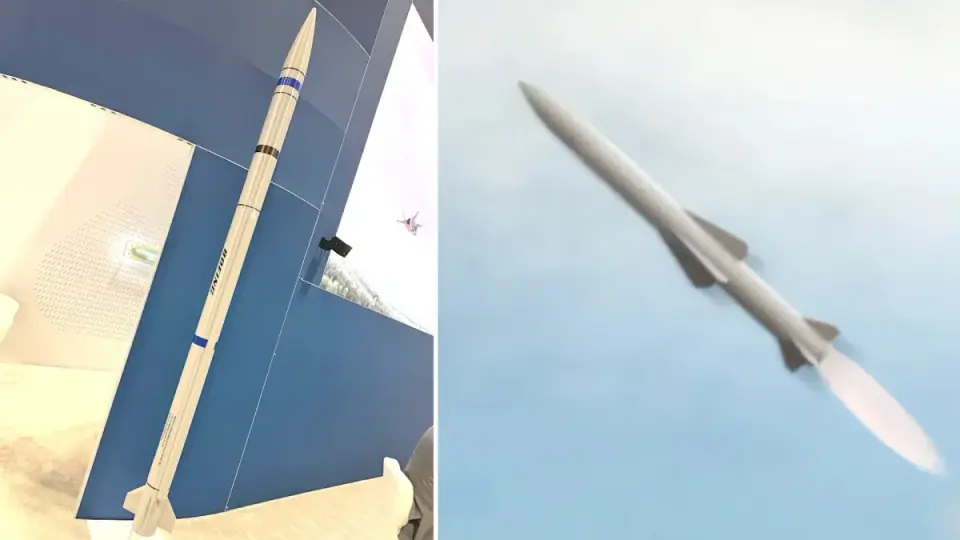
The U.S. Army has selected Lockheed Martin and a team comprising Boeing and Anduril to advance to the second phase of the Integrated Fires Protection Capability (IFPC) Increment 2 competition. This move aims to develop a mid-tier surface-to-air missile for the Enduring Shield system, filling a capability gap left by the retirement of Hawk systems in the 1990s. The new interceptor is designed to counter cruise missiles and drones while maintaining magazine depth comparable to the AIM-9X Sidewinder. Rafael Systems Global Sustainment was eliminated from the competition. The development emphasizes modularity, lower costs, and scalable production to address growing demands from conflicts in the Middle East and Ukraine.
Key points
- Lockheed Martin and the Boeing-Anduril team were down-selected to Phase 2 of the IFPC Increment 2 Second Interceptor competition, with Rafael Systems Global Sustainment eliminated.
- The program seeks a mid-range interceptor for the Enduring Shield system, which currently uses AIM-9X Sidewinders, to address threats like cruise missiles and advanced drones.
- Boeing’s design features a solid-fuel rocket motor from Anduril and a Modular Open Systems Architecture (MOSA) to allow cost-effective upgrades without full redesigns.
- Lockheed Martin’s proposal leverages existing technologies, potentially including hit-to-kill or blast-fragmentation warheads, though specific guidance details remain limited.
- The Army aims to reduce reliance on Patriot systems by creating a layered defense, with Enduring Shield serving as a critical middle-tier capability.
Background
The U.S. Army has been seeking a mid-tier air defense capability since the 1990s retirement of Hawk systems. Recent conflicts in Ukraine and the Middle East have highlighted the need for affordable, high-volume interceptors to counter drone and cruise missile barrages. The Enduring Shield system, developed by Dynetics (a Leidos subsidiary), is entering operational service with AIM-9X Sidewinders. The Army is also pursuing other programs, such as the Next Generation C-sUAS Missile, to address smaller drone threats, but the IFPC Increment 2 focuses on a broader mid-range capability. The current competition follows Phase 1 awards in 2025, with Lockheed receiving an Other Transaction Authority in October 2025 and Boeing-Anduril joining in December 2025.
How outlets are covering it
Breaking Defense and The Boeing Company emphasize the strategic importance of the IFPC Increment 2 in filling the gap between short-range and long-range defenses, highlighting the need for magazine depth and affordability. Boeing stresses its Modular Open Systems Architecture for cost-effective upgrades, while Lockheed Martin focuses on leveraging existing technologies like the PAC-3 MSE. The War Zone (TWZ) notes that while Boeing’s design is a clean-sheet approach, Lockheed’s proposal is not new, leveraging existing capabilities. All sources agree on the urgency driven by recent conflicts, but TWZ highlights concerns about production timelines and stockpile levels, whereas Breaking Defense focuses on the competitive process and technical specifications. The Army’s perspective, as cited by Lt. Gen. John Rafferty, underscores the critical need for cheaper, wide-ranging interceptors to protect warfighters and reduce strain on Patriot systems.
Why it matters
The selection of Lockheed Martin and Boeing-Anduril for Phase 2 of the IFPC Increment 2 competition is a significant step in the U.S. Army’s effort to modernize its air defense capabilities. The development of a mid-tier interceptor for the Enduring Shield system will help address the growing threat of cruise missiles and drones, which have been prominent in recent conflicts. By emphasizing modularity, lower costs, and scalable production, the Army aims to ensure a reliable and affordable defense layer, reducing reliance on more expensive systems like Patriot. This move also reflects the broader strategic shift toward layered defense, where multiple systems work together to protect against a wide range of aerial threats. The success of this program could influence future defense procurement and production strategies, ensuring the U.S. military can respond effectively to evolving threats.
What to watch
The next phase of the IFPC Increment 2 competition will involve detailed design, system development, integration, and demonstration, including a competitive capability demonstration to validate performance against Army requirements. The Army will likely release more information about the technical specifications and capabilities of the competing designs as the competition progresses. Production agreements and timelines for the new interceptor will be critical, given the current strain on munition stockpiles. The Army may also continue to explore other air defense programs, such as the Next Generation C-sUAS Missile, to complement the Enduring Shield system. The outcome of this competition will have significant implications for the U.S. Army’s ability to respond to future conflicts and protect its forces.
- One Of These Missiles Is Set To Be The Army’s Next Mid-Tier Anti-Air Interceptor TWZ
- Army selects Lockheed, Boeing-Anduril team for next phase in IFPC Inc 2 competition Breaking Defense
- Boeing, Anduril midrange interceptor advances in U.S. Army competition The Boeing Company
- US Army Eyes November ‘Shoot-Off’ for Low-Cost Interceptors Bloomberg.com
- Army Plans To Give Industry ‘Multiple Bites’ At Low-Cost Interceptor Effort, Official Says Defense Daily
Want the full story? Read the original reporting
Read on TWZ