New NTSB documents tie the UPS MD-11 crash to fatigue cracks in the engine-mount bearing race, showing Boeing had flagged similar failures in 2011 and that prior flaws largely went unreported; maintenance gaps left the critical parts unsafely under-inspected since 2021 as hearings continue, raising questions about reporting and oversight.
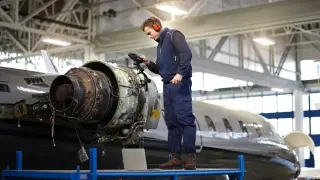
Federal safety investigators will hold hearings this week to determine why a UPS MD-11’s engine separated from the wing on takeoff from Louisville, causing a crash that killed 15 people. The NTSB will examine contributing factors, including engine-mount cracks and maintenance gaps, and how Boeing’s prior guidance on the bearings was implemented; the final report isn’t expected for over a year. Some MD-11s are returning to service after bearing replacements, while UPS plans to retire its MD-11 fleet.
China said it reached a preliminary agreement with the United States to reduce some tariffs through mutual reductions and to establish a trade council and an investment council, aiming to expand two-way trade including agricultural products and to address non-tariff barriers. The deal also covers aviation, with U.S. aircraft and engine supply arrangements. Trump said tariffs were not discussed during his Beijing visit, and both sides signaled further talks and upcoming meetings.
Trump reportedly bought Boeing and GE Aerospace stock before announcing a China-backed order for 200 Boeing planes (potentially expanding to 750), illustrating how geopolitics can lift aerospace demand; Boeing carries about $44.3B in debt but could gain revenue visibility if production stabilizes, while GE Aerospace may profit from engine sales and long‑term maintenance contracts.
At a two-day Beijing summit, Xi Jinping earned a calm, propaganda-friendly stage and Trump praised China, but concrete gains were limited: while Nvidia’s Jensen Huang and Visa were highlighted in the delegation, there were few commitments on Taiwan or Iran and the anticipated large-scale business or security deals mostly stayed aspirational, with tense side shows involving reporters and security drawing some attention.
A Chicago jury awarded $49.5 million to the family of 24-year-old Samya Stumo for her death in the 2019 Ethiopian Airlines 737 MAX crash, after about two hours of deliberation. Most related lawsuits have settled, but Boeing faced a civil trial in this case. Boeing previously paid fines and settlements following related crashes and a criminal fraud charge, with the company expressing condolences and noting families’ rights to pursue claims in court.
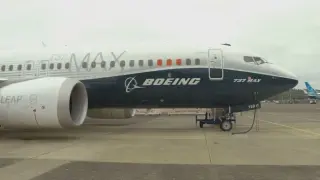
Trump claimed on Fox News that Xi Jinping agreed to buy 200 Boeing jets during his China trip—a figure analysts hadn’t officially confirmed and far below some expectations of up to 500 planes—with no confirmation from Boeing or Beijing; Boeing stock dipped after the report as investors await formal word, noting China has been a buyer of Airbus lately.
As Trump and Xi meet, the summit draws attention to potential shifts in AI chip exports to China and a major Boeing jet deal, including discussion of a 500-aircraft order, signaling that tech controls and aviation diplomacy could shape the US-China relationship.
The wife of Transport Secretary Sean Duffy, Fox News host Rachel Campos-Duffy, faced backlash after critics highlighted that their new road-trip reality series is sponsored by companies the DOT regulates, sparking ethics concerns even as the production is claimed to be funded by a nonprofit and not taxpayers. Critics including Chasten Buttigieg and Democratic officials said the arrangement is out of touch amid high gas prices; Duffy and supporters argue officials cleared his participation and deny any taxpayer funding. The controversy coincides with the Duffys promoting a five‑part YouTube series and a spate of aviation incidents during Duffy’s tenure, adding to the tense political moment surrounding the show.
Boeing beat Q1 2026 estimates with $22.2 billion in revenue (vs $21.91B expected) and an adjusted loss per share of $0.20 (versus a $0.68 loss expected), as jet deliveries rose to 143 in the quarter and the backlog climbed to a record $695 billion. The Defense, Space & Security segment posted a 50% jump in earnings to $233 million, while Commercial Airplanes revenue rose 13% to $9.2 billion but posted a $563 million loss; production is climbing toward 42 Max aircraft per month, with Max 7/10 certifications expected later this year and deliveries to begin in 2027. Boeing projects about 660 planes in 2026, and Wall Street remains bullish with a Strong Buy consensus and a target near $275, implying roughly 25% upside as BA stock rose over 5% on the news.
Boeing posted a 14% rise in quarterly revenue to $22.2 billion and narrowed its loss to $7 million in Q1, delivering 143 commercial aircraft—29 more than Airbus—marking its first quarterly delivery lead over the European rival since 2018. Defence revenue rose about 21%, underscoring progress in its turnaround as production ramps continue and FAA certification for new 737 MAX variants advances.
Boeing reported a slimmer Q1 loss with revenue of $22.22 billion and an adjusted loss of $0.20 per share (vs. $0.83 expected); net loss was $7 million (0.11 per share). Commercial deliveries rose 10% to 143, while 737 Max output remains about 42 aircraft per month. The company expects FAA certification for the 737 Max 7 and 10 later this year, with deliveries starting in 2027, and saw growth in defense and services.
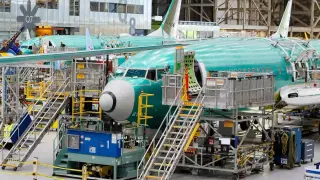
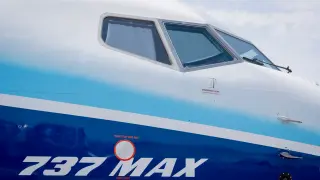
Boeing’s stock slid after the company said a machining error caused wiring scratches on some 737 MAX jets, delaying deliveries briefly. The issue is small and expected to be fixed in days, with only a potential minor hit to Q1 2026 deliveries, while the full-year target of about 500 MAX jets remains intact as orders rise. Analysts remain bullish, with a Strong Buy consensus and an average price target around $276.36, implying roughly 24% upside.
Boeing engineers demonstrate a space-qualified edge AI by running a compact large language model on standard hardware to autonomously analyze satellite telemetry, a development that helped BA stock rise about 2%. The story also covers a Supreme Court denial to hear a Southwest pilots’ union case, while analysts still rate BA as a Strong Buy with roughly 18.8% upside based on a $278 target after a year of gains.
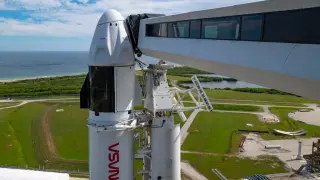
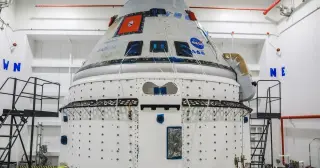
NASA released a 300-page investigation into Boeing’s Starliner mission, finding not only hardware faults but serious organizational and leadership problems—yelling, defensiveness and frayed team relations—that delayed returning two astronauts from the ISS for nine months; the mission was retroactively classified as a Type A mishap, NASA trimmed the contract and Boeing says it has fixes and organizational changes in place, while critics urge stronger oversight and a robust two-vehicle strategy.