
Japan's $55.6B Defense Budget Prioritizes Anti-Radar Missiles, Drones, and AI Integration
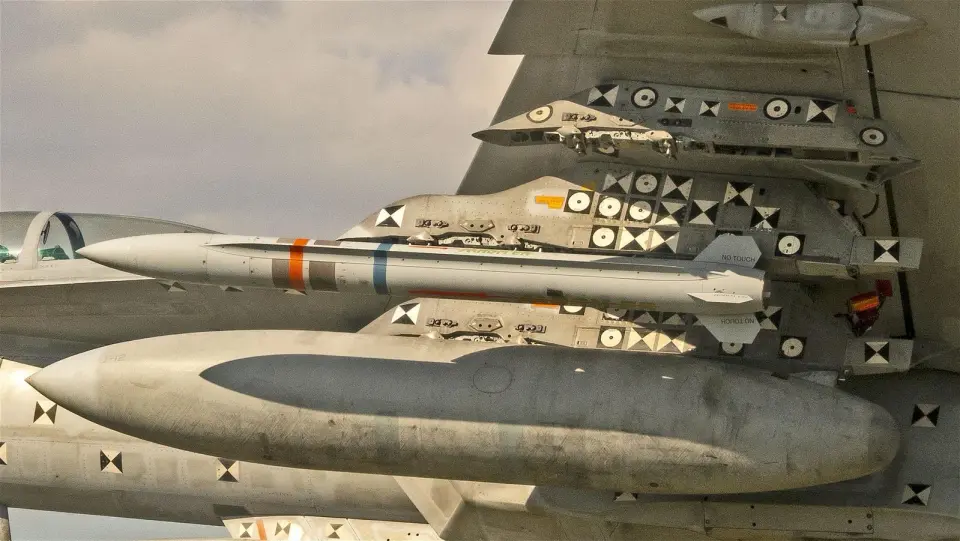
Japan's Ministry of Defense has requested a record 8.89 trillion yen ($55.6 billion) for the fiscal year starting in April 2026. The budget emphasizes acquiring Northrop Grumman's AARGM-ER anti-radar missiles, 17 General Atomics MQ-9B SeaGuardian drones, and interceptor drones. It also allocates funds for developing long-range air-to-air weapons and AI-driven command systems, though specific quantities for many platforms remain undisclosed pending the release of key national security strategies.
Key points
- The requested budget of 8.89 trillion yen marks another year of record-high defense spending in Japan.
- Japan is seeking its first dedicated anti-radar missile, the Northrop Grumman AGM-88G AARGM-ER.
- The plan includes purchasing 17 General Atomics MQ-9B SeaGuardian drones for the Maritime Self-Defense Force.
- Funds are allocated for developing a domestic long-range air-to-air missile derived from the ASM-3 anti-ship missile.
- The budget supports the development of AI-integrated command and control systems for rapid data analysis.
- Specific procurement numbers and costs for many items are withheld until three key national security documents are released later in 2026.
Background
Japan has consistently increased its defense budget in recent years, with previous requests focusing on expanding state-backed production capacity and outsourcing manufacturing to private firms like Mitsubishi Heavy Industries and Kawasaki. Earlier coverage in August 2026 highlighted a similar record request for FY2027, emphasizing unmanned warfare and submarine capabilities. The current budget request continues this trend, building on prior plans for Aegis destroyer enhancements and Taigei-class submarines, while now explicitly detailing new missile and drone acquisitions.
How outlets are covering it
Breaking Defense provides detailed specifics on the new weapon systems, such as the AARGM-ER and the conversion of the ASM-3 into an air-to-air weapon, as well as the 16.3 billion yen allocation for submarine-launched missiles. AP News offers a broader overview, confirming the total budget figure and the focus on drones, AI, and missiles, but lacks the granular procurement details found in the primary source. Both outlets agree on the record nature of the budget and the strategic shift toward unmanned and AI-driven warfare, but only Breaking Defense notes the absence of specific numbers due to pending security strategy documents.
Why it matters
This budget signals a significant shift in Japan's defense posture, moving from traditional deterrence to active strike capabilities and autonomous warfare. The acquisition of anti-radar missiles and long-range air-to-air weapons indicates a desire to counter high-value adversary assets like airborne early warning aircraft. The integration of AI into command systems suggests a move toward faster decision-making in potential conflicts, reflecting broader regional security concerns and a redefinition of Japan's military role.
What to watch
The budget request will now be reviewed by Japan's Ministry of Finance, with approval expected later in 2026. The release of the National Security Strategy, National Defense Strategy, and Defense Buildup Program is anticipated to provide clarity on the specific quantities and costs of the platforms listed in the budget request.
- Japan seeks new extended-range missiles in record $55B defense budget request Breaking Defense
- Japan to beef up its defense with drones, AI and missiles, defense budget plans show AP News
- Japan Seeks Record Defense Budget as Takaichi Plans Buildup Bloomberg.com
- Why Japan’s hypersonic and underwater weapon plans might worry China South China Morning Post
- Defense Ministry’s record ¥8.9 trillion budget request expected to balloon further by year-end The Japan Times
Want the full story? Read the original reporting
Read on Breaking Defense