
Milan and Bologna erupt in violent cost-of-living protests as Italy faces 'autumn of discontent'
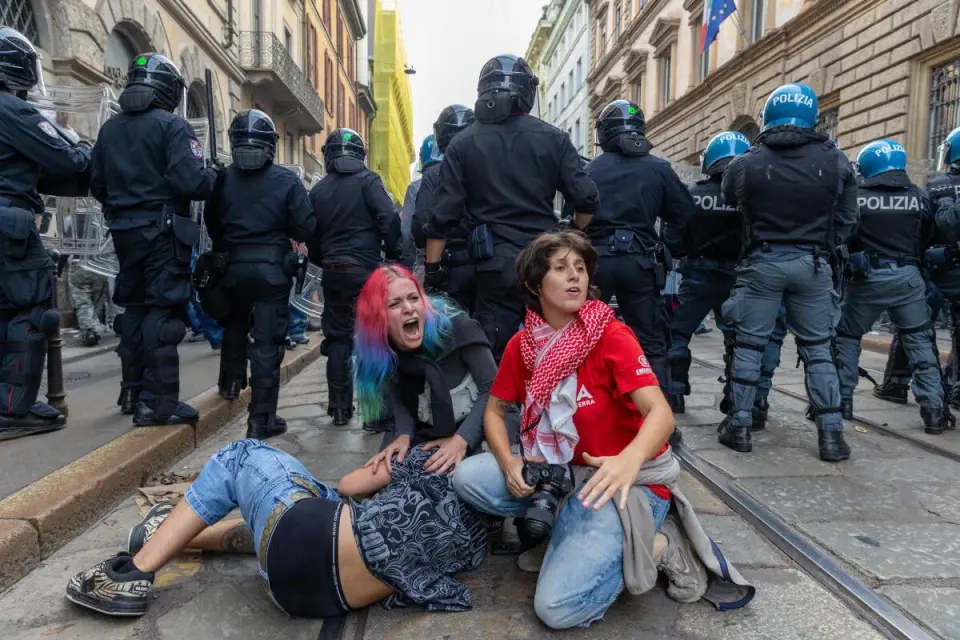
Violent clashes erupted in Milan and Bologna on October 17, 2026, as protesters clashed with police over rising living costs. In Milan, rioters looted stores and set fires near the Duomo, while police used tear gas and water cannons in Bologna, resulting in seven arrests. Prime Minister Giorgia Meloni condemned the violence, stating that 'turning cities into battlegrounds is not a right.' The unrest is part of a broader 'autumn of discontent' driven by stagnant wages, high inflation, and student protests, mirroring recent unrest in France.
Key points
- Rioters clashed with police in central Milan, looting stores and setting fires near the Gothic cathedral, leading to the closure of the Duomo metro station.
- Police in Bologna used water cannons to disperse crowds and made seven arrests after protests turned violent.
- Prime Minister Giorgia Meloni condemned the violence on X, stating 'Demonstrating is a right. Turning our cities into battlegrounds is not.'
- The protests are part of a broader 'autumn of discontent' involving students, unions, and citizens protesting high costs and stagnant wages.
- Inflation reached 4.2% year-on-year in September, with fuel prices driving road blocks in southern Italy.
Background
Italy has experienced decades of stagnant wages and productivity, with real wages falling by 6.6% between 1990 and 2026. Recent geopolitical tensions and post-pandemic inflation have exacerbated these issues, leading to a surge in inflation to 4.2% in September. This economic strain has fueled a wave of protests, including student occupations and road blocks by truck drivers, as citizens demand relief from the cost-of-living crisis.
How outlets are covering it
AP News and The Jerusalem Post focus on the immediate violence in Milan and Bologna, highlighting police use of tear gas and water cannons, as well as Meloni's condemnation of the riots. France 24 provides broader context, framing the events as part of an 'autumn of discontent' driven by deep economic issues like stagnant wages and high inflation, and noting the influence of similar protests in France and Spain. While AP and JPost emphasize the clash between police and rioters, France 24 highlights the underlying economic grievances and the involvement of unions and students.
Why it matters
The unrest signals growing public frustration with the government's handling of the cost-of-living crisis and economic stagnation. With elections approaching, these protests could impact Meloni's political standing and force a re-evaluation of economic policies. The violence also raises concerns about social stability and the potential for further unrest if economic conditions do not improve.
What to watch
Authorities are expected to continue monitoring the situation as protests may continue in other cities. The government may face pressure to address economic grievances, while opposition parties are likely to capitalize on the unrest. The outcome of these protests could influence the upcoming electoral campaign and policy decisions regarding inflation and wages.
- Rioters loot stores, set fires in central Milan during cost-of-living protest AP News
- Meloni decries violent demonstrations as Italian police clash with protesters in Milan, Bologna The Jerusalem Post
- Protesters burn Israeli, US flags as student demonstrations sweep Italy | Watch Ynetnews
- Italy braces for 'autumn of discontent' as students protest France 24
- More than 2,000 students protest in Florence as ‘No Meloni Day’ marches sweep Italy The Florentine
Want the full story? Read the original reporting
Read on AP News