
South Korea Launches Second Conventional Submarine Amid Regional Nuclear Push
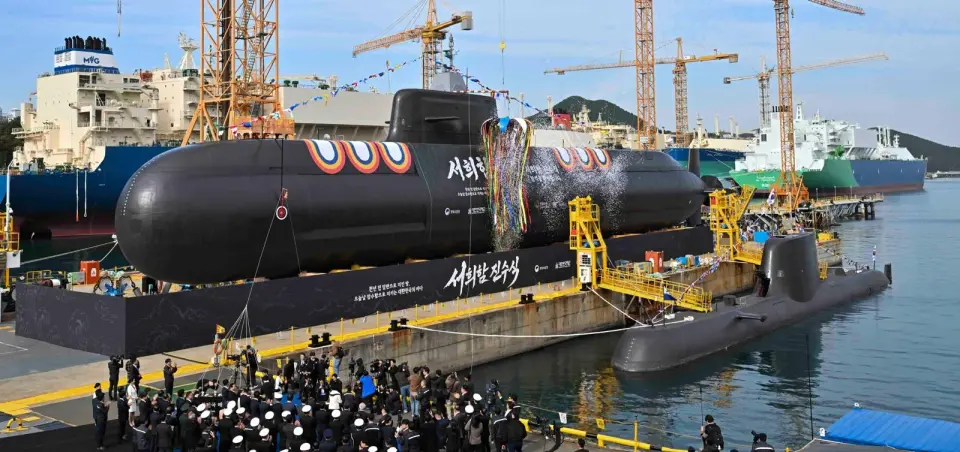
South Korea launched ROKS Seo Hui, the second of its 3,600-ton Jang Bogo-III Batch-II conventional submarines, on November 3. The vessel features 70 domestically developed components, including a lithium battery system, enhancing stealth and endurance. While the launch marks a milestone for conventional naval power, it occurs against a backdrop of South Korea’s planned transition to nuclear-powered submarines by the late 2030s. This move aligns with broader regional shifts in Japan and Australia toward nuclear propulsion to counter maritime threats and maintain strategic endurance in the Indo-Pacific.
Key points
- ROKS Seo Hui (SS-088) was launched at Hanwha Ocean’s Okpo shipyard in Geoje on November 3, 2026, following a construction contract awarded in 2021 and a keel-laying ceremony in 2024.
- The submarine is part of the 3,600-ton Jang Bogo-III Batch-II program, which includes the lead vessel ROKS Jang Yeong-sil (SS-087), and is scheduled for delivery to the ROK Navy in 2028.
- Seo Hui incorporates 70 domestically developed equipment items, including a validated lithium battery system that extends submerged endurance and improves stealth through advanced noise-reduction technologies.
- The vessel features enhanced combat systems, sonar suites, and an auxiliary propulsion system for survivability, with vertical launch tubes increasing from six to ten compared to the previous Batch-I class.
- National Assembly Speaker Cho Jung-sik attended the ceremony, describing the submarine as a core national strategic asset and a symbol of South Korea’s advanced defense industrial capabilities.
- The launch coincides with South Korea’s 2027 budget request for a nuclear-powered submarine program, designated Jangbogo N, with a first launch targeted for the mid-2030s and service entry in the late 2030s.
Background
Recent tensions on the Korean Peninsula, including North Korean missile launches and border incidents in October 2026, have heightened the urgency for advanced naval capabilities. South Korea’s push for nuclear submarines follows a period of escalating regional security concerns, with Pyongyang’s missile tests and drone exhibitions underscoring the need for robust deterrence. The launch of ROKS Seo Hui reflects South Korea’s broader strategy to strengthen its maritime defense while navigating the complex transition to nuclear propulsion, a move that aligns with similar efforts by Japan and Australia to address long-endurance undersea power requirements in the Indo-Pacific.
How outlets are covering it
Naval News and Herald Economic emphasize the technical achievements and domestic content of ROKS Seo Hui, highlighting its role as a symbol of South Korea’s defense industrial prowess. Defense.info, however, frames the launch within the context of South Korea’s impending shift to nuclear-powered submarines, noting that the conventional launch is a precursor to the Jangbogo N program. While Naval News focuses on the submarine’s capabilities and the ceremony’s significance, Defense.info stresses the strategic implications of the 2027 budget request for nuclear submarines and the legal challenges surrounding fuel and construction. Herald Economic underscores the political and economic importance of maritime security, with National Assembly Speaker Cho Jung-sik linking the submarine to South Korea’s economic stability and defense autonomy. The outlets differ in their emphasis: Naval News and Herald Economic focus on the immediate launch and its symbolic value, while Defense.info provides a broader regional and strategic perspective, comparing South Korea’s progress with Japan and Australia’s nuclear submarine initiatives.
Why it matters
The launch of ROKS Seo Hui marks a significant step in South Korea’s naval modernization, demonstrating its ability to design and build advanced conventional submarines with high domestic content. However, its strategic importance is amplified by South Korea’s concurrent pursuit of nuclear-powered submarines, which could reshape the regional balance of power in the Indo-Pacific. The move signals a shift toward long-endurance undersea capabilities, critical for countering maritime threats and maintaining deterrence. For South Korea, the transition to nuclear propulsion could enhance its strategic autonomy and reduce reliance on conventional platforms, while for Japan and Australia, it reflects a broader trend toward nuclear-powered fleets to address the challenges of distance and endurance in the region. The legal and logistical hurdles, including U.S. approval for enrichment and industrial base constraints, highlight the complexity of these programs and their potential impact on regional security dynamics.
What to watch
ROKS Seo Hui is scheduled for delivery to the ROK Navy in 2028, following sea trials and operational work-up. South Korea’s nuclear-powered submarine program, Jangbogo N, is expected to begin with a first launch in the mid-2030s and service entry in the late 2030s, with at least three boats under discussion. Japan is reviewing its security documents, with a decision on nuclear submarines expected by the end of 2026, while Australia is set to host U.S. Virginia-class submarines in a rotational force from late 2027. The resolution of legal and logistical challenges, including U.S. approval for enrichment and industrial base capacity, will be critical for the progress of these programs. The regional shift toward nuclear-powered submarines could have significant implications for deterrence, strategic autonomy, and the balance of power in the Indo-Pacific.
- South Korea Launches Second KSS-III Batch-II Submarine, ROKS Seo Hui Naval News
- 3,600 tons under the sea Korea JoongAng Daily
- [Exclusive] Another Submarine's Engine Stopped on the Day the Seohee Was Launched 아시아경제
- Three Allies, One Undersea Turn: Korea, Japan and Australia Move Toward Nuclear Submarines Defense.info
- Assembly speaker calls submarine Seohuiham 'core national strategic asset' and symbol of K-defense industry 헤럴드경제
Want the full story? Read the original reporting
Read on Naval News