
Gyirong Barrier Lake Breach Risks Rise as Nepal Glaciers Remain Unstable
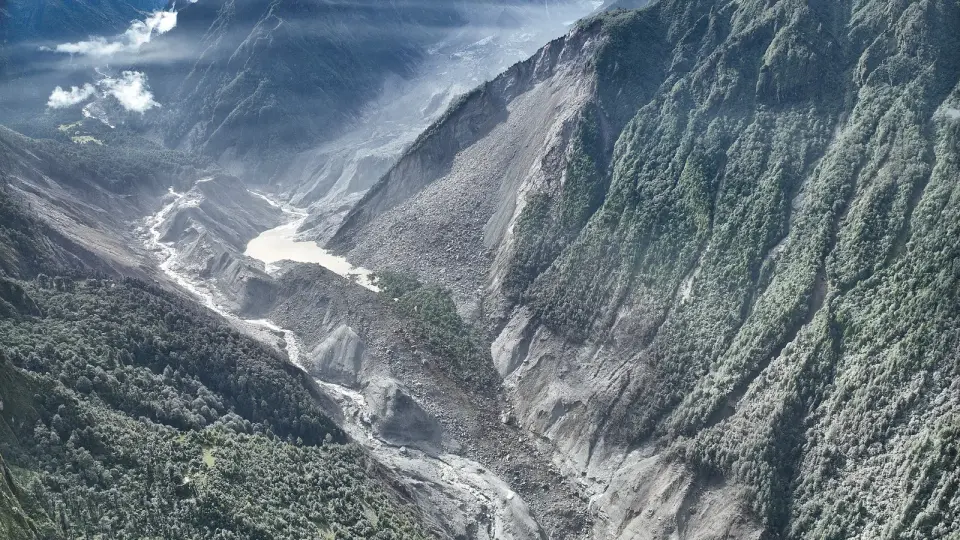
A massive mudslide triggered by a glacier collapse in Nepal on August 26, 2026, blocked a river channel near Gyirong Port in China's Xizang region, creating a dangerous barrier lake. The natural dam, approximately 150 meters long and 40-50 meters high, initially held 2 million cubic meters of water. Although the lake began overflowing by August 27, rescue operations were suspended on August 28 due to safety concerns. By August 31, water was flowing through the channel, but authorities warn that glaciers in the impact crater remain at risk of further collapse, potentially triggering new hazards.
Key points
- The disaster originated from a high-altitude ice collapse in the Cuojian River in Nepal, which scoured moraine deposits and created a high-speed debris flow.
- The debris flow struck Gyirong Port in Xizang, blocking the confluence of the Puripu Qiangzangbu and Cuojian rivers, forming a barrier lake with a storage capacity of 1.5 to 2 million cubic meters.
- As of August 27, the lake reached an overtopping state; forecasts predicted an additional 3 million cubic meters of inflow over three days, increasing breach risks.
- Rescue missions to the core disaster zone were suspended on August 28 due to ongoing overtopping and safety hazards.
- By August 31, water was flowing through the river channel, but the Ministry of Water Resources warned that glaciers around the impact crater remain at risk of collapse.
- China identified 14 moraine-dammed lakes larger than 0.1 square kilometers on its side of the border, with 10 classified as high-risk.
Background
This event follows a series of earlier reports detailing the rapid descent of the debris flow, which traveled approximately 20 kilometers at an average speed of 50 meters per second. Previous coverage noted that the initial barrier lake was stabilized by late August, but a second lake was identified upstream. Rescue efforts have been complicated by damaged infrastructure, including the main highway, requiring temporary routes and advanced monitoring systems to navigate the hazardous terrain.
How outlets are covering it
CGTN emphasizes the immediate danger of the barrier lake's formation and the suspension of rescue operations due to overtopping risks. The Global Times highlights the ongoing geological instability, noting that while water is currently flowing, further landslides could create new barrier lakes, and it provides detailed data on the number and risk classification of moraine-dammed lakes in the region. The Independent focuses on the rapid recovery of infrastructure, reporting that China completed the rebuilding of the road to the Nepal border less than a week after the flash floods, a detail not mentioned in the other sources. While CGTN and Global Times focus on the hydrological and geological risks, the Independent emphasizes the logistical and engineering response to restore connectivity.
Why it matters
The barrier lake poses a significant threat to downstream communities and infrastructure due to the risk of sudden breach and flooding. The ongoing instability of glaciers in the impact crater indicates that the disaster is not over, with potential for secondary hazards. The rapid rebuilding of the road to the Nepal border is crucial for rescue operations, supply delivery, and long-term regional stability, highlighting the importance of infrastructure resilience in disaster-prone areas.
What to watch
Authorities will continue monitoring the barrier lake and the risk of further glacier collapses. The Ministry of Water Resources has deployed teams for emergency hydrological monitoring and is assessing potential sites for monitoring station installations along the Purepu Tsangpo, Donglin Tsangpo, and Gyirong Tsangpo rivers. Rescue operations may resume as conditions stabilize, but the risk of new barrier lakes remains a concern.
- Barrier lake forms after Gyirong mudslide in Xizang news.cgtn.com
- China Says 261 Foreigners From 23 Countries Are Missing in Tibet Flood The New York Times
- Glacier collapse risk remains around Nepal’s Cuojian River impact crater: China’s Ministry of Water Resources Global Times
- Himalayan Disaster Tests China’s Clout as Regional Leader WSJ
- China finishes rebuilding road to Nepal border just one week after devastating flash floods independent.co.uk
Want the full story? Read the original reporting
Read on news.cgtn.com