
Hungary Sinks Barges in Danube to Prevent Nuclear Plant Shutdown Amid Drought
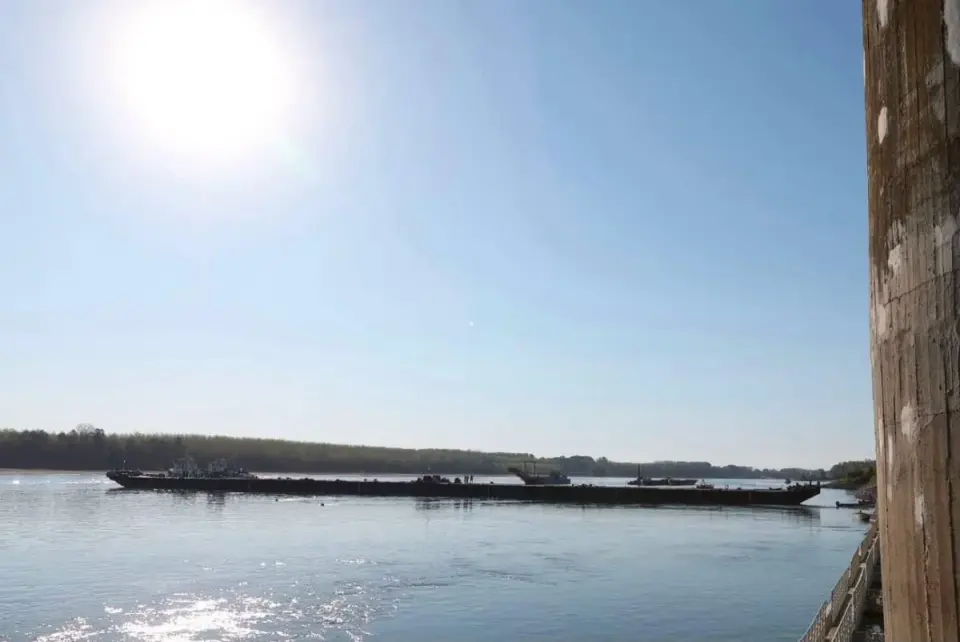
Hungarian authorities are sinking two barges into the Danube River to artificially raise water levels and prevent the shutdown of the Paks nuclear power plant. This emergency measure aims to secure cooling water for the facility, which supplies a significant portion of the country's electricity, as record-low river levels threaten a national energy crisis.
Key points
- Hungarian crews are sinking two 260-foot barges into the Danube to raise water levels near the Paks nuclear plant.
- Prime Minister Peter Magyar stated that water levels are currently 48 inches below normal and could drop further, risking the shutdown of one of the plant's two remaining functioning turbines.
- The Paks plant generates approximately half of the electricity needed by Hungary's 10 million residents, making its operation critical for national energy security.
- The action is part of a broader response to a months-long European drought that has pushed Danube water levels to record lows.
- Prime Minister Magyar is simultaneously reviewing a previous Russian-backed nuclear expansion deal, citing delays and concerns over open-circuit cooling systems.
Background
This development follows a series of energy disruptions in Hungary earlier in 2026. In August, the Paks plant was forced to shut down temporarily due to similar low water levels, prompting the European Union to monitor the situation and consider emergency coordination. Earlier reports indicated that Hungary narrowly avoided a total shutdown when water levels stabilized, but the current measures suggest the crisis remains unresolved. The current situation also intersects with political shifts, as the new government under Magyar is re-evaluating previous energy agreements with Russia.
How outlets are covering it
UPI focuses on the immediate physical intervention, highlighting the sinking of barges as a direct response to the water level crisis to prevent turbine shutdowns. Politico, however, frames the energy crisis within a broader political context, emphasizing Prime Minister Magyar's skepticism regarding the Russian-funded Paks II expansion. While UPI notes the plant's critical role in power generation, Politico highlights that the plant's output has dropped to 10% due to the drought and that Magyar is challenging the viability of the Russian deal, citing delays and environmental concerns. Both sources agree on the severity of the drought but differ in emphasis: UPI on the emergency technical fix, and Politico on the political and contractual implications for future energy infrastructure.
Why it matters
The stability of the Paks nuclear plant is vital for Hungary's energy independence and regional grid stability. A shutdown could trigger a national energy crisis, potentially affecting neighboring countries and prompting further EU intervention. Additionally, the political review of the Russian nuclear deal signals a potential shift in Hungary's energy policy and its relations with Moscow, which could have long-term implications for European energy security and sanctions compliance.
What to watch
Authorities will continue to monitor water levels, velocity, and riverbed conditions using measuring vessels and devices. If water levels drop further, the plant may be forced to shut down additional turbines. The Hungarian government will also proceed with its full review of the Paks II project, including its financing and cooling arrangements, which could lead to significant changes in the country's nuclear energy strategy.
- Hungary sinks barges into Danube River to stave off energy crisis upi.com
- Hungary to sink two barges near nuclear plant to ensure cooling Reuters
- Hungary Sinks Barges to Lift Danube Near Its Nuclear Plant Bloomberg.com
- Magyar casts doubt on Hungary-Russia nuclear power deal politico.eu
- Hungary’s government plans interventions on Danube River to keep nuclear plant running AP News
Want the full story? Read the original reporting
Read on upi.com