
Record Rhine Drought Disrupts European Shipping and Power
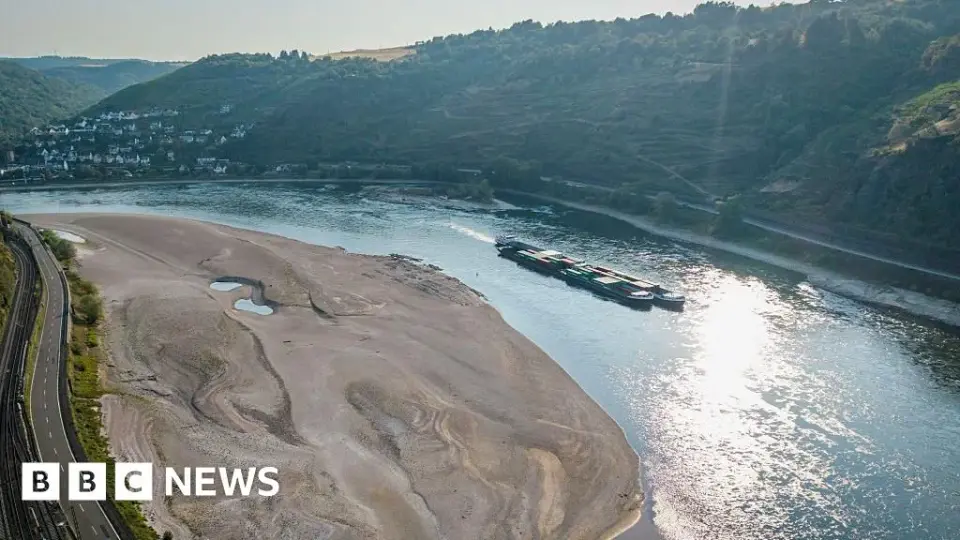
The Rhine and Danube rivers have reached record low levels, severely impacting European shipping, agriculture, and energy production. The Rhine hit its lowest recorded levels in Cologne and Lobith, while the Danube's low flow forced Hungary to shut its only nuclear plant. Shipping costs are rising as cargo loads are reduced, and alternative routes like Belgium's Albert Canal are seeing increased demand. The drought, exacerbated by heatwaves, is also causing dike instability in the Netherlands and saltwater intrusion in Italy's Po Valley.
Key points
- The Rhine reached record low levels in Cologne and Lobith, with the Kaub chokepoint hitting a 25cm depth, matching the 2018 low.
- The Danube's low levels forced Hungary to shut its only nuclear plant and disrupted power in Serbia and Romania.
- Shipping on the Rhine is restricted, with cargo loads dropping from 2,500 tons to 400-600 tons, increasing transport costs.
- MSC is offering rail and truck alternatives, and Belgium's Albert Canal is seeing increased cargo and cruise traffic.
- The drought is causing dike instability in the Netherlands and saltwater intrusion in Italy's Po Valley, threatening agriculture.
Background
This crisis follows a broader pattern of extreme drought in Europe, as noted in our August 1, 2026, coverage, which highlighted the impact on power and shipping. The current situation is part of a larger trend of climate change increasing evaporation and making drought conditions more likely, as reported by the World Weather Attribution group. The drought is also affecting other regions, such as the Colorado River basin in the US, which has seen historic low levels in Lake Powell and Lake Mead.
How outlets are covering it
BBC emphasizes the record low levels of the Rhine and Danube and the economic fallout for shipping, citing the Rhine Waterways and Shipping Authority. AP News focuses on the impact on Dutch dikes and German cargo ships, highlighting the risk of dike failure due to dry peat and the reduced cargo capacity of ships. The Loadstar highlights the response of shipping companies like MSC, which are offering alternative routes and modes of transport, and notes the increased demand for Belgium's Albert Canal. The outlets agree on the severity of the drought and its impact on shipping and energy, but differ in their emphasis on the specific consequences and responses.
Why it matters
The drought is causing significant economic and environmental impacts across Europe, including increased shipping costs, energy shortages, and agricultural disruptions. The reduced water levels are also affecting the stability of dikes and the availability of freshwater for households and industry. The crisis highlights the vulnerability of Europe's infrastructure to climate change and the need for adaptive measures to mitigate future impacts.
What to watch
The drought is expected to continue for at least another week, with temperatures above 40C in many central and southern European countries. Shipping companies are likely to continue using alternative routes and modes of transport, and authorities are monitoring the stability of dikes and the availability of freshwater. The long-term impact of the drought on Europe's economy and environment will depend on the extent of the rainfall and the effectiveness of adaptive measures.
- Rhine falls to record low levels as drought strains Europe's rivers BBC
- Dry, hot summers are putting Dutch dikes at risk and threatening German river trade AP News
- Rhine water level drops to around record lows, costs for industry rise Reuters
- News MSC steps up with viable alternatives to drought-hit European barge traffic The Loadstar
- Germany: Low Rhine River levels could weigh down economy dw.com
Want the full story? Read the original reporting
Read on BBC