
Global Biodiversity Summit in Yerevan Reveals Deep Financing Gaps Despite Record Restoration Efforts
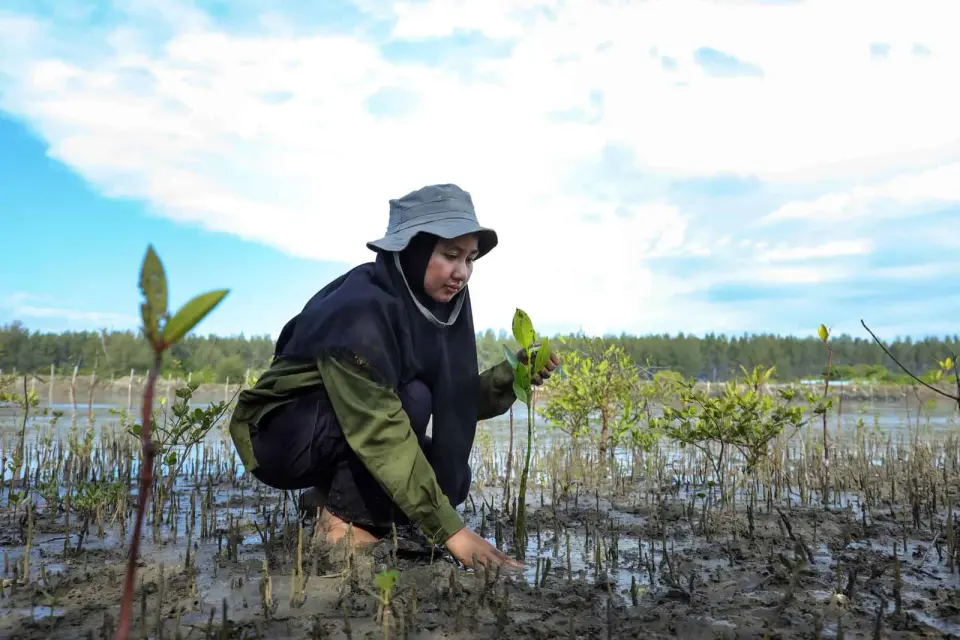
The UN Environment Programme reports that 252 million hectares of land, marine, and freshwater habitats across 149 countries are under active restoration, supporting over one million green jobs. This progress coincides with the conclusion of the 17th Convention on Biological Diversity (COP17) in Yerevan, Armenia, where nations reviewed progress toward 2030 targets. While land restoration is on track, marine and freshwater ecosystems lag significantly. The summit highlighted a critical financing gap, with annual investment needing to quadruple to $296 billion by 2030. Other positive developments include Barbados eliminating mother-to-child HIV transmission, Portugal imposing strict environmental rules on data centers, and England mandating a 10% biodiversity net gain for major infrastructure projects.
Key points
- UNEP estimates 252 million hectares of habitats are being restored across 149 countries, a scale comparable to the size of Kazakhstan.
- COP17 in Yerevan found that 22 of 23 global biodiversity targets are off track, primarily due to insufficient funding and lack of action on harmful subsidies.
- Annual restoration investment must increase from $64 billion to $296 billion by 2030 to meet pledged goals, a gap of $700 billion per year.
- Barbados has eliminated mother-to-child HIV transmission, joining 26 other countries recognized by the WHO for this achievement.
- Portugal is mandating renewable energy and water-free cooling for data centers, while England requires a 10% biodiversity net gain for major infrastructure projects.
- The Green Climate Fund allocated a record $3.3 billion to climate projects in developing countries, though this is negligible compared to the total need.
Background
In 2021, governments pledged to restore 1 billion hectares of degraded ecosystems by 2030. The 2022 Kunming-Montreal Global Biodiversity Framework set ambitious targets, including protecting 30% of land and sea. The recent COP17 summit in Yerevan served as the halfway point for reviewing these commitments. Previous archive coverage from October 2026 focused on local US issues, such as the Good family lawsuits regarding ICE actions and the Dampf Good BBQ expansion controversy, which are unrelated to the current global environmental developments.
How outlets are covering it
Positive News emphasizes the unprecedented scale of nature restoration and highlights specific policy wins in Barbados, Portugal, and England. The Conversation and MSCI focus on the financial and political failures of COP17, noting that while pledges were made, key financing mechanisms were deferred to 2028. The Conversation highlights the lack of progress on harmful subsidies and digital sequence information, while MSCI points out that investors are struggling to link nature risks to financial losses due to data gaps. Both secondary sources argue that the summit's outcomes are insufficient without concrete funding and enforcement, contrasting with the optimistic tone of the primary source regarding restoration rates.
Why it matters
The disconnect between restoration progress and financing gaps threatens the 2030 biodiversity targets. Without increased funding and stricter regulations on industries like data centers and fossil fuels, the current pace of restoration may not offset ongoing biodiversity loss. The success in Barbados and the new rules in England and Portugal offer models for other nations, but the global financial shortfall remains a critical barrier to achieving the pledged 30% restoration goal.
What to watch
Governments are expected to finalize decisions on new financial mechanisms and the role of Indigenous peoples at COP18 in Ecuador in 2028. Portugal’s new data center laws are due to take effect next year, while Germany’s 100% renewables mandate for data centers may be delayed to 2030. Investors and companies are encouraged to use available nature data to assess risks and engage with firms, despite current gaps in financial materiality data.
- What went right this week: the good news that matters Positive News
- Biodiversity summit saw progress on subsidy reform, but pharma firms push back against fund for Indigenous peoples Reuters
- The world promised to halt biodiversity loss by 2030 – now it needs to turn pledges into action The Conversation
- Asia Leads Documented Ecosystem Restoration: UN Report IndiaWest
- Halfway to 2030, COP17 Leaves Finance Unresolved MSCI
Want the full story? Read the original reporting
Read on Positive News