Tag

Biodiversity

All articles tagged with #biodiversity

Volcanic Warmth Creates Hidden Nursery for Giant Deep-Sea Skate Eggs
science-and-technology12 days ago

Volcanic Warmth Creates Hidden Nursery for Giant Deep-Sea Skate Eggs

Scientists discovered large rectangular eggs of the Pacific white skate at about 3,500 meters beneath an active seafloor volcano off Vancouver Island. The geothermally heated water provides a gentle incubator that can accelerate embryo development in the cold, high-pressure deep sea, potentially shaving years from the lengthy incubation. The finding links volcanism to biodiversity, highlighting conservation needs for geothermal nurseries and offering new questions about how vent activity shapes reproductive success. Researchers used ROVs, high-def imagery, temperature readings, and geochemical data to map the thermal landscape where eggs cluster.

Working Forests: A long-term blueprint for climate, biodiversity, and wood
environment12 days ago

Working Forests: A long-term blueprint for climate, biodiversity, and wood

The article argues that 'working forests' are managed for the long term, replanting more than they harvest (over 1 billion seedlings annually) and coordinating foresters, ecologists, and engineers to provide renewable wood while protecting soil, water, and wildlife. It notes carbon dynamics: younger, actively managed forests sequester CO2 more quickly, and carbon stays stored in wood products after harvest; harvest cycles span 25–60 years. It describes a 'shifting mosaic' of preserved and actively managed areas to boost biodiversity and resilience, including wildfire risk reduction through thinning and prescribed practices. The message is that sustainable forest management is a spectrum that can be both economically viable and ecologically sound.

Twenty-four new amphipods, including a new family and superfamily, found in the central Pacific's deep sea
science16 days ago

Twenty-four new amphipods, including a new family and superfamily, found in the central Pacific's deep sea

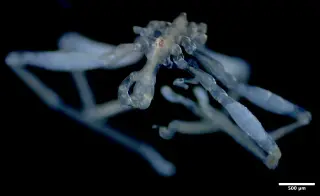
Researchers describe 24 new amphipod species from the central Pacific's Clarion-Clipperton Zone, including a previously unknown family (Mirabestiidae) and a new superfamily (Mirabestioidea), plus two new genera. The work, part of the International Seabed Authority's SSKI One Thousand Reasons initiative, used collaborative taxonomy workshops and produced the first molecular barcodes for several species. The findings underscore the CCZ's largely undocumented biodiversity and suggest that, at current rates, eastern CCZ could be nearly fully cataloged within a decade, highlighting the importance of global collaboration for conservation and policy.

Whale-Headed Termite Discovered Eight Meters Up in the Rainforest Canopy
science17 days ago

Whale-Headed Termite Discovered Eight Meters Up in the Rainforest Canopy

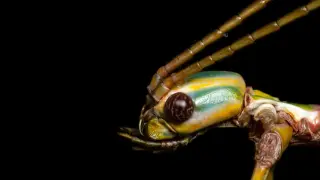
Researchers in French Guiana describe a new termite species, Cryptotermes mobydicki, found eight meters up in the rainforest canopy. Its soldiers have an unusually long, forward-extending head that hides the jaws, giving a whale-like profile reminiscent of Moby-Dick. Genetic analysis links it to Caribbean populations (Colombia, Trinidad, Dominican Republic), suggesting an ancestral lineage across tropical America. The species lives in dead canopy wood and helps decompose it, posing no threat to human structures. The description was published in ZooKeys by Rudolf Scheffrahn and colleagues.

Cambodian cave survey uncovers flying snake and neon turquoise pit viper
science17 days ago

Cambodian cave survey uncovers flying snake and neon turquoise pit viper

In a multi-year exploration of more than 60 limestone caves in Battambang, Cambodia, researchers uncovered rare and new species including a flying snake and a vivid, heat-sensing pit viper, along with camouflaged leaf-toed geckos and bright millipedes, highlighting how isolated karst ecosystems foster unique life and underscoring the need to protect these habitats, of which only about 1% is legally safeguarded.

Cambodian Karst Caves Reveal 11 New Species, Highlighting Fragile Biodiversity
science18 days ago

Cambodian Karst Caves Reveal 11 New Species, Highlighting Fragile Biodiversity

Scientists surveying Cambodia’s limestone karst revealed 11 species new to science across 64 caves, including a turquoise pit viper, an ornate flying snake, several geckos, micro-snails and millipedes. The discovery shows how isolated cave systems fuel rapid evolution, but warns that quarrying, tourism and habitat destruction threaten these species and underscores the need for protection.

Cambodia's hidden caves yield 11 new species, from turquoise pit viper to flying geckos
science18 days ago

Cambodia's hidden caves yield 11 new species, from turquoise pit viper to flying geckos

A survey of Cambodia’s karst limestone caves uncovered 11 species new to science, including a turquoise pit viper with a heat-detecting head organ, the ornate flying snake, several geckos (one named Gekko shiva), and other invertebrates, found across 64 caves on 10 karst hills between 2023 and 2025. Researchers warn that these isolated cave ecosystems are under threat from limestone quarrying, habitat loss, and overtourism, and call for protective status and continued conservation work.

Limestone caves in Cambodia reveal a treasure trove of new species
science18 days ago

Limestone caves in Cambodia reveal a treasure trove of new species

A Fauna & Flora-led survey across more than 60 caves in Battambang Province's karst landscape uncovered multiple previously unknown species, including several geckos (Gehyra, Dixonius noctivagus and Cyrtodactylus kampingpoiensis), a new pit viper, and other cave-dwelling creatures such as millipedes, a reticulated python, a brown tree frog and an ornate flying snake, underscoring Cambodia's karst ecosystems as a hotspot for biodiversity and undiscovered life.

Tiny Nematodes Discovered Living Deep in Great Salt Lake Sediments
science1 month ago

Tiny Nematodes Discovered Living Deep in Great Salt Lake Sediments

University of Utah researchers report finding microscopic nematodes living in the sediment beneath Great Salt Lake, revealing a hidden layer of biodiversity in this hypersaline environment. Genetic analysis identified multiple nematode species that inhabit lakebed spaces, feeding on bacteria and organic matter to help recycle nutrients and potentially shaping the lake’s microbial ecosystem. The discovery, published in the Journal of Nematology, expands our understanding of life in extreme habitats.

Uncharted Deep Sea Reveals Hundreds of Potential New Species
science1 month ago

Uncharted Deep Sea Reveals Hundreds of Potential New Species

A Nature Ecology and Evolution study of the Clarion-Clipperton Zone found 4,350 seabed wildlife specimens; about 3,826 matched 788 known species, revealing over 500 potential new species and underscoring the ocean floor's hidden biodiversity as deep-sea mining expands, with researchers noting a 37% decline near mining paths and emphasizing the need to predict biodiversity loss and guide more responsible extraction.

Nine Living Fossils Roaming the Earth Today
science1 month ago

Nine Living Fossils Roaming the Earth Today

Nine species are highlighted as 'living fossils' that have changed little over hundreds of millions of years, from sharks and nautilus to sea turtles, crocodiles, platypuses, and the tuatara. The article traces their ancient origins, notes ongoing threats like pollution and climate change, and underscores how these lineages endured multiple mass extinctions while remaining recognizable today.