
Italy Secures EU Deal to Cap Gas-Driven Electricity Costs
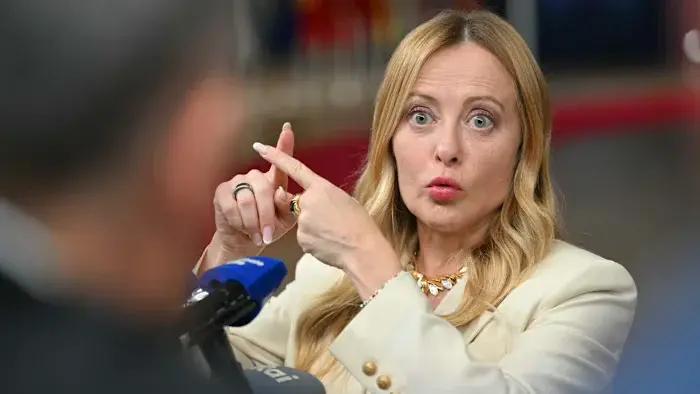
Italy has reached a preliminary agreement with the European Commission to decouple its wholesale electricity prices from gas costs, a move Prime Minister Giorgia Meloni described as a significant political victory ahead of the 2027 elections. The deal allows Italy to cap the impact of gas-fired generation on the overall electricity price, addressing a structural vulnerability in its energy mix. While the government frames the measure as essential for protecting households and industry from soaring fossil fuel prices, critics warn it may create unsustainable costs and distort market dynamics.
Key points
- Italy and the European Commission reached a preliminary agreement allowing Italy to lower wholesale electricity prices by capping the influence of gas costs.
- The mechanism activates when gas prices exceed €59/MWh, with the government compensating generators for the difference, funded by consumer levies.
- Prime Minister Meloni hailed the deal as a major win, noting it addresses the high cost of living, which is the top concern for a quarter of Italians.
- The agreement is modeled after the 2022 'Iberian exception' for Spain and Portugal, though it was significantly scaled back from Meloni's initial proposal to subsidize carbon levies.
- Critics, including energy expert Simone Tagliapietra, warn the measure could boost gas demand and lead to the export of subsidized electricity, potentially causing more harm than good.
Background
Italy's energy market has been under strain due to its heavy reliance on gas-fired electricity, which drives up wholesale prices compared to neighbors like France and Spain that rely more on nuclear and renewables. This issue has been a central theme in Meloni's recent political maneuvers, including her push for electoral reform and her advocacy for EU-level flexibility in energy and fiscal rules. The current deal follows a broader European context where energy costs are a primary driver of inflation and public discontent, exacerbated by geopolitical tensions in the Middle East and Ukraine.
How outlets are covering it
The Financial Times highlights the deal as a political triumph for Meloni, emphasizing the mechanism's similarity to the 'Iberian exception' and the risks of unintended consequences, such as increased gas demand. The Italian government, via Meloni's address to the Senate, frames the agreement as a necessary correction to EU rules that are out of touch with current realities, arguing that the ETS and marginal pricing mechanisms unfairly penalize Italy's gas-heavy grid. ANSA focuses on the broader EU summit context, noting Meloni's satisfaction with the inclusion of ETS-related issues in the summit conclusions, which she views as a positive step toward addressing energy costs. OneSafe, while not directly covering the political deal, notes that lower electricity costs in Italy could attract Bitcoin miners, though it cautions that such savings may be offset by global market dynamics and regulatory hurdles.
Why it matters
This deal could significantly reduce household and industrial energy bills in Italy, potentially stabilizing the economy and providing a political boost for Meloni ahead of the 2027 elections. However, it also raises questions about the long-term sustainability of the measure and its potential to distort energy markets across the EU. The outcome will influence how other EU member states approach energy pricing and could set a precedent for future negotiations on energy policy within the Union.
What to watch
The agreement is preliminary, and final details are expected to be finalized in the coming weeks. Meloni has indicated that the government will continue to push for further reforms, including adjustments to the ETS and ETS2, to ensure that energy costs remain manageable. The European Commission will likely monitor the implementation of the deal to ensure it complies with EU state aid rules and does not create unintended market distortions.
- Italy secures EU deal to lower its electricity prices Financial Times
- Italy clinches deal with EU over measures to limit impact of gas prices on electricity costs Reuters
- The Bitcoin Mining Dilemma in Italy’s Energy Scene OneSafe
- President Meloni’s address to the Senate ahead of the European Council meeting on 15-16 October www.governo.it
- Meloni says reference to ETS in summit conclusions is a positive step ANSA
Want the full story? Read the original reporting
Read on Financial Times