
Belgian Protests Turn Violent as Police Deploy Tear Gas in Brussels and Liège
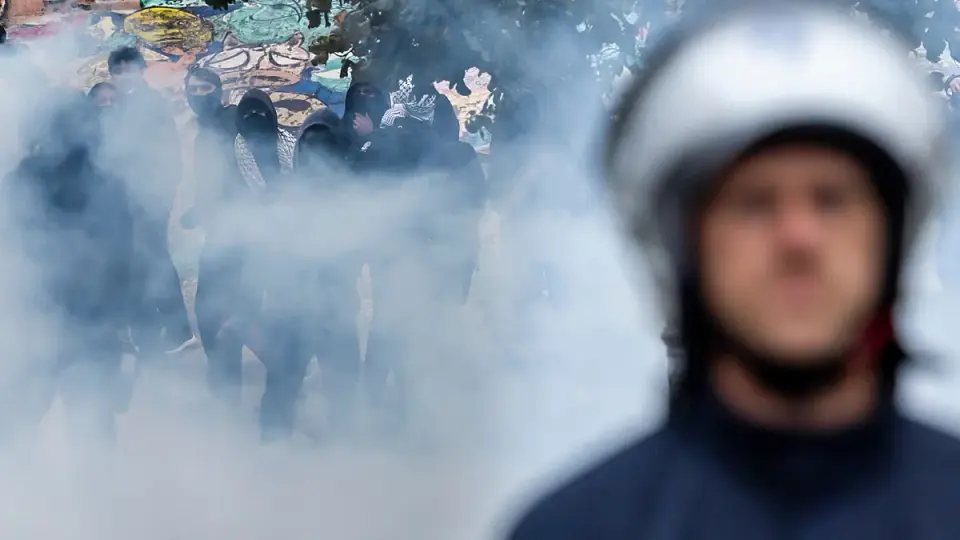
Violent clashes erupted in Brussels and Liège on October 17, 2026, as police deployed tear gas and water cannons against demonstrators protesting education costs and austerity. Interior Minister Bernard Quintin condemned the unrest as 'organized violence,' while police reported approximately 10 arrests in Brussels. The unrest mirrors escalating tensions in neighboring France, where similar protests have led to widespread chaos and injuries.
Key points
- Police in Brussels used tear gas and water cannons to disperse hundreds of protesters near the central railway station and in the Bourse district on October 17, 2026.
- Interior Minister Bernard Quintin described the situation as 'pure and simple violence,' claiming it was organized to destabilize society, and stated that all necessary measures would be taken to restore order.
- In Liège, police used water cannons to break up smaller groups of demonstrators, following clashes that occurred in the city ten days prior.
- Protests were driven by high school students opposing rising university registration fees and broader cost-of-living concerns, with some groups throwing bottles, fireworks, and flammable liquids at police.
- A Socialist Party office was vandalized, and garbage bins and e-scooters were set on fire during the disturbances in Brussels, according to Le Monde.
Background
The current unrest in Belgium follows a broader wave of European protests against rising living costs and educational neglect. In France, approximately 550,000 people demonstrated on October 17, with violence escalating in Paris and other cities. In Albania, the 'Flamingo Revolution' has seen five days of violent clashes between students and police, driven by corruption allegations and high living costs. These events highlight a growing trend of youth-led unrest across Europe, fueled by economic pressures and dissatisfaction with government policies.
How outlets are covering it
Euronews and Le Monde emphasize the violent nature of the protests, with Interior Minister Bernard Quintin labeling the unrest as 'organized violence' and 'pure and simple violence.' Le Monde notes that police used tear gas and water cannons in response to youths throwing bottles and missiles, while Euronews highlights the broader context of cost-of-living protests across Europe. UA.NEWS provides a more detailed account of the events, noting that the initial gathering near Brussels-Central station was unauthorized but later allowed to march, and that participants chanted slogans against police repression and government policies. UA.NEWS also highlights the peaceful nature of the march in Liège, where around 250 people, mostly young people, gathered and marched to the city center, raising issues of education funding and social inequality. The perspectives differ in their emphasis on the violence and the role of the police, with Euronews and Le Monde focusing on the clashes and the government's response, while UA.NEWS provides a more balanced view of the protests, including the peaceful elements and the specific grievances of the demonstrators.
Why it matters
The violent clashes in Belgium reflect a growing trend of youth-led unrest across Europe, fueled by economic pressures and dissatisfaction with government policies. The protests highlight the increasing tension between young people and the government, as well as the potential for these protests to escalate into more widespread unrest. The government's response, including the use of tear gas and water cannons, and the condemnation of the protests as 'organized violence,' may further exacerbate tensions and lead to more protests in the future.
What to watch
The government is expected to take further measures to restore order, as stated by Interior Minister Bernard Quintin. The protests may continue, with more clashes and arrests expected. The government may also face increased pressure to address the underlying issues driving the protests, such as rising education costs and austerity measures. The situation in Belgium may also have implications for other European countries, as the protests reflect a broader trend of youth-led unrest across the continent.
- Protesters clash with police in Belgium as demonstrations turn violent across Europe Euronews
- Protesters clash with police in Brussels Reuters
- Belgian police fire tear gas at protesters Le Monde.fr
- Police stop antifascist protesters in Anderlecht but unrest continues The Brussels Times
- Police use water cannon and tear gas at Brussels protest — Anadolu Agency UA.NEWS
Want the full story? Read the original reporting
Read on Euronews