
Belgrade Burial of Ratko Mladić Sparks EU Condemnation and Deepens Balkan Divisions
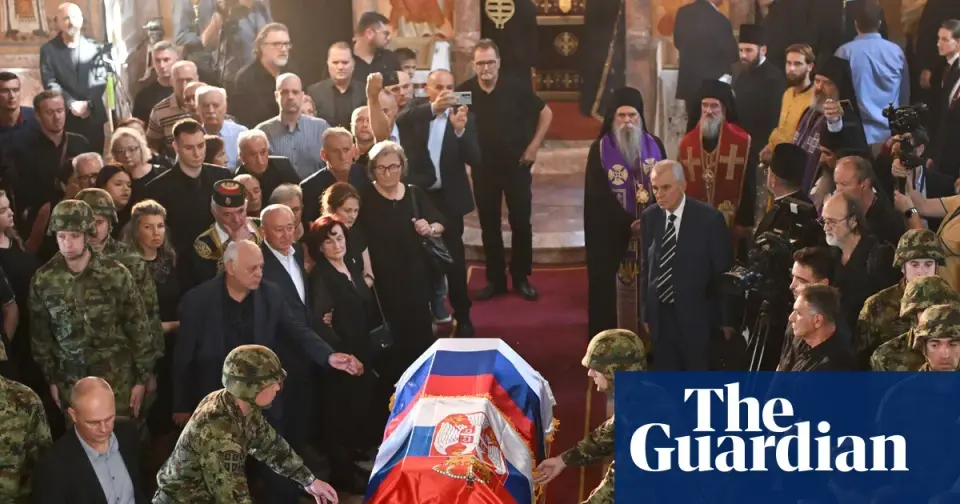
Ratko Mladić, the Bosnian Serb general convicted of genocide for the 1995 Srebrenica massacre, was buried in Belgrade with full military honors on Monday. Thousands of mourners, including government officials and veterans, attended the ceremony at St. Luke's Church, where his coffin was draped in the Serbian flag. The event drew sharp condemnation from the European Union, with Enlargement Commissioner Marta Kos canceling a planned visit and warning that such glorification is incompatible with EU values. While President Aleksandar Vučić did not attend, his son and other officials were present. The funeral highlighted the enduring divide in the region, with many in Serbia and Republika Srpska viewing Mladić as a hero, while international bodies and civil society groups condemned the state-backed tribute to a convicted war criminal.
Key points
- Ratko Mladić, 84, died on August 27 while serving a life sentence for war crimes and crimes against humanity.
- Thousands gathered in Belgrade for his funeral, which included military guards, a coffin draped in the national flag, and a banner reading 'Welcome, General, thanks be to your mother for bearing a hero.'
- EU Enlargement Commissioner Marta Kos canceled a visit to Serbia, stating the glorification of Mladić is incompatible with EU values and the path to accession.
- President Aleksandar Vučić did not attend the funeral, but his son Danilo and other government figures were present; Vučić had previously supported a 'dignified' burial.
- The funeral drew condemnation from the UN and civil society groups in Serbia, who called it a slap in the face to victims and survivors of the Bosnian war.
- In Republika Srpska, many residents and politicians, including President Milorad Dodik, continue to view Mladić as a defender of Serbs, rejecting the international narrative of his crimes.
Background
Mladić was convicted by the International Criminal Tribunal for the former Yugoslavia (ICTY) in 2017 for his role in the 1992–1995 Bosnian war, including the 1995 Srebrenica massacre, where over 8,000 Bosniak men and boys were killed. He was sentenced to life in prison and his conviction was upheld on appeal in 2021. His death in August 2026 and subsequent state-backed funeral have reignited tensions over the legacy of the Bosnian war and Serbia's relationship with the EU, which has been negotiating accession since 2014.
How outlets are covering it
The Guardian and Al Jazeera emphasize the scale of the state-backed funeral and the sharp condemnation from the EU and UN, highlighting the conflict between Serbia's actions and EU values. Al Jazeera notes the presence of Russian and Montenegrin officials, underscoring the geopolitical dimensions. The Jerusalem Post provides a contrasting perspective from Republika Srpska, where many residents and politicians, including President Milorad Dodik, view Mladić as a hero and defender of Serbs, rejecting the international narrative and arguing that the West has created a 'myth' around him. CNN's source was largely inaccessible due to technical issues, but its headline aligns with the narrative of EU warnings and the hero's burial. The sources collectively illustrate the deep and enduring divide in the region over Mladić's legacy, with the funeral serving as a focal point for tensions between Serbia, the EU, and Bosnia and Herzegovina.
Why it matters
The funeral of Ratko Mladić is a significant event because it highlights the unresolved tensions and divisions in the Balkans, particularly regarding the legacy of the Bosnian war and the Srebrenica genocide. The state-backed tribute to a convicted war criminal has drawn sharp condemnation from the EU, potentially jeopardizing Serbia's accession talks. The event also underscores the enduring nationalist sentiment in parts of Serbia and Republika Srpska, where Mladić is still viewed as a hero, despite his conviction for genocide. This has implications for regional stability, reconciliation, and Serbia's relationship with the EU, as the bloc has warned that glorifying war criminals is incompatible with its values.
What to watch
The EU is likely to continue monitoring Serbia's actions and may factor the handling of Mladić's funeral into its assessment of Serbia's readiness for EU accession. The event may further strain relations between Serbia and Bosnia and Herzegovina, as well as with the EU. In Republika Srpska, the funeral may reinforce nationalist sentiment and the view of Mladić as a hero, potentially complicating efforts at reconciliation and regional stability. The long-term impact on Serbia's EU bid and the broader regional dynamics will depend on how the EU and Serbia navigate the fallout from this event.
- Ratko Mladić, the ‘Butcher of Bosnia’, given hero’s funeral in Serbia theguardian.com
- Thousands of Serbs Gather to Mourn Ratko Mladic, the ‘Butcher of Bosnia’ The New York Times
- Convicted war criminal Ratko Mladic gets hero’s burial in Serbia Al Jazeera
- War criminal Ratko Mladić to receive full military honors in funeral as crowds gather CNN
- Reporter's Notebook: Bosnian Serbs reflect on life of Ratko Mladic The Jerusalem Post
Want the full story? Read the original reporting
Read on theguardian.com