
German Youth Riots Erupt in Frankfurt Amid European Cost-of-Living Unrest
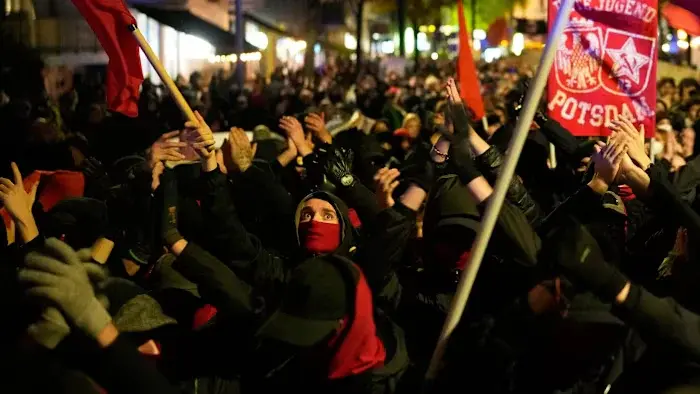
Youth-led protests in Germany turned violent on Saturday, with looting and clashes in Frankfurt, Berlin, and Hamburg. Organized by 'Gen Z regelt,' the demonstrations opposed high living costs, education cuts, and military conscription. While organizers claimed 100,000 to 120,000 participants, authorities reported lower figures. The unrest mirrors recent violent protests in France, where 320,000 people marched on the same day.
Key points
- Protests in Germany, organized by 'Gen Z regelt,' turned violent in Frankfurt, Berlin, and Hamburg, with looting, fireworks, and clashes with police.
- Organizers estimated 100,000 to 120,000 participants across 30+ cities, while authorities reported lower figures, with 56 arrests in Berlin alone.
- Protesters demanded better education funding, opposed military conscription, and criticized public spending cuts, echoing grievances in France.
- Frankfurt saw the most severe violence, with shop looting, Molotov cocktails, and barricades set on fire, prompting police to close parts of the city center.
- The unrest follows similar violent protests in France, where 320,000 people marched on Saturday, with 70,000 police deployed to prevent a repeat of October's chaos.
Background
The German protests are part of a broader wave of youth-led unrest across Europe, driven by anger over housing, education, and living costs. France has been the epicenter, with massive police deployments and violent clashes in October. Similar unrest has spread to Italy, Spain, Portugal, and other nations, reflecting a broader breakdown in the social contract among young people.
How outlets are covering it
The Financial Times and BBC emphasize the violence in Frankfurt, with looting and clashes, while noting that Berlin remained largely peaceful. NBC News highlights the connection to French protests, noting that organizers aimed to maximize turnout by coinciding with Halloween. CNN focuses on the broader European context, noting that protests in Germany, France, Italy, and Serbia share common themes but differ in scale and impact. All sources agree that the protests were organized by 'Gen Z regelt' and opposed military conscription and education cuts, but they differ in their emphasis on the level of violence and the number of participants.
Why it matters
The German protests signal a growing discontent among young people across Europe, with demands for better education, housing, and living conditions. The violence in Frankfurt and other cities raises concerns about the potential for further unrest, especially as similar protests continue in France and other nations. The protests also highlight the challenges faced by governments in addressing the economic precarity and climate concerns of young people.
What to watch
Authorities in Germany and France remain on high alert, with police deployed to prevent further violence. In France, demonstrations are expected to continue, with a nationwide strike and mobilization called by the inter-union coalition on November 5. In Germany, the government is likely to increase security measures and address the demands of protesters, particularly regarding education funding and military conscription.
- Gen Z protests turn violent in Germany Financial Times
- Shops looted as German cost of living protests turn violent BBC
- Riots loot stores in Frankfurt as European youths protest living costs and military service NBC News
- Protests spread to Germany as hundreds of thousands march again in France CNN
- German rioters loot shops as 'Gen Z' demos turn ugly RFI
Want the full story? Read the original reporting
Read on Financial Times