
French riot police stage mass walkout amid two-month student unrest
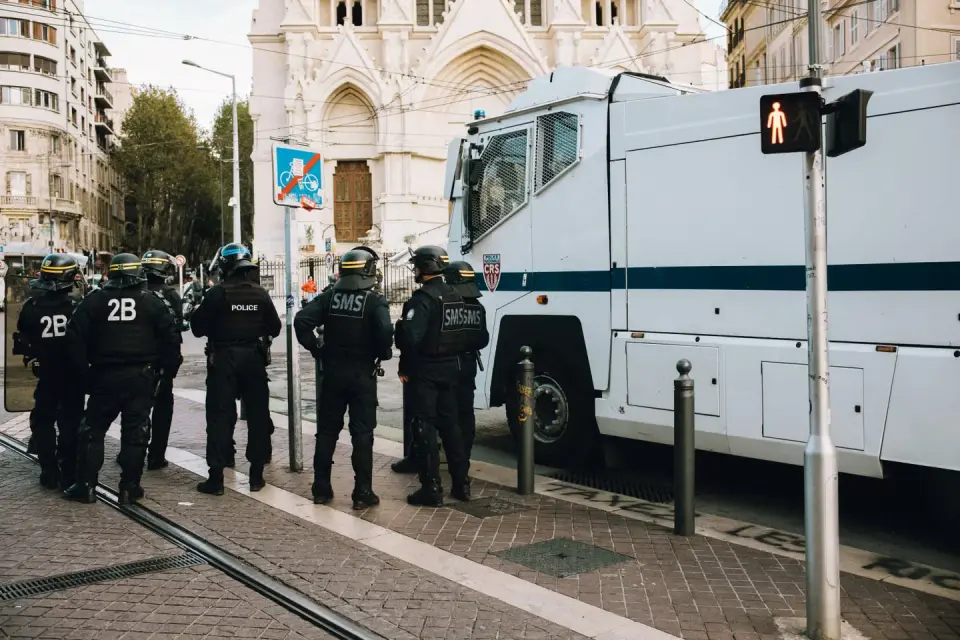
Nearly 1,000 French riot police officers skipped duty on Tuesday via medical consultations, marking a significant escalation in internal discontent. This action follows two months of high school blockades and public-sector strikes. Police unions demand a higher risk premium, while broader societal tensions persist between left-wing student leaders and far-right critics.
Key points
- Approximately 1,000 CRS officers used medical consultations to avoid work on November 17, affecting nearly 30 of 63 units nationwide.
- Police unions demand the police risk premium (ISSP) be raised from 28.5% to 35% of base salary, a request rejected by Interior Minister Laurent Nuñez.
- The walkout follows a failed meeting between unions and the Interior Ministry, where officers expressed exhaustion and anger over working conditions.
- The broader unrest involves polarized youth: left-wing student leaders like Soumaya Sarré and far-right critics like Louise Montangon.
- President Emmanuel Macron has compared the current unrest to the 1968 protests, framing attacks on state symbols as threats to the Republic.
Background
The current crisis builds on months of escalating tensions. Since September, high school blockades have led to over 5,000 arrests and the closure of hundreds of schools. Violence has intensified, including a September incident in Marseille where a 15-year-old was arrested for using a flamethrower against a woman. In October, President Macron condemned attacks on town halls in Limoges, Marseille, and Lyon, describing them as attempts to tear down institutions. International attention has also grown, with former US President Donald Trump blaming immigration for the unrest, a claim Macron dismissed as false. The unrest mirrors similar 'anti-system' riots in Barcelona, highlighting a broader European trend of youth-led civil disorder.
How outlets are covering it
Le Monde focuses on the internal crisis within the CRS, highlighting that officers are using medical consultations to bypass the ban on striking, and that unions feel ignored by Interior Minister Laurent Nuñez. The New York Times emphasizes the generational and political polarization of the protesters, contrasting left-wing student leader Soumaya Sarré with far-right critic Louise Montangon, suggesting the movement lacks a unified direction. Al Jazeera provides a broader sociological context, comparing the current unrest to the 2005 suburban riots and 1968 protests, arguing that the 'French malaise' stems from elite isolation, discriminatory policing, and a failure to provide genuine citizenship rights to marginalized communities, rather than just economic grievances.
Why it matters
The walkout by riot police signals a critical breakdown in the state's ability to manage public order. If the CRS, the primary force for crowd control, continues to refuse duty, the government may struggle to contain the ongoing high school blockades and public-sector strikes. This internal police dissent, combined with deep societal polarization between left and right youth, suggests the unrest may evolve from student protests into a broader institutional crisis, potentially challenging the stability of the French Republic.
What to watch
The situation is expected to intensify with further public-sector strikes and protests scheduled for Tuesday. The key question is whether the CRS walkout will become a sustained movement or a one-off protest. The government must decide whether to negotiate with police unions to address their demands for higher pay and better conditions, or risk further internal fragmentation. Additionally, the polarized nature of the youth movement means that any government concession could be criticized by either the left or the right, making a resolution difficult.
- After two months of protests, anger rises among French riot police Le Monde.fr
- They’re Young and Frustrated and Want France to Change. They Disagree on How. The New York Times
- The new French malaise Al Jazeera
- Riots in France: How anti-government protests spiraled out of control Reuters
- Turnout falls at largely peaceful public sector marches across France Reuters
Want the full story? Read the original reporting
Read on Le Monde.fr