
Knesset elects Matan Kahana as speaker, shifting legislative control to opposition bloc
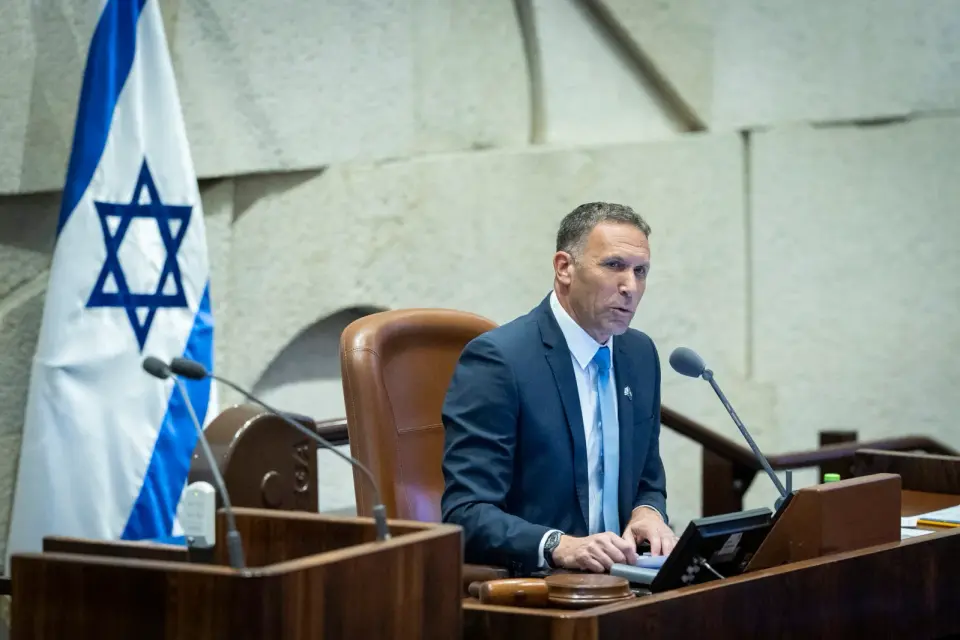
The Israeli parliament elected Yashar MK Matan Kahana as its new speaker on November 17, 2026, in a 66-52 vote that transferred control of the legislative agenda to the opposition bloc led by Gadi Eisenkot. The election followed a six-hour filibuster by Prime Minister Benjamin Netanyahu’s allies and marked a significant shift in power after Netanyahu lost his parliamentary majority in the October 27 elections. Kahana pledged to uphold court rulings and serve all citizens, while the opposition bloc moved to repeal judicial overhaul laws and establish a commission of inquiry into the October 7, 2023, attacks. Netanyahu’s coalition condemned the result as illegitimate, citing the support of Arab parties, while Eisenkot’s bloc faces internal divisions over coalition formation.
Key points
- Matan Kahana, a Yashar party member, was elected Knesset speaker with 66 votes, defeating Likud’s Ofir Katz, who received 52 votes.
- The opposition bloc, comprising 67 seats, includes four Jewish parties and two Arab-led parties (Ra’am and Joint List), which provided crucial support for Kahana’s election.
- Kahana vowed to ensure the Knesset obeys court rulings and to serve all citizens, contrasting with the previous coalition’s defiance of judicial decisions.
- The opposition plans to repeal judicial overhaul laws and establish a commission of inquiry into the October 7, 2023, attacks, which Netanyahu has opposed.
- Netanyahu’s allies condemned the election as an 'eternal disgrace,' accusing the opposition of relying on 'terror supporters' and delegitimizing Arab party participation.
Background
The election follows the October 27, 2026, parliamentary elections, in which Netanyahu’s coalition lost its majority. Gadi Eisenkot, leader of the Yashar party, was tasked by President Isaac Herzog with forming a new government. Prior to the speaker election, Netanyahu delivered a divisive address to the Knesset, accusing Arab lawmakers of seeking Israel’s destruction, which led Eisenkot to cancel unity talks. The opposition bloc has faced internal divisions, with some leaders opposing coalition with Arab parties, while others, like Avigdor Liberman, seek alliances with ultra-Orthodox parties. The speaker’s role is critical in setting the legislative agenda, and the opposition aims to use this position to constrain Netanyahu’s caretaker government.
How outlets are covering it
The Times of Israel emphasized the procedural victory for Eisenkot’s bloc and Kahana’s pledge to uphold court rulings, highlighting the six-hour filibuster by Netanyahu’s allies. CNN focused on the weakening of Netanyahu’s grip on power and the opposition’s plans to repeal judicial overhaul laws and establish a commission of inquiry. The New York Times highlighted the confrontational nature of the divided government and the distinction between Arab party support for the speaker and coalition formation. The Guardian stressed the opposition’s legislative advantage and the urgency to advance bills before Eisenkot’s deadline to form a government. All sources agreed on the 66-52 vote and the opposition’s control of the Knesset, but differed in emphasis: The Times of Israel and CNN focused on the procedural and legislative implications, while the New York Times and Guardian highlighted the political divisions and challenges in coalition formation.
Why it matters
The election of Matan Kahana as Knesset speaker marks a pivotal shift in Israeli politics, transferring control of the legislative agenda to the opposition bloc. This move allows the opposition to challenge Netanyahu’s policies, particularly the judicial overhaul, and to push for accountability for the October 7, 2023, attacks. The result also highlights the deepening political divisions in Israel, with Netanyahu’s allies delegitimizing Arab party participation and the opposition navigating internal disagreements over coalition formation. The speaker’s role in setting the legislative agenda and overseeing parliamentary business makes this a critical step in the opposition’s efforts to constrain Netanyahu’s caretaker government and advance their policy priorities.
What to watch
The opposition bloc is expected to advance legislation to repeal judicial overhaul laws and establish a commission of inquiry into the October 7, 2023, attacks. Eisenkot has up to four and a half weeks to form a new government, with internal divisions over coalition partners, including Arab and ultra-Orthodox parties, posing significant challenges. Netanyahu’s coalition may continue to delegitimize the opposition’s actions and push for a unity government, while the opposition aims to use its control of the Knesset to constrain Netanyahu’s caretaker government. The outcome of coalition negotiations will determine whether Eisenkot can form a government or if Netanyahu will be given another chance to do so.
- Knesset votes 66-52 to elect Yashar’s Matan Kahana as speaker, in boost to Eisenkot bloc The Times of Israel
- Israel’s parliament elects new Knesset speaker, weakening Netanyahu’s grip on power CNN
- Matan Kahana Elected Speaker of Israel’s Parliament The New York Times
- Israeli parliament elects new speaker backed by Netanyahu’s opponents The Guardian
- Eisenkot-led bloc replaces Netanyahu ally as Knesset speaker Reuters
Want the full story? Read the original reporting
Read on The Times of Israel