
Italy Bypasses EU to Deploy Warships as Houthi Control of Bab al-Mandeb Threatens Global Supply Chains
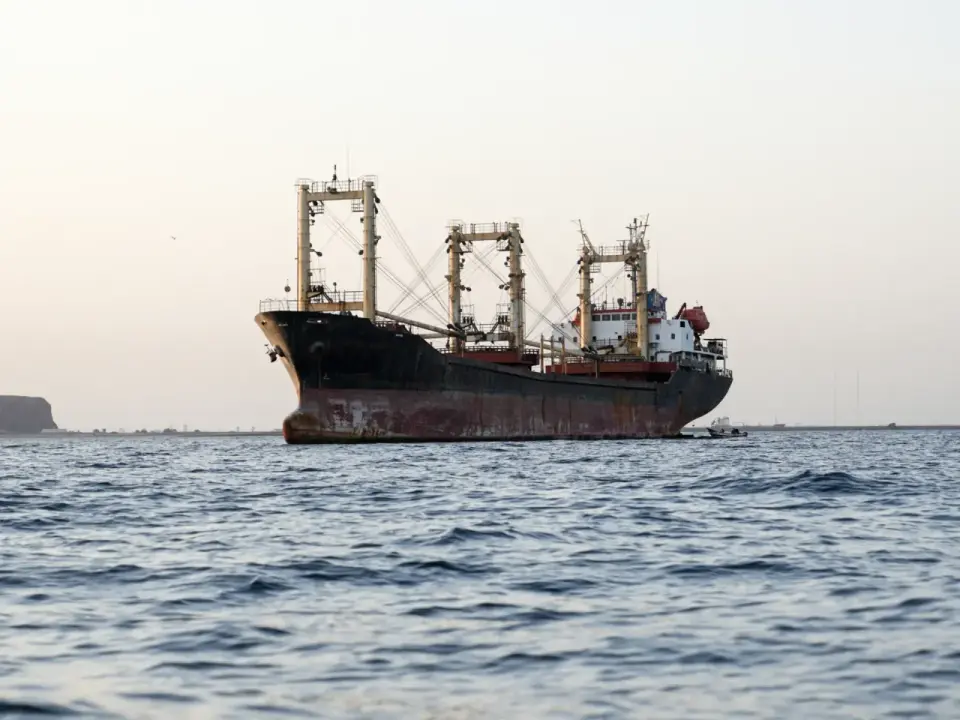
Italy will unilaterally deploy warships to protect its commercial vessels in the Bab al-Mandeb strait, rejecting EU delays. This move follows the Houthis' recent seizure of key Yemeni islands and ports, which threatens to close the last major artery for Gulf oil exports after the Strait of Hormuz was blocked. The disruption risks severe economic fallout, with analysts estimating billions in supply chain costs and potential shortages of critical mining inputs.
Key points
- Italy’s Defence Minister Guido Crosetto announced that Rome will deploy warships to ensure safe passage for its commercial vessels through the Bab al-Mandeb strait, stating that Italy will not wait for a joint European Union decision.
- Crosetto warned that if the waterway becomes impassable, the economic consequences would be severe, criticizing bureaucratic delays in EU decision-making as exacerbating an already complex situation.
- The Houthis have recently seized the Greater and Lesser Hanish islands, along with the coastal port of Mokha and Perim Island, giving them unrestricted access to the strait and control of the entire western Red Sea coast of Yemen.
- The Bab al-Mandeb strait, which is only 30km wide at its narrowest point, handles 12 to 15 percent of global trade and serves as a critical route for oil, gas, and container traffic heading to the Suez Canal.
- The strait’s importance has increased sharply since Iran effectively seized control of the Strait of Hormuz earlier in 2026, pushing Gulf crude exports toward alternative routes, with Saudi Arabia increasingly relying on Red Sea shipping to bypass Hormuz.
Background
This development follows a rapid escalation in the Red Sea region earlier in September 2026. On September 12, Iran and its Houthi allies began tightening their grip on global shipping lanes after seizing Perim Island, threatening oil shipments and pushing prices higher. By September 13, the Houthis had captured key coastal points including Mocha and Mayyun, moving within 20km of Africa and effectively controlling the chokepoint. On September 15, reports indicated the Houthis were threatening Saudi energy infrastructure, including the 745-mile East-West pipeline and the Abqaiq oil processing plant, risking a sizable share of global crude supply. These events have already led to shipping reroutes around the Cape of Good Hope, higher costs, and a rise in piracy risks off the Horn of Africa.
How outlets are covering it
Al Jazeera emphasizes Italy’s unilateral military response and the immediate economic warnings from Rome, highlighting the frustration with EU bureaucratic delays. In contrast, safety4sea focuses on the broader geopolitical warning from Qatar, which cautioned that a closure of Bab al-Mandeb would be 'catastrophic' for the entire world, compounding the disruption already caused by the closure of the Strait of Hormuz. Geomechanics.io provides a technical and economic perspective, modeling that a 90-day disruption could affect 38.9 to 77.8 million tonnes of mining-related commodity flows, with cost premiums of approximately $1.37 billion. This outlet highlights specific vulnerabilities in supply chains for sulfur, graphite, and rare earths, noting that such disruptions could push 2030s supply-demand balances into deficit earlier than previously modeled.
Why it matters
The closure or sustained threat to Bab al-Mandeb represents a critical risk to global energy and trade stability. As the last major artery for Gulf oil reaching global markets after the Hormuz blockade, its disruption could trigger severe inflationary pressure and a global recession. The unilateral action by Italy signals a shift in European defense policy, prioritizing national security over collective EU decision-making. Furthermore, the potential for prolonged maritime bottlenecks threatens to exacerbate existing structural shortfalls in critical minerals, impacting industries from mining to battery production, and could lead to a cascade of economic disruptions across Europe and Asia.
What to watch
Italy is expected to proceed with its warship deployment in the near term, bypassing further EU coordination. The international community, including Qatar and the US, is likely to continue urging collective action to safeguard freedom of navigation and push for a diplomatic resolution to prevent the strait from becoming a permanent chokepoint. Shipping operators may face increased uncertainty and costs as they navigate the conflict-affected waters, with potential further reroutes around the Cape of Good Hope. The Houthis' consolidated control of the western Red Sea coast may lead to further attacks on commercial vessels and Saudi oil infrastructure, potentially escalating the regional conflict and impacting global energy markets.
- Italy to deploy warships to protect shipping through Bab al-Mandeb Al Jazeera
- Italy readies navy to protect its shipping amid Bab el-Mandeb tensions Reuters
- Red Sea disruption: supply-chain risk and design notes for mine project teams Geomechanics.io
- Red Sea disruption puts global mining supplies at risk Mining.com
- A second gateway under threat: Bab el-Mandeb draws fresh concern safety4sea
Want the full story? Read the original reporting
Read on Al Jazeera