
Europe’s Iran War Stance Shifts as Oil Crisis Fuels Protests
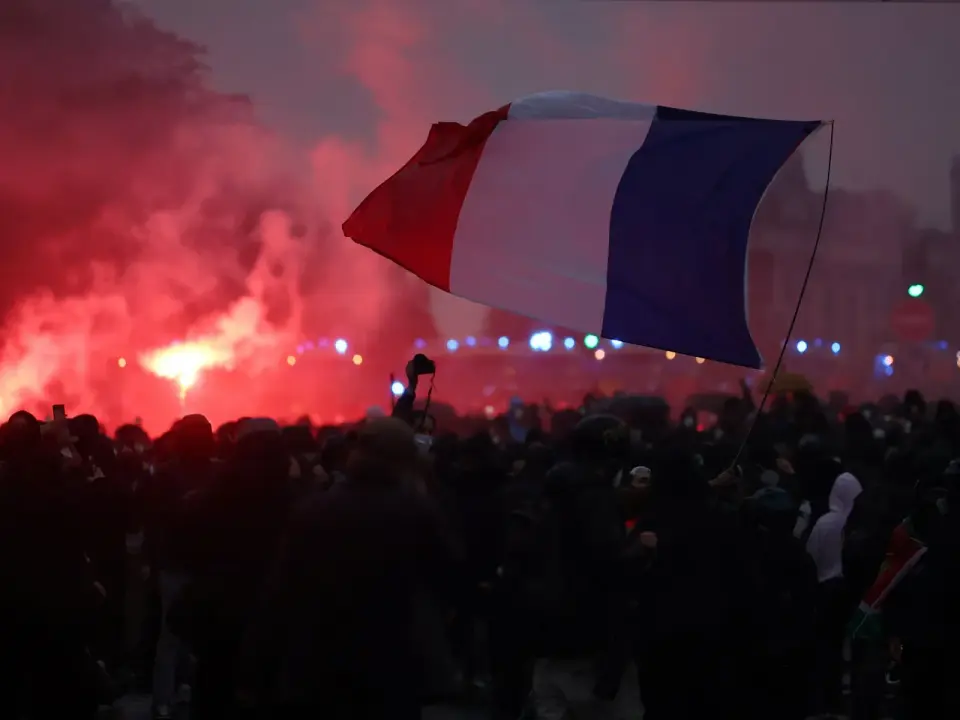
Western European governments are increasingly opposing the US-Israeli war on Iran, driven by soaring energy costs and social unrest. While initial support for the conflict was muted, leaders in Germany, the UK, and France now warn against renewed escalation. Iran’s foreign ministry highlights this shift, contrasting Chancellor Friedrich Merz’s 2025 support for Israel with current European calls for restraint. The conflict has driven Brent crude above $100 and gas prices up 140%, exacerbating a cost-of-living crisis that has sparked protests across Europe.
Key points
- European leaders, including those from Germany, the UK, France, and Italy, met in Istanbul to urge restraint, warning that further escalation would severely impact hydrocarbon prices.
- Spain has taken the hardest line, closing its airspace to US aircraft involved in the war, a move that prompted President Trump to threaten trade sanctions against Madrid.
- Iran’s Foreign Ministry spokesperson Esmaeil Baghaei criticized the 'double standards' of the E3 (France, Germany, UK), noting their initial silence on the February 2026 attacks versus current warnings against new strikes.
- The war has caused Europe’s fossil fuel bill to rise by 106 billion euros, with gas prices up 140% and diesel prices doubling since late February.
- Protests over living costs, housing, and wages have erupted in France, Belgium, Italy, Spain, and other nations, with young protesters linking the conflict to broader fears about military spending and their future.
Background
The US and Israel launched attacks on Iran on February 28, 2026, citing Tehran’s nuclear program. Initially, major European powers issued joint statements condemning Iranian retaliatory strikes but did not condemn the opening US-Israeli bombardment. Germany allowed US use of its Ramstein base, while Britain and France provided limited support for defensive strikes. This period followed the 2015 nuclear deal and its 2018 withdrawal by the US. Recent archive coverage notes that US officials, including Defense Secretary Pete Hegseth, have been coordinating with Israeli Prime Minister Benjamin Netanyahu ahead of an October 27 election, with Trump warning of potential military action if Netanyahu loses.
How outlets are covering it
Al Jazeera emphasizes the economic impact on Europe, highlighting the 106 billion euro increase in fossil fuel costs and the resulting social unrest. It notes that European governments are not united, with Spain taking a harder line than Germany or the UK. Mehr News Agency, representing the Iranian perspective, criticizes European complicity in the 'aggression' and calls for a principled condemnation of the war. Middle East Echo focuses on the diplomatic dimension, quoting Iran’s foreign ministry to highlight the perceived hypocrisy of the E3, contrasting Chancellor Merz’s 2025 remarks with current warnings against escalation. All sources agree that the war has strained US-Europe relations, but they differ in emphasis: Al Jazeera focuses on the economic and social fallout, while Iranian and Middle Eastern outlets focus on the moral and diplomatic double standards of Western powers.
Why it matters
The war is reshaping European foreign policy and domestic politics. The economic burden is driving a shift from diplomatic silence to active opposition against US-led military action. This divergence is straining transatlantic relations, as seen in the dispute over Spain’s airspace closure. Furthermore, the cost-of-living crisis is fueling widespread protests, linking anti-war sentiment to broader anxieties about military spending, climate change, and the future of European societies. The conflict is no longer just a regional issue but a central factor in European economic stability and political cohesion.
What to watch
Washington is reportedly preparing options for renewed attacks on Iran, which could further escalate the conflict. European leaders are expected to continue pressing for restraint and diplomacy, but the lack of unity among European governments may limit their effectiveness. The economic impact will likely persist, with energy prices remaining high as winter approaches. Protests across Europe may intensify as the cost-of-living crisis deepens, potentially leading to further political instability. The outcome of the Israeli election on October 27 may also influence the trajectory of the conflict, with Trump warning of potential US military action if Netanyahu loses.
- How is the US-Israeli war on Iran causing havoc in Europe? Al Jazeera
- Poland deputy FM meets Araghchi in Tehran Mehr News Agency
- Iran urges France, Germany, UK to examine root cause of military conflict Middle East Eye
- Iran Warns German Military Bases Could Become Targets if Berlin Joins Conflict, Fars Reports cedarnews.net
- Iran: Europe must prove seriousness by following law Breakingthenews.net
Want the full story? Read the original reporting
Read on Al Jazeera