
Hegseth Vows Strait Blockade Will Hold as Gaza Strikes and Saudi Fire Emerge
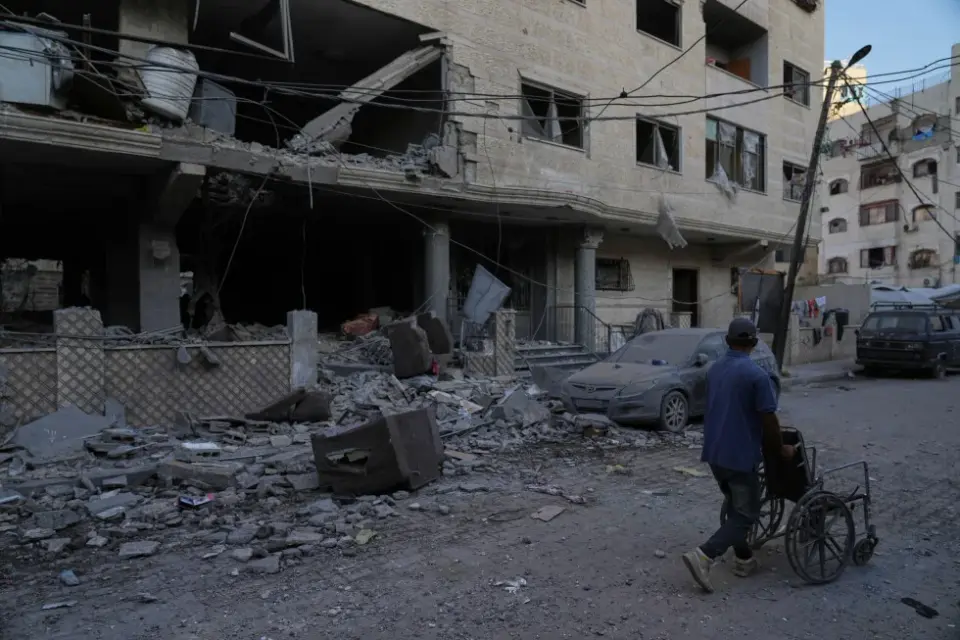
U.S. Defense Secretary Pete Hegseth asserted that the American blockade of the Strait of Hormuz is 'ironclad' and that President Trump has all necessary options to prevent Iran from acquiring nuclear weapons. Simultaneously, Israel confirmed the killing of a senior Hamas official in Gaza, while a fire broke out at a Saudi Aramco facility in Riyadh. Houthi rebels in Yemen reported airstrikes in Sanaa, marking a resurgence in regional conflict.
Key points
- Hegseth stated the U.S. blockade of the Strait of Hormuz is 'ironclad,' claiming Iran has passed 'nothing through' and that the U.S. is operating at prewar throughput levels.
- Israel’s army reported killing Ali Ahmed Al-Amoudi, described as the deputy chairman of Hamas’ political bureau and a key aide to Yahya Sinwar, in an apartment in Gaza.
- Gaza’s Health Ministry reported at least 1,439 Palestinian deaths since the ceasefire began nearly a year ago, a figure considered reliable by U.N. agencies.
- A fire erupted at an Aramco oil refinery in Riyadh, sending black smoke into the air; authorities tightened security but did not immediately confirm the cause.
- Houthi rebels claimed airstrikes hit Sanaa, while Yemen’s military stated it targeted 'legitimate vital military targets,' signaling renewed fighting between the Houthis and Saudi-backed forces.
Background
Recent coverage of the FlyDubai incident has highlighted aviation security concerns, specifically regarding the vetting of Hamam al-Hammami, an Omani co-pilot previously barred by Oman Air for extremist views. While the current AP report does not detail new developments on that specific case, it identifies the co-pilot as Omani, linking to earlier investigations into why FlyDubai employed him despite prior red flags. The broader Middle East instability, including the Gaza conflict and Yemeni civil war, provides the backdrop for these latest security escalations.
Why it matters
The simultaneous escalation in the Strait of Hormuz, Gaza, and Yemen indicates a fragmented but interconnected regional crisis. Hegseth’s firm stance on the strait suggests a potential for direct U.S.-Iran confrontation, while the killing of a top Hamas figure may impact ceasefire stability in Gaza. The fire in Riyadh and airstrikes in Sanaa demonstrate how regional conflicts are spilling over into critical infrastructure and sovereign territories, threatening global energy security and diplomatic stability.
What to watch
Analysts will monitor whether the U.S. blockade of the Strait of Hormuz leads to direct military engagement with Iran. In Gaza, the killing of Al-Amoudi may prompt further retaliatory actions or shifts in Hamas leadership. In Saudi Arabia, the cause of the Aramco fire will be investigated, while the situation in Yemen will likely see continued cross-border strikes as the civil war intensifies.
Want the full story? Read the original reporting
Read on AP News