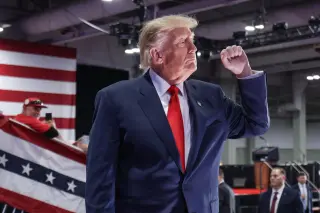
Trump posted on Truth Social praising Allah and warned he would be able to completely decimate Iran if the regime targets him, as U.S. strikes escalate tensions after Iranian attacks on shipping near the Strait of Hormuz and talks continue despite a June ceasefire breakdown.
Following the supreme leader’s funeral, Iran’s leadership publicly asserts strength and a bolder stance toward the United States, while Tehran maintains control of the Strait of Hormuz; despite Trump’s claim that the ceasefire is over, the risk of renewed war hangs as both sides take stronger positions.
With Iran talks faltering and the ceasefire unraveling, Vice President JD Vance’s public skepticism about Tehran is being framed by allies as political leverage—he could claim credit if talks progress and blame Iran if they fail—while gas prices edge higher and the debate over military options intensifies.
Ahmad Alsaqer, a 28-year-old asylum-seeker identified as a person of significant interest in Jamey Carney’s murder in Ireland, was in Istanbul hours before Gardaí launched a manhunt; investigators say he may travel through the Middle East toward Jordan, and his DNA found at Carney’s home could complicate charges if he’s apprehended.
The family of New York mother Jamey Carney, who was killed in her Ireland home, says hearing the devastating news was a shock and a nightmare. Carney, 43, moved to Ireland in 2021 with her daughter and was found with severe head wounds; an autopsy ruled suffocation as the cause of death. Police say her boyfriend Ahmad Alsaqer, a 28-year-old asylum seeker, is a person of significant interest and may have fled the country, with authorities suspecting he could be in Turkey. The couple reportedly met at an anti-Israel protest. Carney’s relatives urge that the tragedy not be used to fuel prejudice as investigators continue to pursue answers.
Unclaimed airstrikes hit Iran after the US ended its attacks, leaving questions about who carried them out and what this means for regional tensions and accountability.
Iran buried its slain Supreme Leader Ali Khamenei in Mashhad as diplomacy to ease US-Iran tensions unfolds in the region; the US has signaled readiness for potential strikes but is pausing actions to let talks proceed, while reports of an assassination plot against Donald Trump and renewed Strait of Hormuz tensions underscore a volatile backdrop.
The US-Iran ceasefire has collapsed after renewed exchanges of fire, prompting a wave of regional volatility while diplomacy continues behind the scenes with mediators in Pakistan, Qatar, and others; Iran reports strikes on multiple sites, including near Bushehr, but the US says it is not currently striking, as it maintains a strike capability and a target list. Meanwhile, Iran’s late Supreme Leader Ali Khamenei was buried and his son Mojtaba has shown little public presence, fueling speculation about leadership. The situation keeps strategic hot spots—like the Strait of Hormuz—under pressure as talks on nuclear issues and broader regional stability continue amid mounting tensions.
As Iran buries its late Supreme Leader Ali Khamenei, the US-Iran ceasefire appears to be unraveling with renewed strikes and counterstrikes across the region. The US says diplomacy is ongoing but has strike options ready, while Iran reports attacks on sites and US retaliation, amid mediation efforts by Pakistan and Qatar to restart talks. Strait of Hormuz traffic remains volatile and GPS spoofing has resurfaced, and Iran's new leader Mojtaba Khamenei has not appeared publicly during the funeral period.
During Ayatollah Ali Khamenei’s burial in Mashhad, mourners displayed banners threatening retaliation, including one that read “WE WILL KILL TRUMP,” along with other threats aimed at U.S. and Israeli leaders. The display underscores ongoing tensions surrounding Khamenei’s death and Iran’s broader confrontations in the region amid recent cross-border hostilities and retaliatory strikes.
Renewed U.S.-Iran clashes have driven tanker traffic through the Strait of Hormuz back to a near standstill, with reports of only one sanctioned tanker moving and several vessels turning away, triggering a spike in oil prices after a period of traffic recovery.
Trump announced the temporary ceasefire with Iran is over, reversing earlier conciliatory talk after Iranian attacks and U.S. strikes renewed tensions. The piece tracks his shifting rhetoric since the June 17 MOU—calling it “unconditional surrender,” threatening to destroy the Strait of Hormuz, and, by July 8, declaring the deal over—while leaving open a possible, if unlikely, pathway to talks.
Israeli Prime Minister Benjamin Netanyahu told CNN that he opposes the U.S. sale of F-35 fighter jets to Turkey, arguing it would disrupt the Middle East power balance, while downplaying divisions with President Trump and saying they largely share the same priorities on major issues.
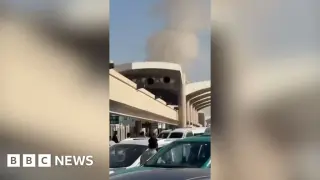
Explosions in Damascus wounded at least 18 as French President Emmanuel Macron met Syria's new leadership, with authorities saying devices were placed in a garbage bin and a parked car near the Four Seasons Hotel where Macron stayed; Macron's talks continued, the attack highlighting ongoing security challenges even as Damascus pursues Western engagement and reconstruction deals.
A massive, highly choreographed Tehran funeral for Ayatollah Ali Khamenei blends mourning with political theater, signaling Iran's new leadership’s resolve and intent to avenge perceived U.S. and Israeli aggression. Millions join the procession through Tehran and sacred sites in Qom, Najaf, and Karbala, with the final burial in Mashhad and a prominent “fist of defiance” monument underscoring a hardline message. While the regime seeks legitimacy and sanctions relief, many Iranians still face economic pain and protest fatigue, and some mourners quietly voice dissent.