
Nuristan Clash: Kabul Blames Pakistan for Border Incursion, Islamabad Denies
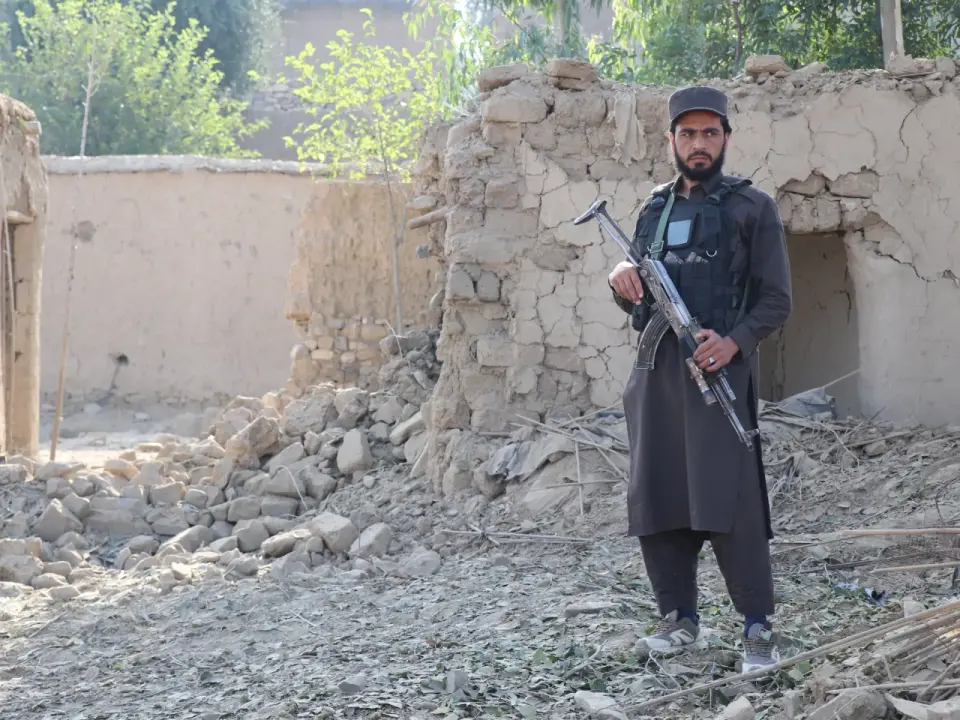
Afghan forces killed 28 fighters in Nuristan province after they crossed from Pakistan, according to the Taliban government. Kabul accuses Islamabad of recruiting former Afghan security personnel and ISIL members, while Pakistan denies involvement and demands Kabul act against militants. This incident follows recent Pakistani airstrikes in Afghanistan, deepening bilateral tensions.
Key points
- Afghanistan’s Ministry of Defence reported killing 28 fighters and capturing 32 in Kamdesh district, Nuristan, on Sunday.
- Kabul alleges the fighters were former Afghan security personnel recruited by Pakistani intelligence and ISIL members supported by Pakistani militias.
- Pakistan’s Ministry of Information rejected the claims as 'frivolous and baseless,' denying any state involvement in the incursion.
- The clash follows Pakistani airstrikes on September 21 and 24, which Kabul condemned as violations of sovereignty.
- The UN mission in Afghanistan confirmed three civilian deaths from the earlier September 21 strikes.
Background
Tensions between Afghanistan and Pakistan have escalated significantly since late September 2026. Following a wave of domestic violence in Pakistan, including a Kohat mosque bombing, Islamabad accused the Taliban government of sheltering Tehrik-e-Taliban Pakistan (TTP) militants. This led to Pakistani airstrikes in Kunar, Paktika, Kandahar, and Khost provinces on September 21 and 24. While Islamabad claimed these strikes targeted militant sanctuaries, Kabul protested the violations of sovereignty, with the UN confirming civilian casualties. The current Nuristan incident represents the latest escalation in this recurring cycle of cross-border violence and diplomatic friction.
How outlets are covering it
The Taliban government, via its Ministry of Defence and Pajhwok Afghan News, frames the Nuristan incident as a direct result of Pakistani state-sponsored aggression, alleging that Islamabad trained and deployed former Afghan security personnel and ISIL fighters to destabilize Afghanistan. In contrast, Pakistan’s Ministry of Information and Broadcasting, as reported by Al Jazeera and The Times of India, categorically denies these allegations, labeling them 'fabricated' and 'baseless.' Islamabad maintains that it is not involved in cross-border clashes and instead demands that Kabul fulfill its obligation to prevent Afghan soil from being used for terrorism against Pakistan. The Jerusalem Post highlights the lack of independent verification for Kabul’s casualty figures and the specific claim of state involvement, noting that Reuters could not confirm the ministry’s account. While all sources agree on the 28 fatalities, they diverge sharply on the origin and sponsorship of the fighters, with Kabul pointing to Pakistani intelligence and Pakistan pointing to Afghan inaction.
Why it matters
This incident underscores the fragility of the border between Afghanistan and Pakistan, a region prone to recurring violence that threatens regional stability. The mutual accusations of state involvement in cross-border terrorism complicate diplomatic relations and hinder efforts to resolve the TTP issue. As both nations trade blame, the risk of further escalation, including potential military confrontation, remains high, affecting the security situation for both countries and the broader region.
What to watch
Analysts expect continued diplomatic friction and potential further military exchanges along the Durand Line. The Taliban government has promised an 'appropriate response' to previous Pakistani strikes, while Pakistan continues to demand verifiable action from Kabul against militant groups. The situation may lead to further international mediation attempts or, conversely, a deeper freeze in bilateral relations, with no immediate signs of de-escalation from either side.
- Afghanistan says 28 fighters killed as Islamabad, Kabul trade accusations Al Jazeera
- Info ministry rejects Afghan Taliban's 'frivolous' claims linking Pakistan to reported Nuristan violence Dawn
- 28 'fighters', mostly former Afghan security personnel, killed after crossing from Pakistan: Kabul The Times of India
- Afghanistan says it killed 28 fighters, wounded 32 after group crosses over from Pakistan The Jerusalem Post
- Pakistan-supported armed groups heavily defeated in Nuristan’s Kamdesh: MoD Pajhwok Afghan News
Want the full story? Read the original reporting
Read on Al Jazeera