
Pakistan downplays Mecca pact activation amid Houthi attacks on Saudi Arabia
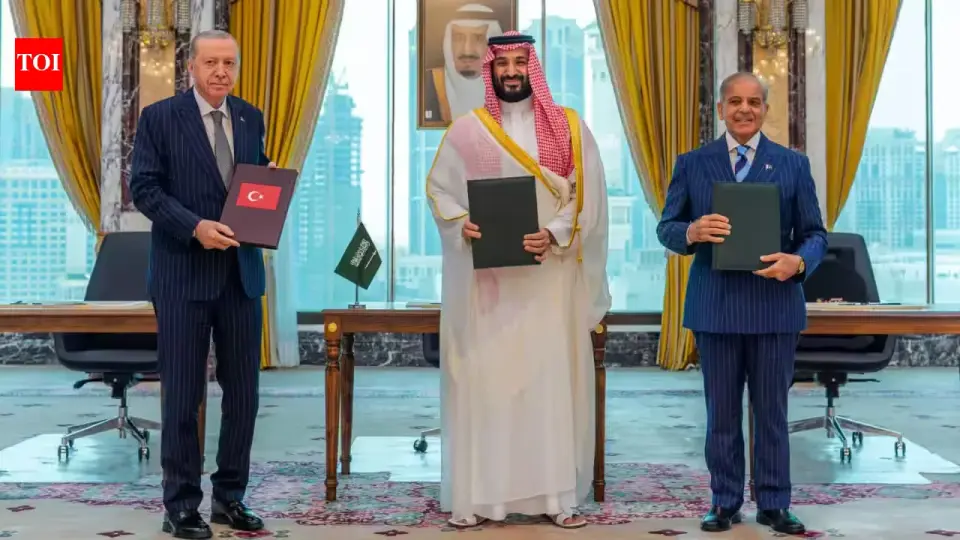
Pakistan has walked back earlier warnings that the Mecca Defense Pact would be activated against Houthi attacks on Saudi Arabia, stating no military response is currently under discussion. While the pact, signed in August 2026, remains a political commitment, analysts question its operational credibility due to a lack of integrated command structures and divergent strategic priorities among the signatories.
Key points
- Pakistan’s foreign ministry spokesperson Sajjad Haider Khan stated on September 10 that no military response under the Mecca pact is currently being discussed, contradicting Defense Minister Khawaja Asif’s warnings from the previous day.
- The Mecca Joint Defense Agreement, signed on August 7 by Pakistan, Saudi Arabia, and Turkey, stipulates that an armed attack on one member is considered an attack on all three, but lacks detailed public operational protocols.
- Houthi attacks on Saudi energy infrastructure and cities have intensified, prompting earlier threats from Islamabad that the pact’s clauses against aggression would become operative if the conflict spilled into Saudi territory.
- Pakistan has ruled out immediate expansion of the alliance, stating there are no formal applications or new names for membership at this stage, despite earlier discussions about broadening the pact.
- The pact’s credibility is questioned due to the absence of joint command-and-control mechanisms, with critics noting that the three nations have different primary adversaries and strategic priorities.
Background
The Mecca Defense Pact was formalized in August 2026 to strengthen collective deterrence in the Middle East, building on a bilateral agreement between Saudi Arabia and Pakistan from September 2025. Initial talks in Istanbul on August 31 focused on establishing a secretariat in Saudi Arabia and exploring defense-industrial cooperation. India’s External Affairs Minister S. Jaishankar had previously downplayed the pact’s impact, questioning its utility amid existing regional conflicts, while noting that New Delhi would factor it into its security calculus.
How outlets are covering it
The Times of India highlights the rapid shift in Pakistan’s rhetoric, noting the walk-back of Defense Minister Khawaja Asif’s warnings within 24 hours as a sign of diplomatic caution. War on the Rocks argues that the pact suffers from a 'credibility gap,' lacking the military integration and escalation controls needed to deter adversaries, potentially inviting testing of its boundaries. The Jerusalem Post emphasizes the strategic implications for India, suggesting the pact may remain a political declaration rather than an operational military alliance, with experts doubting the feasibility of joint military operations among the signatories due to divergent threat perceptions and equipment incompatibilities.
Why it matters
The Mecca pact represents a significant shift in regional security architecture, aiming to reduce reliance on U.S. security guarantees. However, its effectiveness is uncertain without operational mechanisms, raising concerns about escalation risks and the ability to manage crises involving regional rivals like Iran and Israel.
What to watch
Observers will watch for any further Houthi attacks on Saudi Arabia to test the pact’s response. Additionally, the establishment of the secretariat in Saudi Arabia and potential future membership discussions, including with Bangladesh or other Gulf states, will determine the pact’s evolution from a political declaration to an operational alliance.
- Pakistan blinks on Houthis, walks back Saudi defence warning within 24 hours The Times of India
- Pakistan says no military response discussed under Mecca pact over Houthi attacks on Saudi Arabia Reuters
- The Mecca Pact’s Credibility Gap War on the Rocks
- Turkey, Saudi, Pakistani pact forces India to rethink regional security equation jpost.com
- Pakistan says there are no plans to expand ‘defensive’ alliance with Turkey, Saudi Arabia The Times of Israel
Want the full story? Read the original reporting
Read on The Times of India