
Putin Dismisses Post-Election Mobilization Rumors as Ukraine Warns of 600,000-Strong Draft Plan
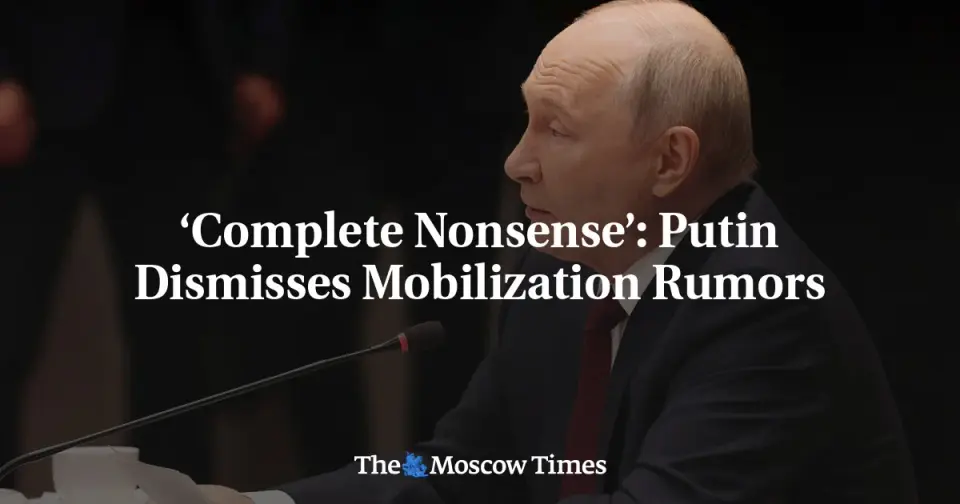
Vladimir Putin dismissed speculation of a new military mobilization following the State Duma elections as 'complete nonsense' and an 'information attack.' Ukrainian intelligence agencies claim Moscow is preparing a plan to mobilize 600,000 men across 2026 and 2027, though they describe this as a contingency scenario rather than an active call-up. While the Kremlin denies a formal draft, it has implemented legal changes to facilitate recruitment, including digital registries and travel bans, amid a stalled war and significant manpower losses.
Key points
- Putin stated that reports of a post-election mobilization are 'complete nonsense' and an 'information attack on Russia,' speaking after the SCO summit in Bishkek.
- Ukrainian intelligence services report that Russia’s General Staff has prepared a scenario to mobilize 600,000 people, with 300,000 recruits planned for each of 2026 and 2027.
- Ukraine’s military intelligence attributes the potential mobilization to battlefield losses and a slowdown in voluntary contract recruitment, noting Russia lost roughly 240,000 personnel from January to July 2026.
- The Kremlin has avoided a formal call-up by pressuring men to sign military contracts, offering signing bonuses, and utilizing legal mechanisms like automatic travel bans and year-round draft processing.
- The 2022 'partial' mobilization decree remains technically in effect, allowing the government to deploy reservists without a new formal announcement, though experts note logistical hurdles for a mass mobilization.
Background
This development follows months of escalating coercive recruitment tactics in Russia, including large signing bonuses and pressure on men with criminal records, as detailed in earlier coverage. The current situation reflects a broader trend of militarizing Russian society to sustain the war effort in Ukraine, which has entered its fifth year with limited territorial gains for Moscow.
How outlets are covering it
The Moscow Times and Euromaidan Press highlight the direct contradiction between Putin’s public denial and the specific intelligence assessments from Ukrainian agencies. RBC-Ukraine notes that Zelenskyy had previously warned of a post-election mobilization, while The Sunday Guardian emphasizes the potential deployment of 400,000 additional troops. While the Kremlin frames the rumors as foreign disinformation, Ukrainian officials describe the 600,000 figure as a prepared contingency scenario rather than an immediate order, noting that no new call-up has been publicly announced or reported as underway.
Why it matters
The potential for a new mobilization represents a significant escalation in Russia's war strategy, potentially impacting domestic stability and international relations. The shift from voluntary recruitment to coercive measures and legal preparations for a draft indicates deepening manpower crises for the Russian military, which could influence the trajectory of the conflict in Ukraine and the broader geopolitical landscape in Europe.
What to watch
Analysts will monitor the State Duma elections later this month for any official announcements regarding mobilization. Additionally, observers will watch for further legal changes or logistical preparations, such as the reported rehearsals in Kaliningrad Oblast, that might indicate a move toward a formal call-up despite current denials.
- ‘Complete Nonsense’: Putin Dismisses Mobilization Rumors The Moscow Times
- Kremlin leader breaks silence on looming post-election mobilization in Russia RBC-Ukraine
- Russia Ukraine War Live News: Putin Planning to Deploy 400,000 More Russian Troops Along Battlefront As War With Ukraine Escalates The Sunday Guardian
- Kremlin Sources Say Putin Fears Physical Retaliation if Russia Fails to Capture All of Donbas Межа. Новини України.
- Putin dismisses mobilization reports as Ukraine warns Russia could call up 600,000 to war 02/09/2026 Euromaidan Press
Want the full story? Read the original reporting
Read on The Moscow Times